

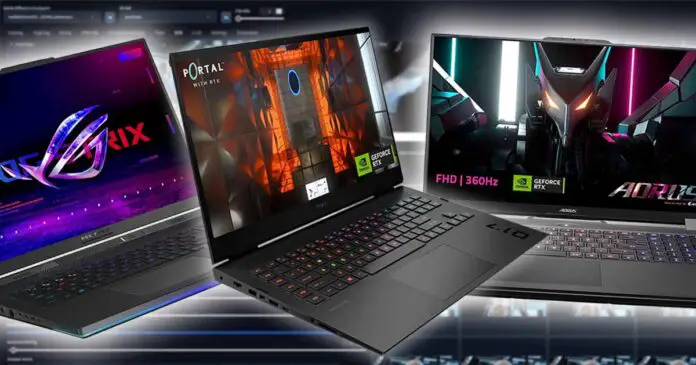
Here is the promised top list of my own picks when it comes to the best and most powerful high-end laptops for AI this year. Read on to see which parameters are most important when it comes to the best AI model training and inference performance on your laptop computer!
Major updates:
– Oct 2026 – Added a quick list with the key specs of every laptop, a section on MacBooks and AMD Ryzen AI Max laptops with unified memory, and corrected a few outdated GPU details.
– Jan 2026 – Updated with new hardware featuring 5xxx series GPUs and more recent information.
You might also like: Beginner’s Guide To Local LLMs – How To Get Started
This web portal is reader-supported, and is a part of the Amazon Services LLC Associates Program, AliExpress Partner Program, and the eBay Partner Network. When you buy using links on our site, we may earn an affiliate commission!
-
 1
Best overallASUS ROG Strix Scar 18 AIRTX 5090 24GB GDDR7 · Up to 64GB DDR5 · Up to ~30B modelsRead more below ↓
-
 2
Best for Thunderbolt 5MSI Raider 18 HXRTX 5090 24GB GDDR7 · Up to 96GB DDR5 · Up to ~30B modelsRead more below ↓
-
 3
Best for cheaper configsLenovo Legion Pro 7i Gen 10RTX 5090 24GB GDDR7 · Up to 64GB DDR5 · Up to ~30B modelsRead more below ↓
-
 4
Best last-gen pickASUS ROG Strix Scar 18 (2024)RTX 4090 16GB GDDR6 · Up to 64GB DDR5 · Up to ~20B modelsRead more below ↓
-
 5
Most RAM out of the boxHP Omen 17RTX 4090 16GB GDDR6 · 64GB DDR5 · Up to ~20B modelsRead more below ↓
-
 6
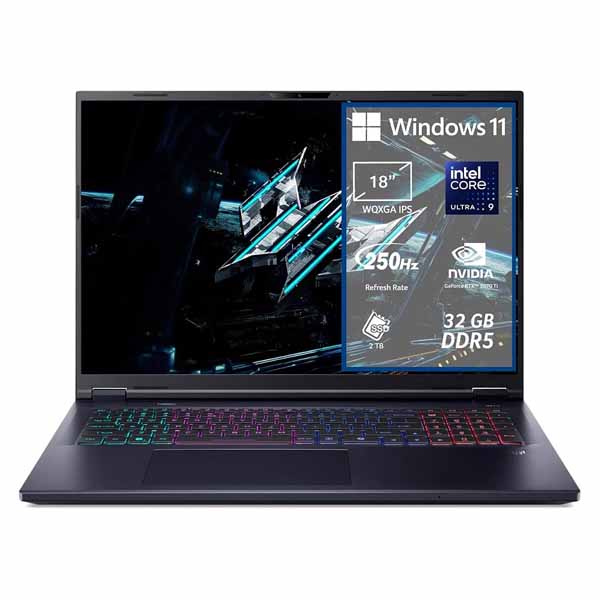
Best for RAM upgradesAcer Predator Helios 18 AIRTX 5080 16GB GDDR7 · Up to 192GB DDR5 · Up to ~20B modelsRead more below ↓
-
 7
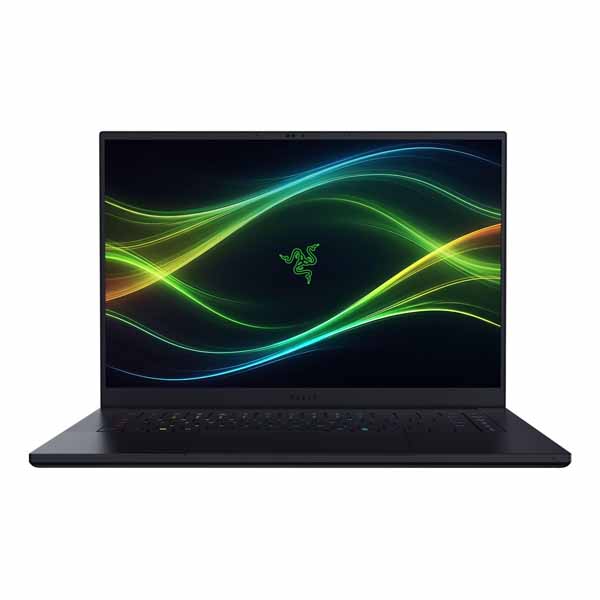
Thinnest and lightestRazer Blade 16 (2026)RTX 5080 16GB GDDR7 · Up to 64GB LPDDR5X · Up to ~20B modelsRead more below ↓
-
 8
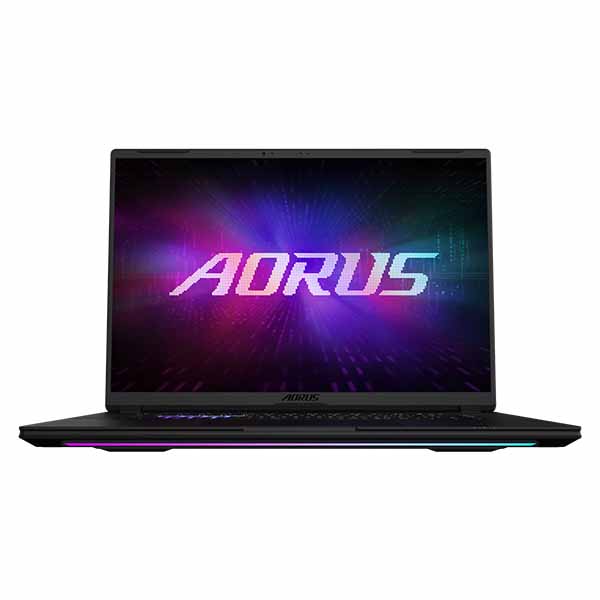
Best-balanced 16-inchGigabyte AORUS MASTER 16RTX 5080 16GB GDDR7 · Up to 64GB DDR5 · Up to ~20B modelsRead more below ↓
-
 9
Budget pick, discontinuedASUS ROG Strix Scar 15RTX 3080 16GB GDDR6 · Varies by config · Up to ~20B modelsRead more below ↓
A quick comparison of all the laptops on this list. The LLM fit values are a rough guide for 4-bit quantized models with a modest context window. Bigger models will still run if you offload part of them to system RAM, just a lot slower. More on that in my LLM VRAM requirements guide.
The Most Important Laptop Parameters For AI & LLMs
When picking a laptop for hosting local AI software, training models, model inference be it generating responses from an LLM or generating images with the aid of Stable Diffusion, one of the most important things is a powerful GPU.
But what does “powerful” really mean in this context? Well, the first thing you need to care about is the amount of VRAM your chosen GPU has. Video memory is one of the most important (if not downright the most important) parameters here.
If you have more VRAM on board, you can for instance, while training AI models, choose larger training batch sizes and oftentimes finish your training process faster. Loading an LLM for local inference means having to load the whole model into your GPU VRAM for the best performance, so for running larger, higher quality models you need as much VRAM as you can get. Video memory is also very important if you’re trying to generate larger batches of images at once, for instance when using the Stable Diffusion Automatic1111 WebUI.
Another important thing is the max GPU clock speed – the maximum speed at which the graphics card is able to make calculations, which in most if not all cases is higher in newer GPU models. The general rule of thumb when buying GPUs is: the newer the better when it comes to overall performance, but the latest model is almost certainly overpriced. That’s just how it is.
Other than that, you want a capable CPU (which all of the laptops in this line-up have), and ideally at least 32GB of RAM if you ever plan to off-load some model data into your main system memory. If your budget cannot cover it, 16GB of RAM is also acceptable – it is pretty much a standard amount these days.
Also, as I always say, remember to keep in mind your chosen laptop’s cooling system before making a purchase. You don’t want to end up with a powerhouse of a laptop that cannot utilize its processor and GPU to their full potential because of the cooling issues and thermal throttling. There aren’t many devices which are not able to cool themselves properly at the price range we’re talking about here, but in my honest opinion this is still important to note. If you’re not sure, always check trustworthy YouTube reviews of the device you’re aiming to buy.
As you will see in a short while, there are no laptops with AMD graphics cards here, and for a pretty good reason. If you want to know why, you might want to check out my main article about the best graphics cards for AI and LLMs this year. I go into much more detail there.
How Much VRAM Do You Need? – The “Best” Laptop GPU For AI
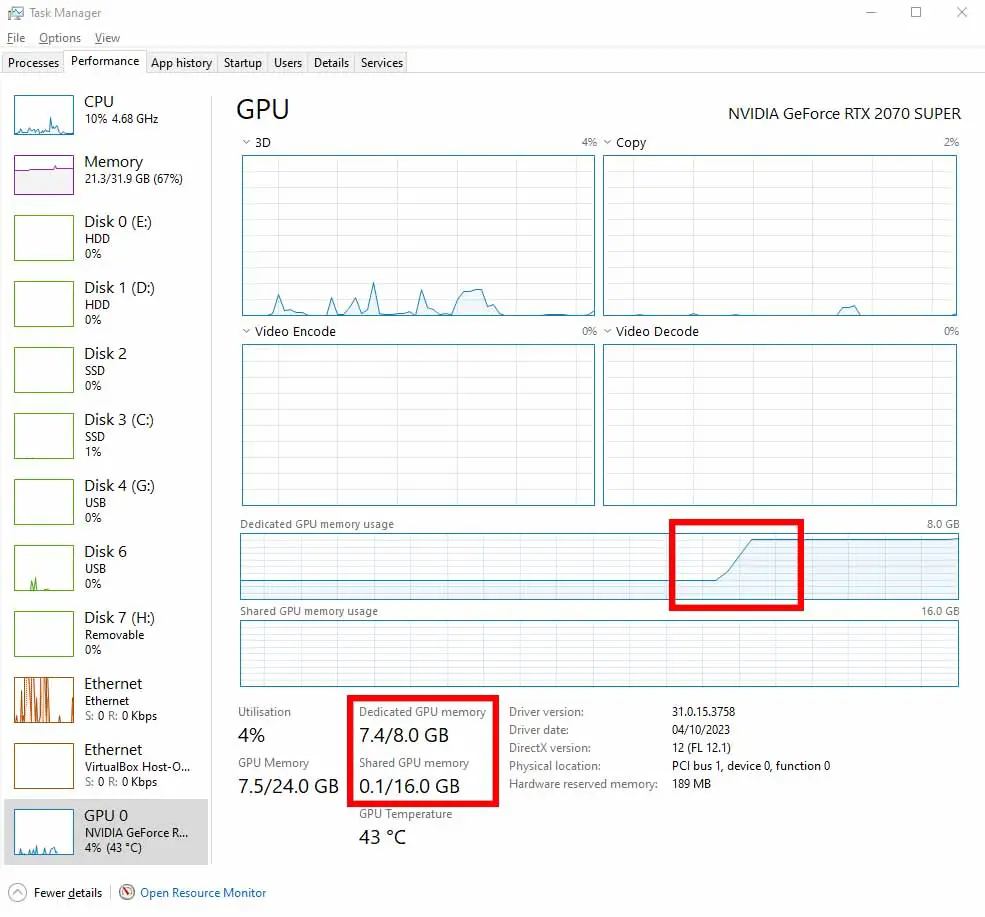
With regular GPU units made for desktop PCs and graphics cards used by laptops the current upper limit of the available amount of VRAM on consumer laptop hardware is 24GB (RTX 5090 Laptop GPUs), while the desktop RTX 5090 goes up to 32GB. This is the amount you should go for if you’re more serious about locally hosted LLMs, and now they’re finally here this year, flagships like the ASUS ROG Strix Scar 18 AI.
There also exist cards with 16GB and 12GB of VRAM on board, which will be of interest to you if you’re hard pressed on hosting and utilizing large language models, and for now are more than enough for most AI-related tasks you throw at them, including efficient medium-sized model training and fine-tuning. These ones are stocked in high-end gaming laptops across RTX 50-series lines.
Then, there are oftentimes much older (and almost always significantly cheaper) cards with 8GB of video memory which you don’t really want to take into consideration if you want to really get into running LLMs, or doing AI video generation work on your hardware.
Even with smaller, heavily quantized 7B models 8GB of VRAM can be quite limiting (although it’s not impossible to fit a small language model in 8GB of video memory with pretty annoying limitations). While for things like basic Stable Diffusion XL image generation 8GB VRAM GPU is just enough, getting a brand new laptop with such a card for AI software use doesn’t really make much sense nowadays.
For your convenience the GPU model alongside the amount of VRAM it has on board will be present in brackets next to each laptop model listed.
Are There Any More Affordable Options?
Some of these prices may be downright scary for some of you. And that’s totally understandable. After all, the high-end laptop market is well-known for overblown pricing of the top-notch high-performing devices.
Are there any budget options here? Well, actually there are. The ASUS ROG Strix Scar 15 for one, while definitely not cheap, is one of the most affordable laptops featuring the NVIDIA RTX 3080 GPU with 16GB of VRAM, but hunt for deals fast, as it’s already been discontinued. When it comes to this year’s options, the Lenovo LOQ and HP Victus series with RTX 5060/5070 (8-12GB VRAM) GPUs are also a great wallet-friendly option you might want to check out.
Also, if you want to reduce the price of any of the listed models quite a bit, consider choosing a 16GB RAM variant with a smaller capacity drive when you get to the product listing. This way you can save quite a bit when still getting the same laptop model, just with a little bit less storage space and a lower amount of system memory.
Best Laptops For AI and LLMs This Year
1. ASUS ROG Strix Scar 18 AI (RTX 5090 24GB)
The ASUS ROG Strix Scar 18 AI with an Intel Core Ultra 9 275HX CPU and the NVIDIA RTX 5090 featuring 24GB of GDDR7 VRAM on board is the top pick on this list. It certainly is expensive, but for now it’s also one of the absolute top performers in this category. With very efficient cooling (vapor chamber + liquid metal) its 175W TGP can resist throttling pretty well in most reasonable scenarios, and its overall performance is absolutely top-notch as you can judge by its internals.
If you want the absolute best piece of hardware on this list, this is it. There is also a version with a RTX 5080 16GB card available, which is roughly $1k cheaper than this model, giving you much less VRAM to work with, but at the same time being much more affordable.
ASUS has also released the 2026 version of the ROG Strix Scar 18, which moves to the newer Intel Core Ultra 9 290HX Plus, gets an 18-inch 4K (3840×2400) display, and supports up to 128GB of DDR5 RAM – double the maximum of the model above, which is great news if you want to offload larger models into system memory. It’s once again available with either the RTX 5090 24GB or the RTX 5080 16GB.
2. MSI Raider 18 HX (RTX 5090 24GB)
The MSI Raider 18 HX is another laptop with the NVIDIA RTX 5090 GPU with 24GB of fast GDDR7 video memory paired with the slightly higher performing Intel Core Ultra 9 285HX CPU. When it comes to sheer power it’s directly comparable with the ASUS ROG, and it also does feature a QHD+ 240Hz display. As a neat bonus, it also features two Thunderbolt 5 ports.
Just as with the ASUS ROG Strix Scar 18 AI, the MSI Raider 18 HX also comes in a cheaper variant with the RTX 5080 16GB installed. Once again, this is a tradeoff – less video memory, for a significantly lower price. Overall, it’s yet another great find.
MSI’s newer take on this laptop is the MSI Raider 18 Max HX. It comes with the Intel Core Ultra 9 290HX Plus, the same RTX 5090 24GB and RTX 5080 16GB options running at up to 175W, an 18-inch UHD+ Mini LED display, and room for up to 128GB of DDR5 RAM.
3. Lenovo Legion Pro 7i Gen 10 (RTX 5090 24GB)
The Lenovo Legion Pro 7i Gen 10 comes with an Intel Core Ultra 9 275HX processor and the RTX 5090 with 24GB VRAM. Featuring an OLED 2.5K WQXGA 240Hz display and the classic Lenovo Legion outer casing design, it’s another solid pick if you want the best of the best.
And as you might expect, this one is also available in different configurations, letting you save even more if you decide to go for the RTX 5080 16GB variant with less internal storage and memory, as well as previous iterations of the Intel CPUs. As the Lenovo Legion series is also known for its more budget-friendly configs, at the time of writing this article you can still rather easily find the 5080 builds hovering around the $2500 mark. Lenovo has also started selling this laptop with the newer Intel Core Ultra 9 290HX Plus processor, so look out for that CPU in the listing if you want the latest version.
4. ASUS ROG Strix Scar 18 2024 (RTX 4090 16GB)
The ASUS ROG Strix Scar 18, and to be more specific, its older version back from the end of 2024 with an Intel i9-14900HX CPU and the NVIDIA RTX 4090 featuring 16GB of GDDR6 VRAM on board with the ROG Nebula 2k HDR display used to be on the first position of this list. As the top performer of the previous year, it’s still one of the better picks for simple local AI workflows even after the 5th generation of NVIDIA GPUs has hit the market.
There is also a version of this laptop with an RTX 4080 12GB available, which is roughly $1k cheaper than this model. It really goes to show that getting the latest and most powerful hardware most of the time requires a solid investment, however trust me, if you get it, you won’t be disappointed.
5. HP Omen 17 (RTX 4090 16GB)
The HP Omen 17 RTX 4090 is another laptop with the NVIDIA RTX 4090 GPU with 16GB of fast video memory paired with the Intel i9-13900HX CPU. When it comes to sheer performance it’s directly comparable with the ASUS ROG, and it also does feature a QHD display.
Although this might seem unimportant for many, I really like the user-assignable macro key row on the left hand side of the keyboard. Really nice to see on a device like this. And did I mention it comes with 64GB of DDR5 RAM? Definitely worth looking into. If the price of the previous model was a little bit much for you, the HP Omen 17 RTX 4080 is pretty much the exact same device, just featuring a lower-tier 4th generation NVIDIA GPU – the RTX 4080 with 12GB of VRAM.
6. Acer Predator Helios 18 AI (RTX 5080 16GB)
The Acer Predator Helios 18 AI takes over from the older Predator Helios on this list. It pairs the new Intel Core Ultra 9 290HX Plus CPU with the RTX 5080 featuring 16GB of GDDR7 VRAM, running at up to 175W, and the RTX 5080 version comes with an 18-inch 2560×1600 Mini LED display with a 250Hz refresh rate.
What makes it especially interesting for local AI is the memory. It ships with 32GB of DDR5, but according to Acer it can be expanded up to 192GB, which leaves plenty of space for the parts of larger LLMs that won’t fit into the 16GB of VRAM. At around 7.7 lbs it’s more of a desktop replacement than a laptop you’ll carry around every day, but if it’s going to sit on your desk anyway, that’s not much of a problem.
7. Razer Blade 16 (2026) (RTX 5080 16GB)
If you want something you can actually take with you, the Razer Blade 16 (2026) is by far the slimmest laptop in this lineup. Its 14.9mm chassis houses the Intel Core Ultra 9 386H and the RTX 5080 with 16GB of GDDR7 VRAM running at up to 165W, along with a 240Hz QHD OLED display.
There is one thing you need to know before buying this one. The system memory (up to 64GB of LPDDR5X) is soldered, so you can’t upgrade it later on. If you plan to offload bigger models into your RAM, go for the 64GB configuration right away. Weighing about 4.6 lbs, it’s the one to get if portability matters to you just as much as the GPU.
8. Gigabyte AORUS MASTER 16 (RTX 5080 16GB)
The Gigabyte AORUS MASTER 16 replaces the AORUS 17H on this list. This one comes with the AMD Ryzen 9 9955HX3D processor and the RTX 5080 16GB running at up to 175W, the same maximum GPU power as the much bigger 18-inch Acer, all paired with a 16-inch 2560×1600 OLED 240Hz display.
With a weight of around 2.3kg (roughly 5 lbs), it sits right between the large 18-inch machines and the thin Razer Blade. The system RAM goes up to 64GB, and unlike in the Blade, it’s not soldered, so you can start with the stock 32GB and upgrade later. All in all, a really well-balanced choice if you want full RTX 5080 performance in a 16-inch laptop.
9. ASUS ROG Strix Scar 15 (RTX 3080 16GB) [Discontinued]
Finally, the ASUS ROG Strix Scar 15 is my budget choice here. With an NVIDIA GPU from the previous, 3rd generation – the RTX 3080 with 16GB of VRAM and an AMD Ryzen 9 5900HX CPU, it gives you all you need for working with local AI software, without breaking the bank.
Still, I don’t know how I feel about the touchpad-numpad combo feature this one has going on. If you’re able to look past that, it is a laptop fully capable of not only running some mid-sized local LLM models, but also some more serious triple A gaming. Keep in mind, this one is not only a few years old, but also discontinued. It’s a good deal only if you can find it for a really good price. And with this one, this list has finally concluded!
What About MacBooks and AMD Ryzen AI Max Laptops (Unified Memory)?
All of the picks above are NVIDIA RTX laptops, and that’s on purpose. CUDA is still the best-supported option across local LLM and image generation software, and dedicated GDDR7 VRAM is fast. The catch is the hard VRAM ceiling: even the RTX 5090 Laptop GPU has 24GB, so anything much bigger than a ~30B model at 4-bit quantization has to be partly offloaded to much slower system RAM.
That’s where unified memory laptops come in, as their GPU can use a big chunk of one shared memory pool. The current Apple MacBook Pro goes up to 64GB with the M5 Pro chip and up to 128GB with the M5 Max (with up to 614GB/s of memory bandwidth), while the M5 MacBook Air and the base M5 MacBook Pro top out at 32GB. On the Windows side, the AMD Ryzen AI Max+ 395 supports up to 128GB of memory, and AMD says up to 96GB of that can be assigned to its integrated Radeon 8060S graphics on Windows.
The trade-off is pretty simple. These machines can load 70B-class and larger models that just won’t fit on any laptop RTX card. For models that do fit into 24GB though, the RTX 5090 Laptop GPU with its 896GB/s of memory bandwidth is the faster option, and a lot of AI software (especially image and video generation, and training) still targets CUDA first. If running really large models matters more to you than raw speed on smaller ones, a high-memory MacBook Pro or a Ryzen AI Max laptop is worth a look. Just buy all the memory you need up front, because it’s soldered and can’t be upgraded later.