

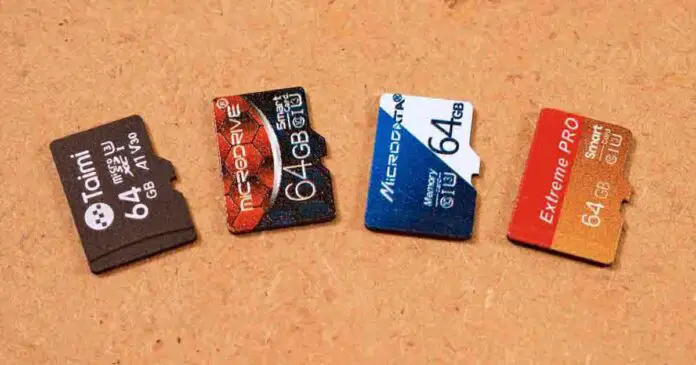
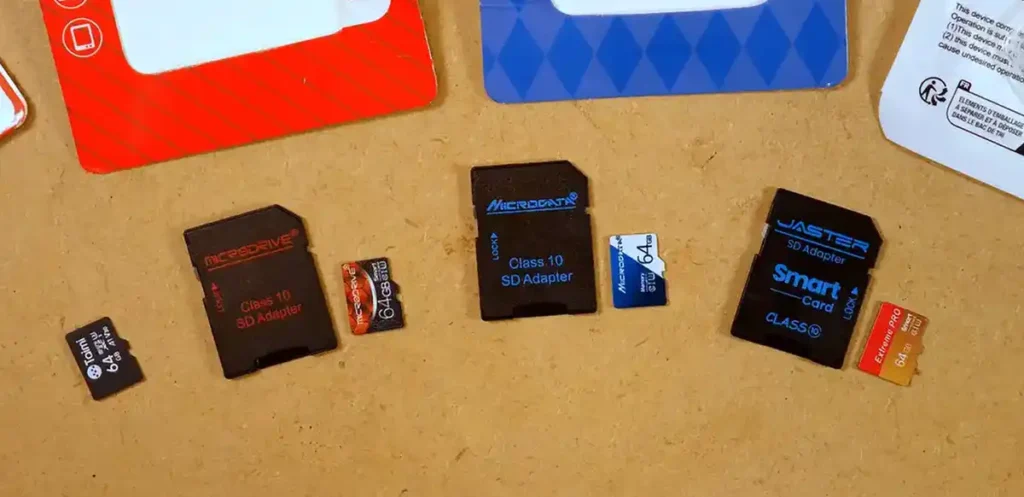
I’ve benchmarked 4 different cheap 64GB microSD cards I got from AliExpress to check their actual read and write speeds, as well as their true capacities. The brands I picked were Taimi, Microdrive, Microdata, and Jaster. With the memory prices on the rise, was it worth to take the risk? Here is what I found out.
This web portal is reader-supported, and is a part of the AliExpress Partner Program, Amazon Services LLC Associates Program and the eBay Partner Network. When you buy using links on our site, we may earn an affiliate commission.
You might also like: How To Back Up and Restore a Retro Handheld microSD Card
At The First Glance
The captured listings placed these cards in the range of roughly $7-15, which is a little below the average price of a brand new 64GB microSD. This is precisely why I’ve chosen these for this little experiment.
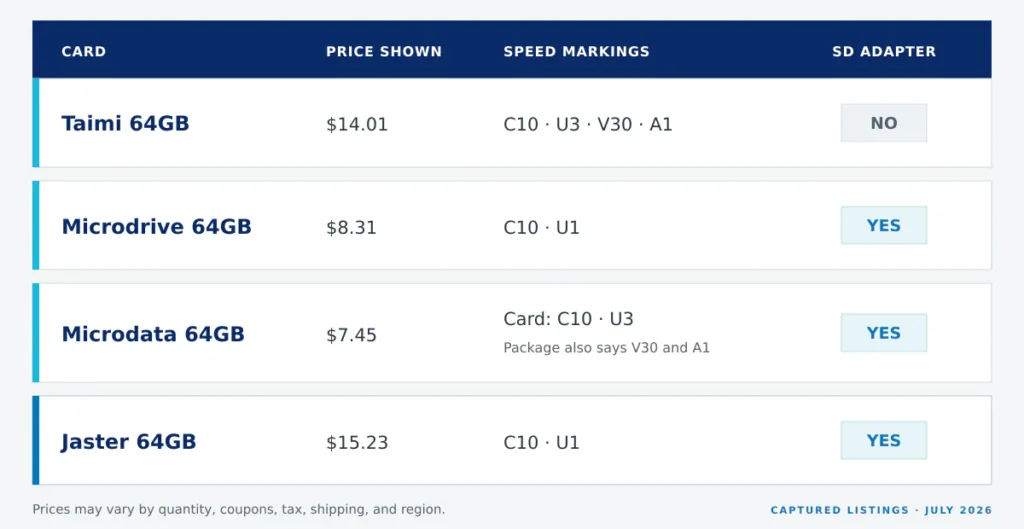
The prices were reasonable enough to take the plunge, and I really do feel like if you’re trying to get a cheaper microSD card from a site like AliExpress, you’re likely to come across these models, or some version of them at least.
All of these were also fairly consistent when it comes to the contents of their product listings, which made me choose them from the sea of other microSD deals of varying quality that I’ve come across.
What Are We Checking For, and How
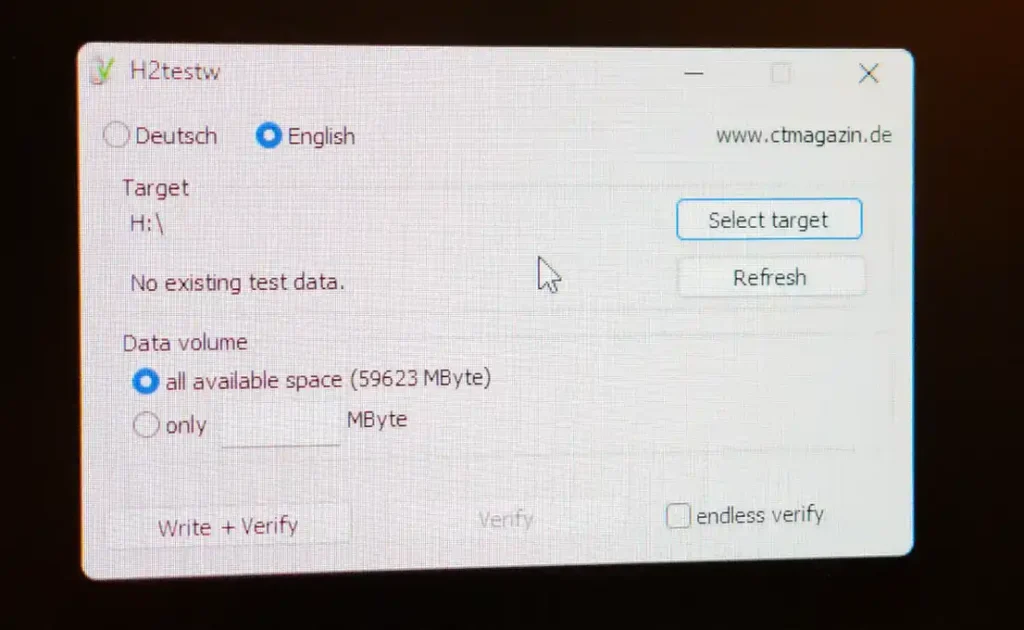
There are a few common risks associated with buying cheap microSD cards from unknown brands/manufacturers. These are:
- Fake capacity – e.g. the microSD reports a capacity of 64GB to Windows, but the real capacity of the card is significantly lower and all of the data saved to the card beyond the real limit gets corrupted and destroyed without any notification to the user. This is sadly still a very widespread practice among fraudulent manufacturers/sellers.
- Low quality of the card – the capacity of the card is legitimate, but the card has lower than usual read/write speeds (either sequential, random, or both), and the card has a non-zero chance of unexpected failure after repeated write cycles. This is a problem that’s widely known in the retro handheld community, as many cheaper handhelds ship with such budget cards included.
We will be checking the first using H2TestW, and the latter, using CrystalDiskMark, set to 5 test runs and a 1GiB test file. The speed benchmarks were done after the capacity tests, and none of the cards were formatted beforehand.
This can confirm the usable addressable capacity of each sample and show how it performs today. It cannot tell us how many write cycles the flash will survive or whether another card from the same listing uses the same components.
For reference, C10 and U1 mean a minimum sequential write speed of 10MB/s, while U3 and V30 mean 30MB/s under the standard’s defined conditions. A1 is a separate application-performance class based on random I/O as well as sequential speed.
The Results
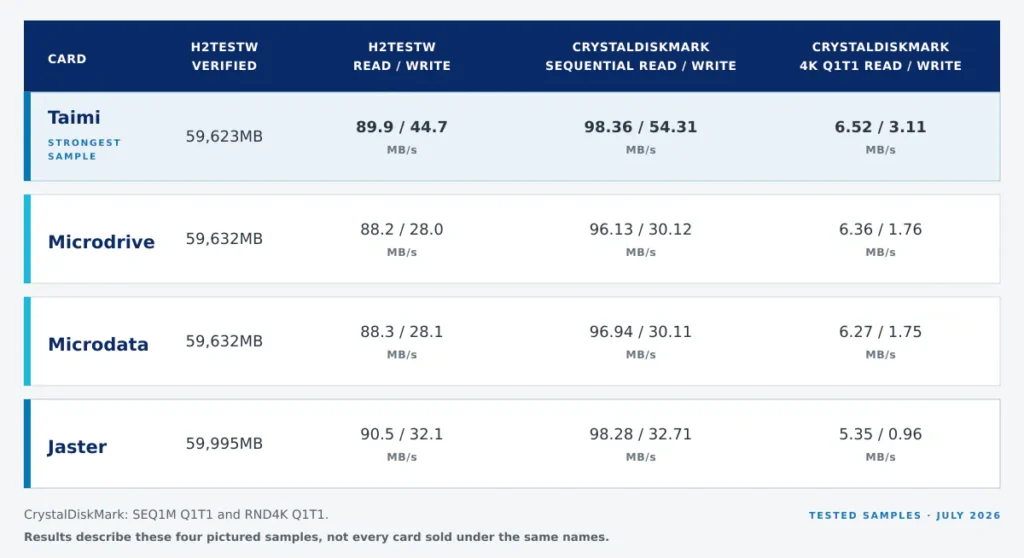
Here are the H2TestW and CrystalDiskMark results for each card, alongside the info and notes on each of the cards and the links to the exact AliExpress listings I got them from.
A word of warning: Although I’ve included both the screencaps of the exact listings I got the cards from alongside the corresponding links, as always nothing stops the sellers from: a) swapping the product available on the sales page with another one, b) silently switching to another supplier/manufacturer for the hardware sold via the very same listing. Take the results and sources for what they are, and always be mindful of the risks that come with the cheap electronics lottery.
1. Taimi 64GB
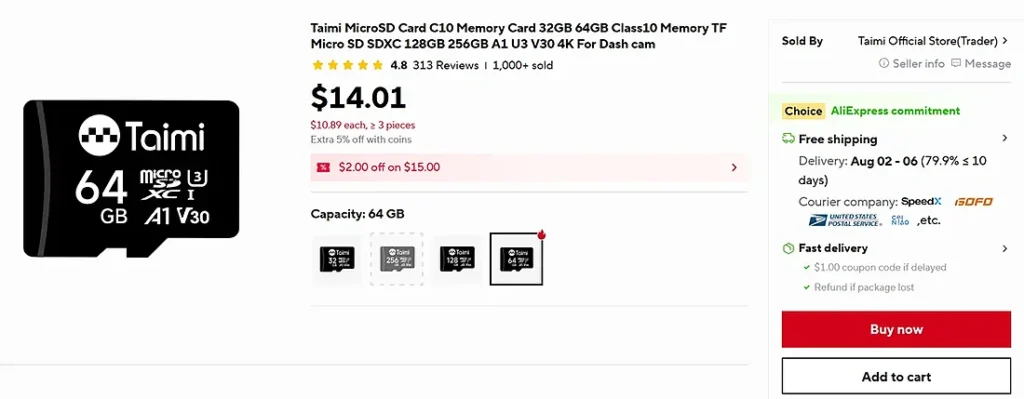
See the exact Taimi 64GB listing on AliExpress. The captured page showed a price of $14.01, or $10.89 each when buying at least three.
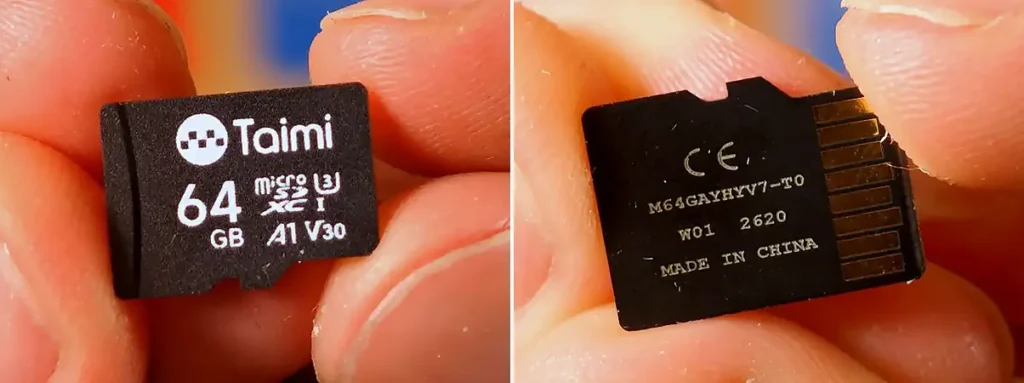
Taimi has the clearest brand presence of the four: I found an active manufacturer website operated by Shenzhen Minder Semiconductor, and the company lists memory cards among its product categories. I could not independently match the exact code printed on this sample to a public product database, however.

The reported Windows capacity is a little below the roughly 59.6GB normally shown for a full 64GB card, but the controller was not hiding a smaller physical limit behind that number.
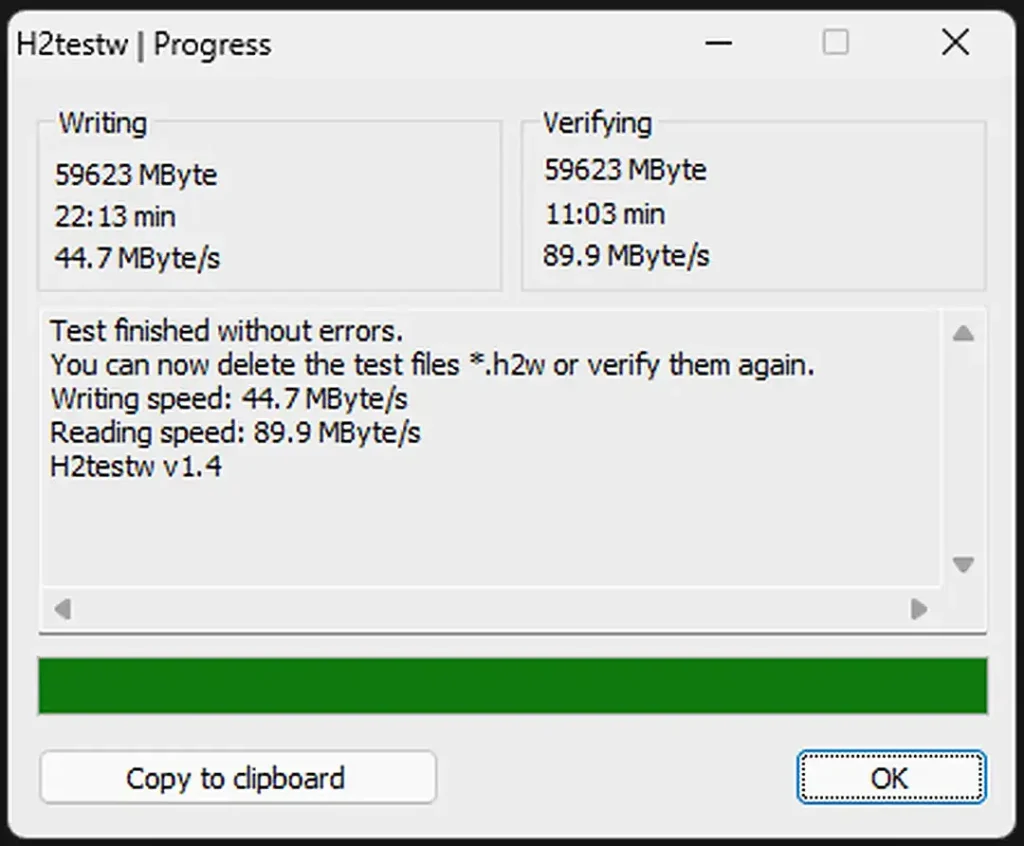
No fake-capacity behavior or data errors appeared during the full write-and-verify pass. Taimi also recorded the highest sustained write speed in this comparison by a comfortable margin.
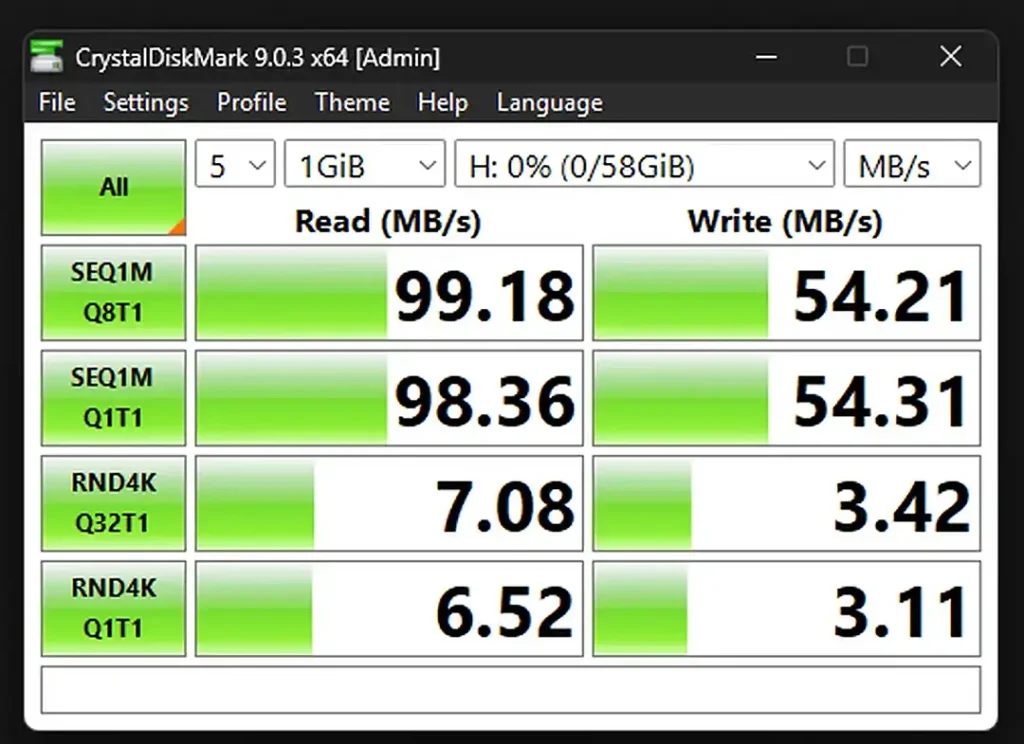
Its CrystalDiskMark result backs this up. It was the fastest card here for sequential writing and 4K random writing, and its measured performance was consistent with the U3 and V30 markings. CrystalDiskMark is not the SD Association’s formal A1 compliance test, so I would not treat this benchmark alone as certification of the A1 logo.
2. Microdrive 64GB
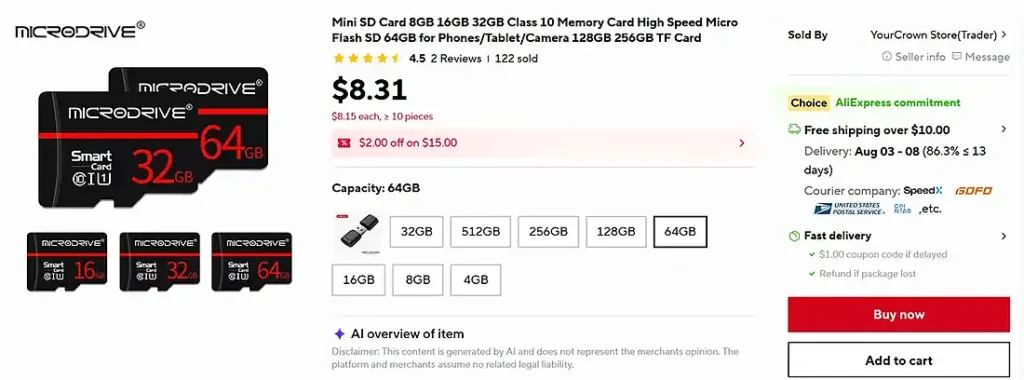
See the exact Microdrive 64GB listing on AliExpress. The captured page showed a price of $8.31 and included a full-size SD adapter.
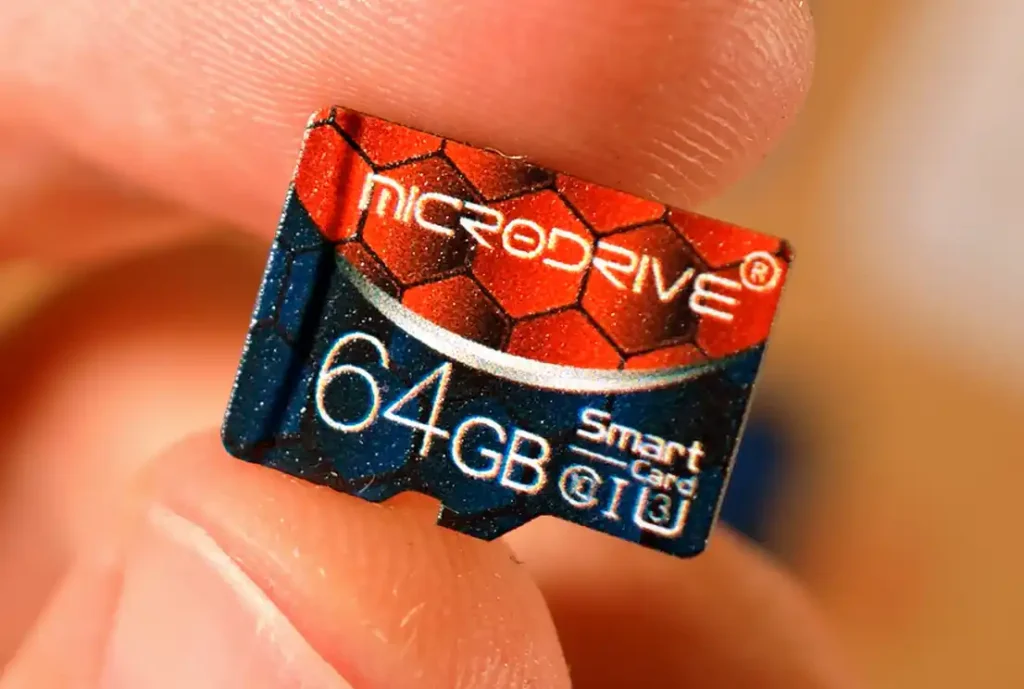
The Microdrive’s print quality looked rougher than the Taimi’s, but there was nothing mechanically unusual about the card itself. Its more interesting details appeared when I compared it with the Microdata.
Microdrive, Microdata – Same Manufacturer?
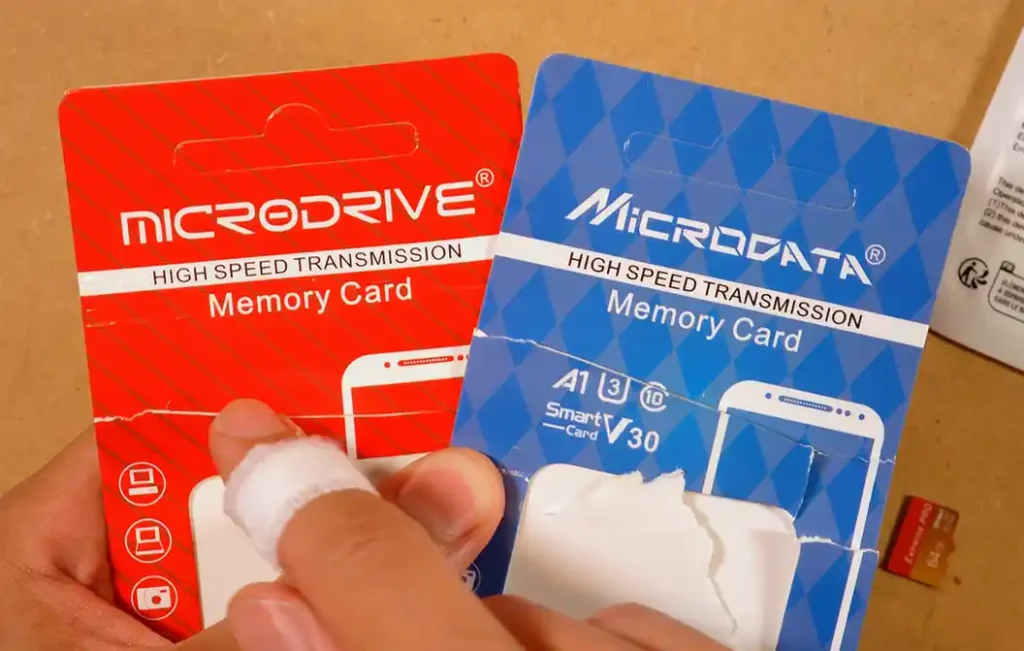
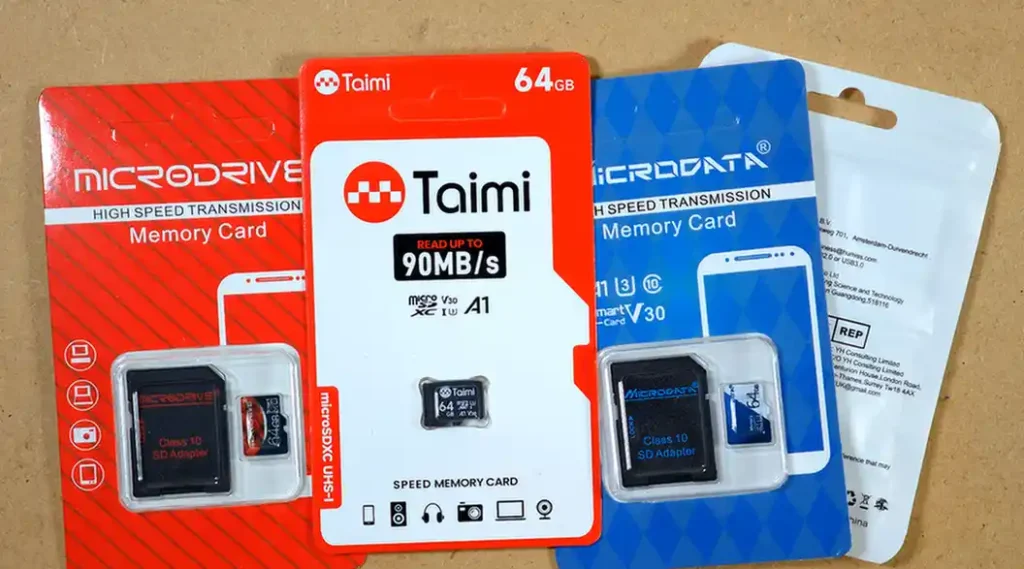
The Microdrive and Microdata packages use the same “High Speed Transmission” line, the same basic layout and very similar graphics. Packaging alone does not prove a common manufacturer, but the cards themselves provide another clue.
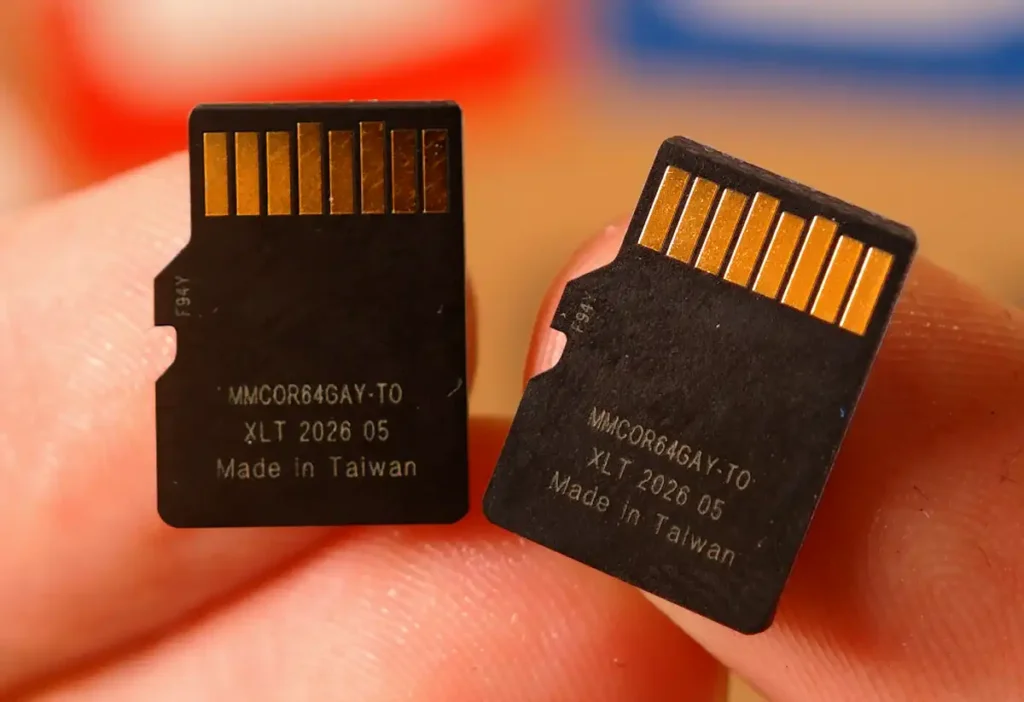
The matching identifier and date-style code strongly suggest that these two samples came from the same production source or at least used the same pre-printed card bodies. I found no public record that lets me tie “MMCOR64GAY-T0” to a specific flash controller, NAND supplier or factory, so it would be a stretch to call this proof.
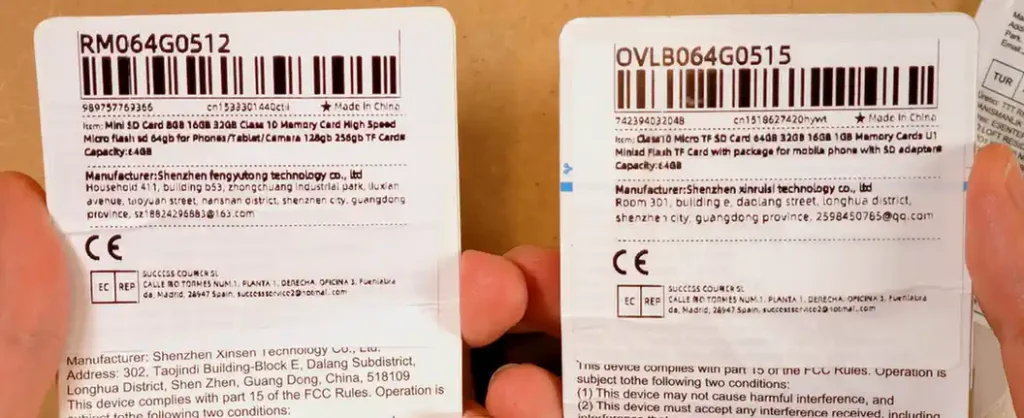
This is where the trail gets messy. Microdrive’s added label names Shenzhen Fengyutong Technology, while the original text underneath names Shenzhen Xinsen Technology. The Microdata label names Shenzhen Xinruisi Technology.
After a quick investigation I was able to find a public product sheet for generic memory cards that does connect Shenzhen Xinsen Technology with the same Taojindi address and an “MDTFCARDU3” test model, but that still does not identify who assembled the NAND and controller inside these two cards. The safest conclusion is that the branding and supply chain are opaque.

As with the Taimi, the displayed capacity was a little below what I normally expect from a 64GB card.
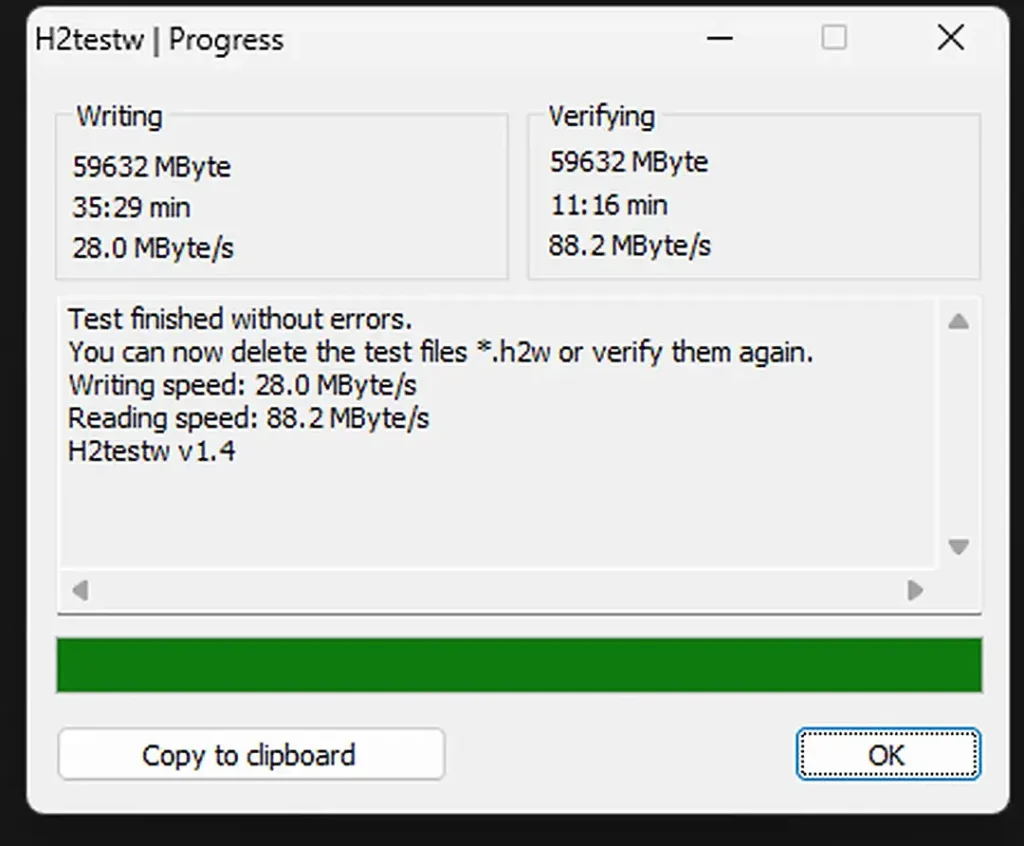
The complete write-and-verify test found no false-capacity behavior or damaged sectors in the tested space. Its 28.0MB/s full-card write speed also clears the 10MB/s minimum associated with the card’s C10 and U1 markings.
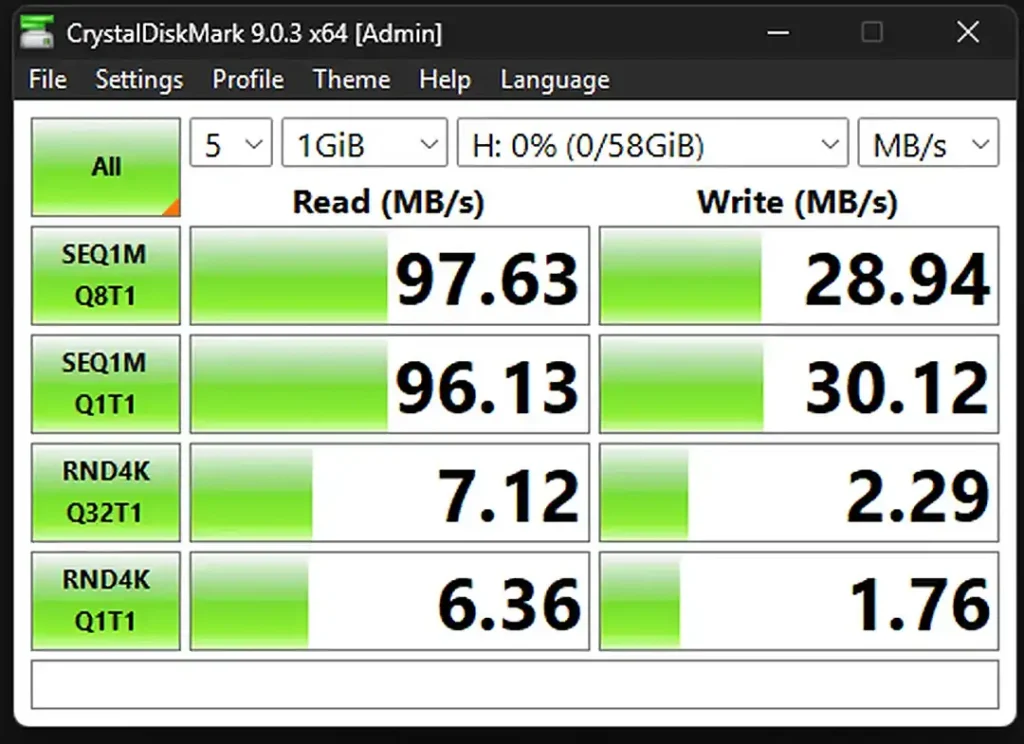
CrystalDiskMark showed good sequential read speed for an ordinary UHS-I card. The random results were unremarkable, but almost identical to the Microdata’s down to the second decimal place.
You might also like: 4 Best Websites to Track AliExpress Packages More Accurately
3. Microdata 64GB
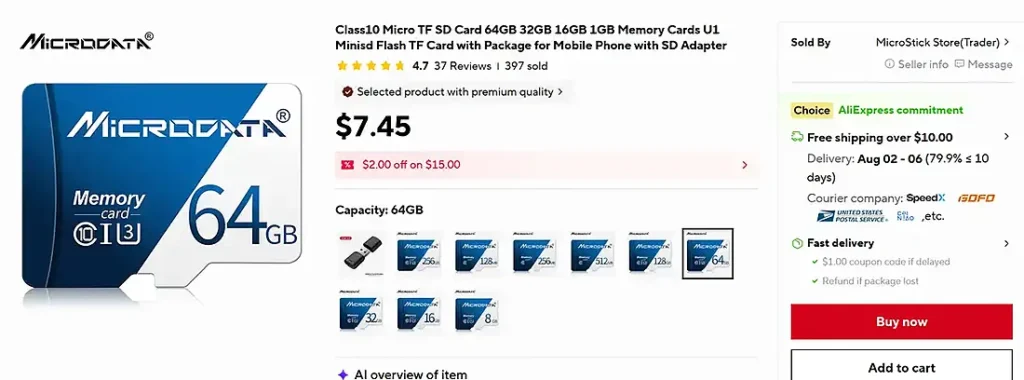
See the exact Microdata 64GB listing on AliExpress. At $7.45 in the captured screenshot, this was the cheapest of the four listings.
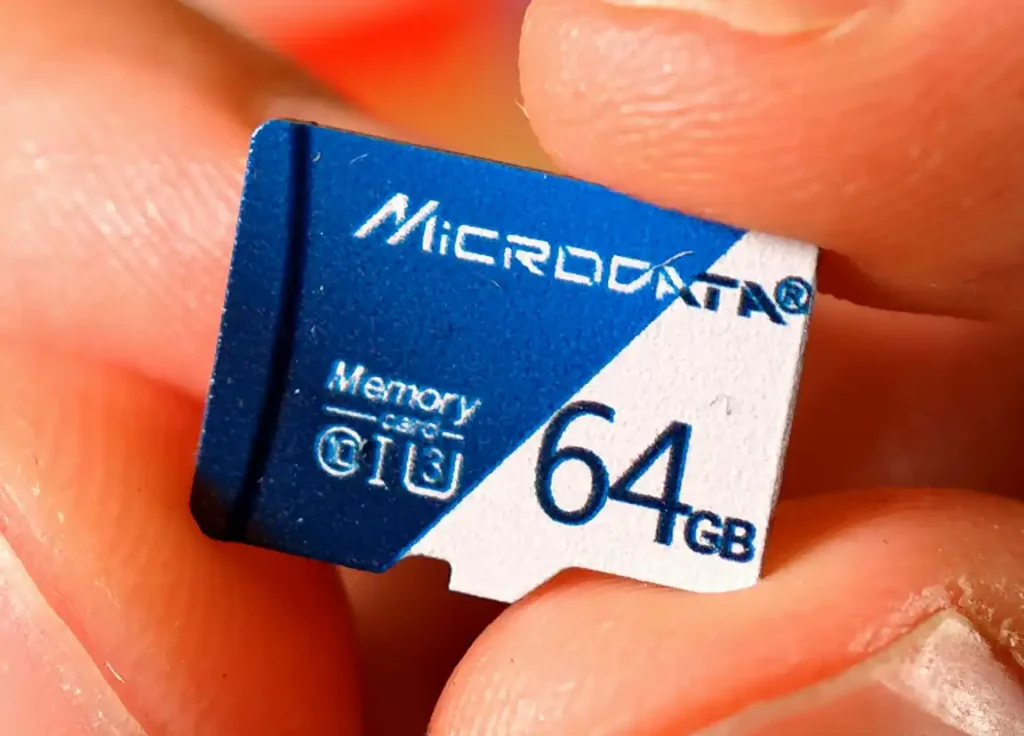
Despite the different front print, its matching back code and near-identical benchmark behavior make it difficult to separate this Microdata sample from the Microdrive in any meaningful hardware sense.

This was the only card supplied as exFAT rather than FAT32 and it showed the largest Windows volume of the four.
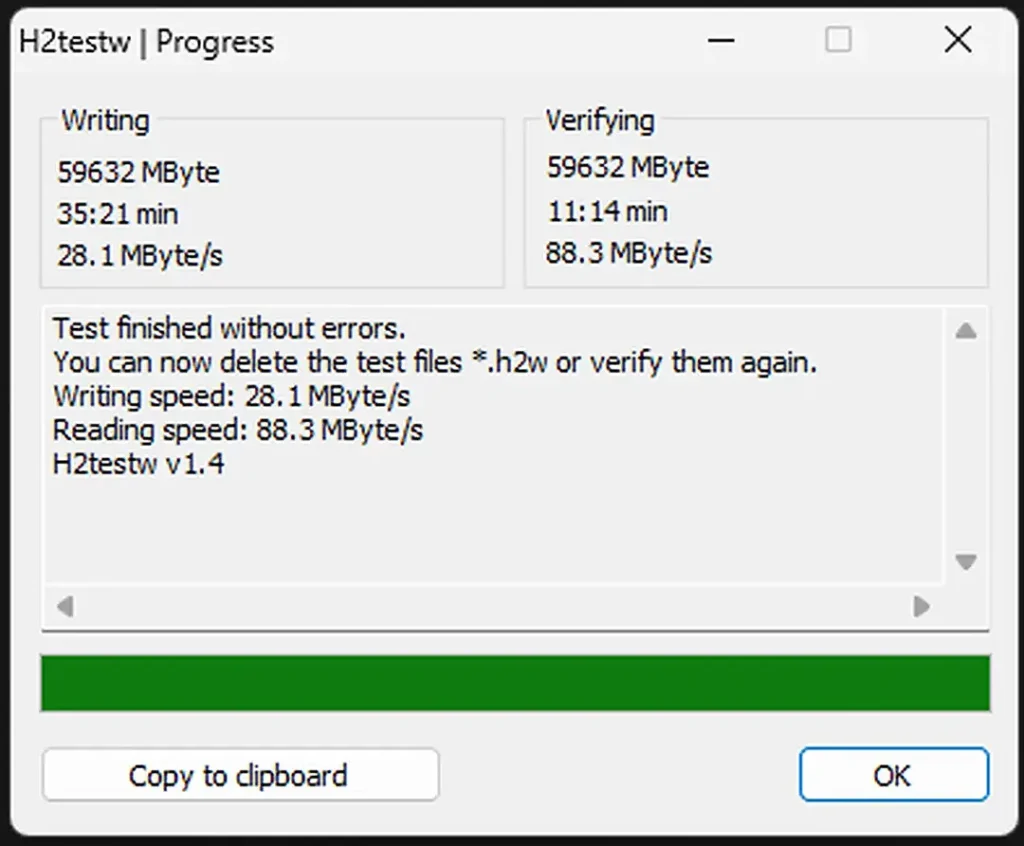
Capacity was genuine within the addressable space and H2testw reported no errors. The important catch is the 28.1MB/s full-card write average: it fell just below the 30MB/s threshold represented by U3 and V30, so this sample did not validate those package claims in my test conditions.
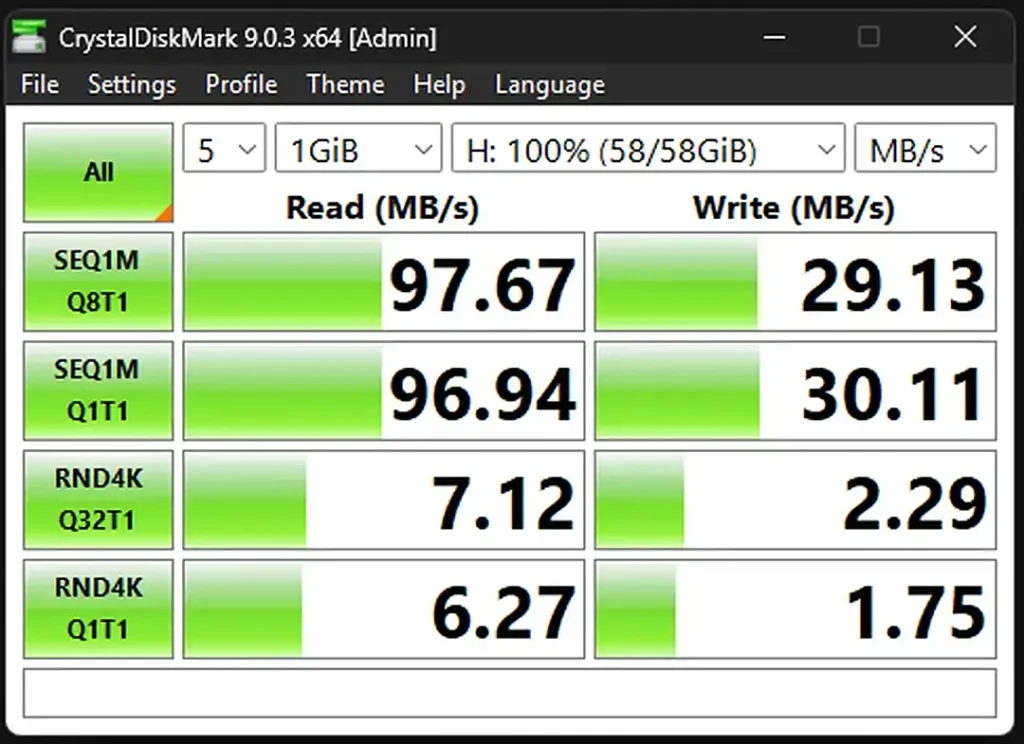
The short CrystalDiskMark run brought sequential writing just above 30MB/s, but one row still measured 29.13MB/s. Its 4K Q1T1 result was again effectively the same as the Microdrive’s. I would treat this as a roughly 28-30MB/s card, not as a dependable V30 choice.
4. Jaster 64GB
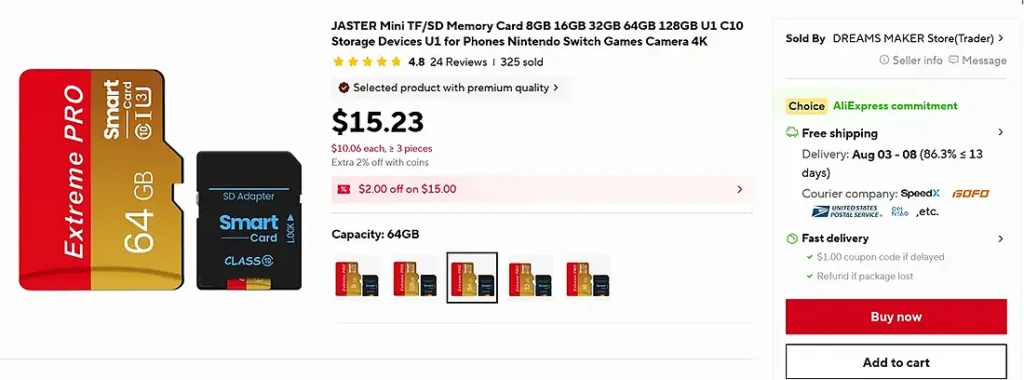
See the exact Jaster 64GB listing on AliExpress. The captured page showed a price of $15.23, or $10.06 each when buying at least three.
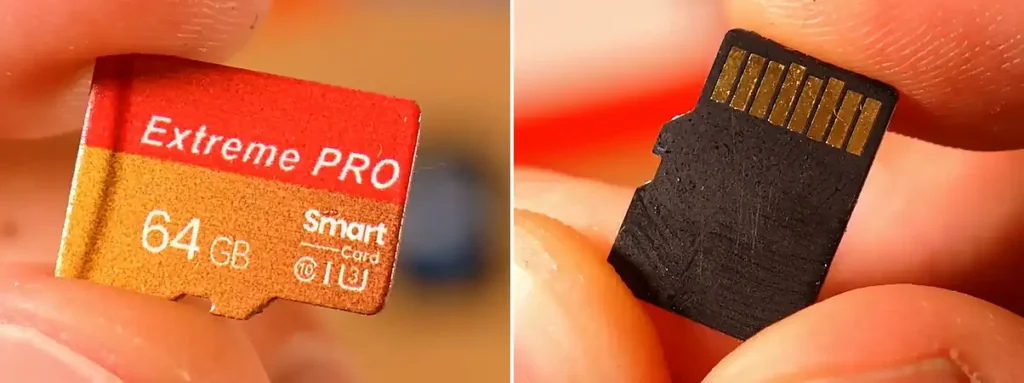
Unlike the other three samples, the Jaster has a completely blank back. That leaves no batch, production or manufacturer code to investigate.
Its included SD adapter also had the “LOCK” label and arrow printed on the opposite side from the actual write-protect slider. The adapter still worked; the marking was simply wrong.

The Windows capacity matched the Taimi and Microdrive samples and was again slightly below the usual figure for a full 64GB card.
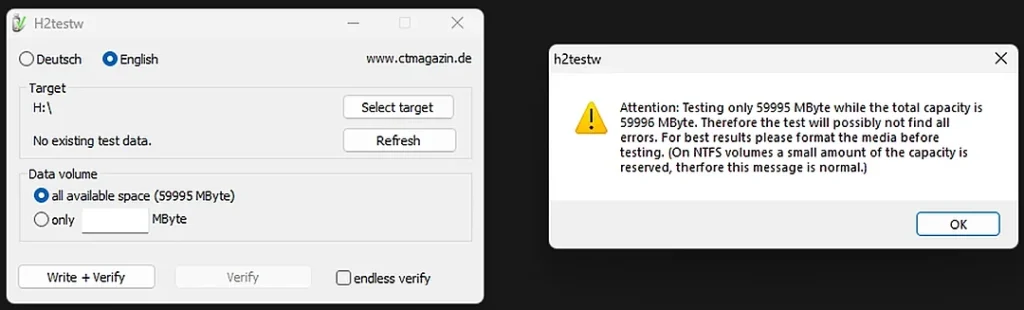
That left just 1MB outside the test files. It is worth disclosing, but not enough to change the result: virtually the entire available space was still written and verified.
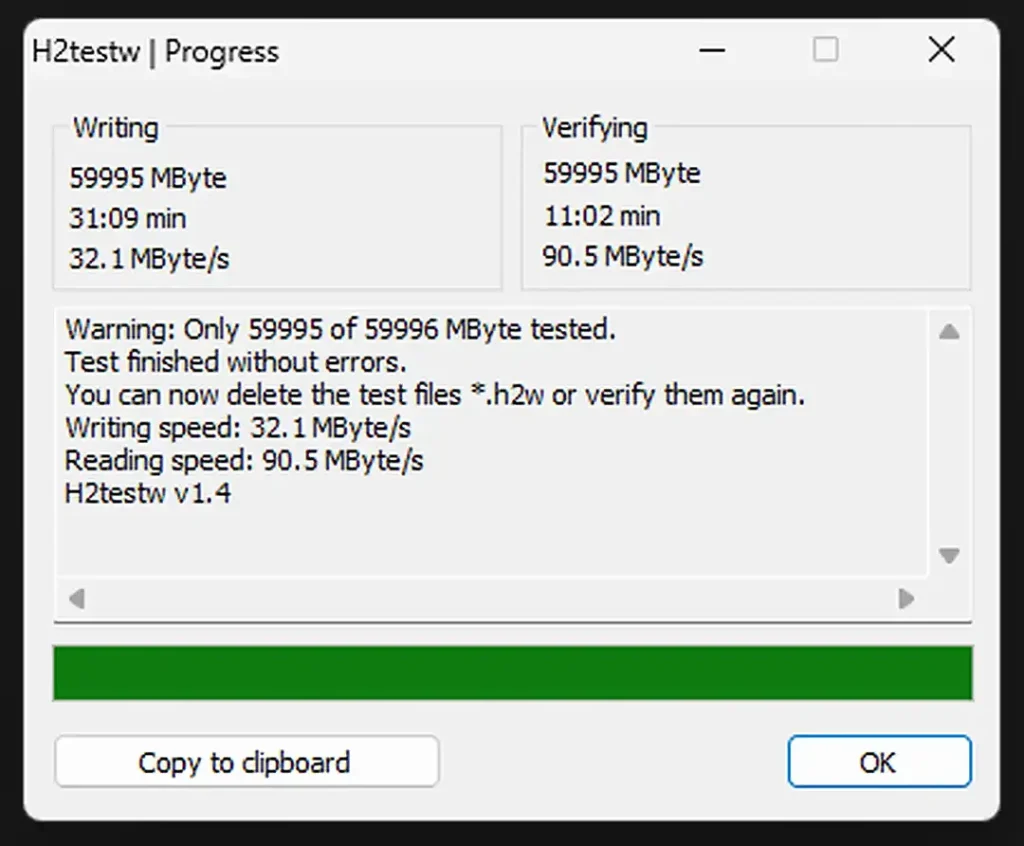
Jaster achieved the fastest H2testw read result and the second-fastest full-card write result. There was no sign of a programmed fake capacity within the tested space.
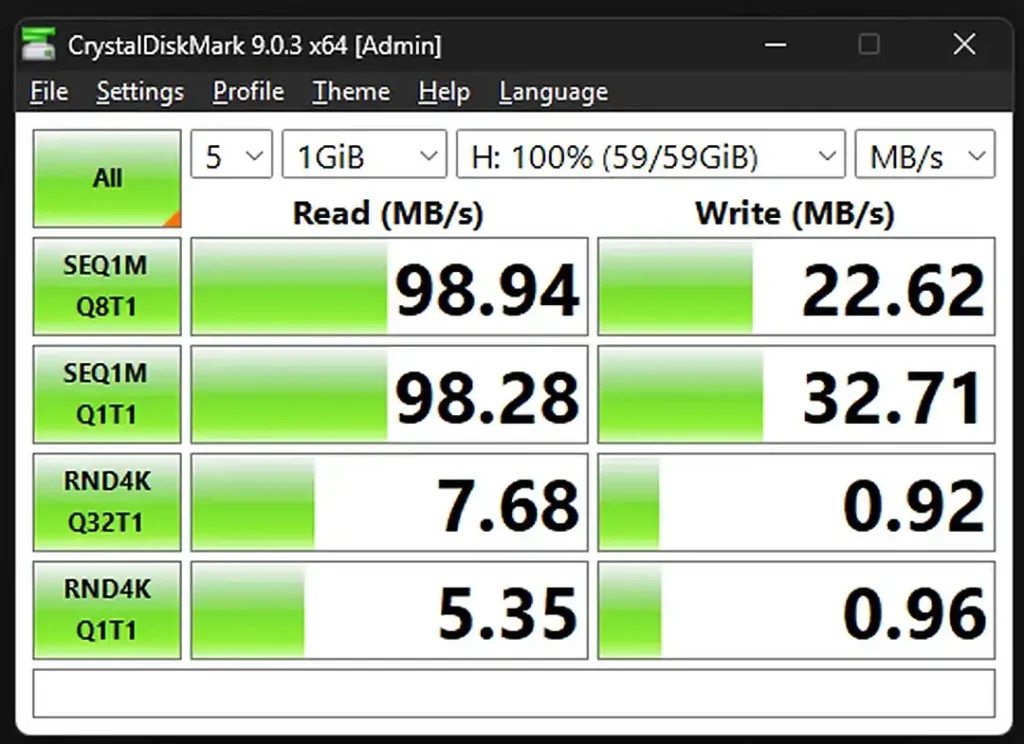
Sequential performance was good enough for the stated C10 and U1 ratings. Random writing was the weak point: 0.96MB/s was the lowest result in the group by a large margin, making this my last choice of the four for an operating-system card or application storage.
So, Is It Worth It To Get MicroSD Cards From AliExpress?
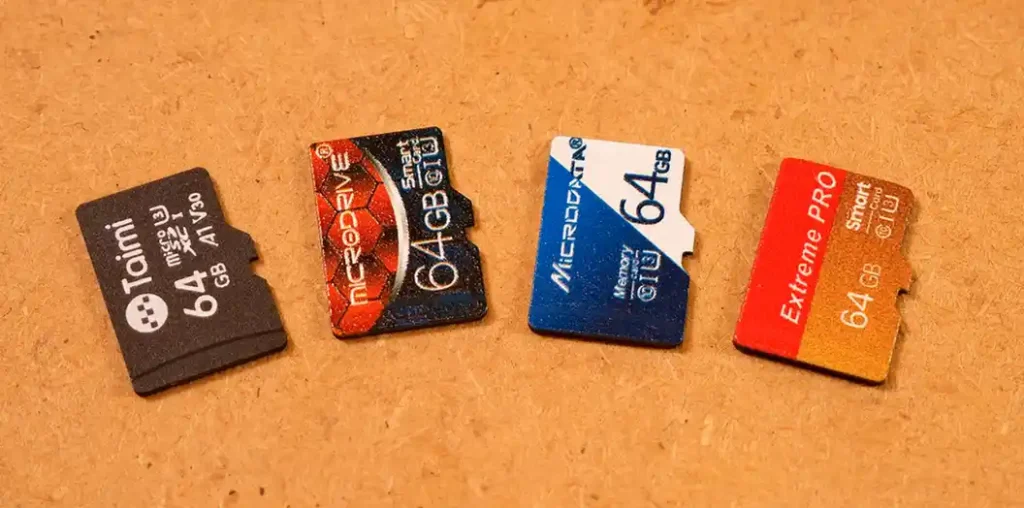
The conclusion of this small experiment with a tiny sample size of just four hand-picked microSD is that you can absolutely find usable cards coming from less-than-well-known sources.
Taimi is the easy winner in this batch. It was the fastest writer, had the best random-write result, met the important speed claims in my tests and was the only brand here for which I found a clear storage-manufacturer website. Microdrive is my second choice if it is meaningfully cheaper. Microdata performed almost identically, but its full-card write average did not support the U3/V30 markings. Jaster had respectable sequential speed but very weak random writing.
Of course, there is no easy way to tell how long will these cards last when heavily used. This is always going to be kind of a lottery when it comes to some more obscure brands and manufacturers. Still, if you’re just looking for a cheaper alternative for a store-bought card and you can wait for a while for your package to arrive from China, I would say that these are reasonably good for what they are. I would use them for replaceable data with a backup, not as the only copy of photos, saves or other important files.
Here is my word of advice on how to minimize your chances of getting scammed:
- Don’t fall for unrealistic pricing – if a microSD you’re planning to buy is sold with a price substantially lower than the market price of a brand new card of the same capacity, it can often point to non-genuine offers.
- Always check the genuine user reviews – many times over offers promoting fraudulent products feature comments showcasing capacity measurement results from tools such as H2TestW showing that the card is sold and marketed with a capacity larger than it actually has. This happens more often than you’d think, especially over on AliExpress. Watch for these types of comments as well as low product ratings with attached proof, it can be really helpful. Mind that fake-positive reviews also exist out there – in my experience for instance in the form of repeated positive result screengrabs from H2TestW with similar review messages.
- Test the whole card before trusting it – seeing the advertised capacity in Windows is not proof. Run a complete write-and-verify test with H2testw or an equivalent tool before moving important data onto a new card.
While you essentially can’t prevent the seller from sending you an item that’s inconsistent with what was advertised in the product listing, using these tips you can at least make sure that you’re not falling right into an obvious price trap alongside many less experienced buyers.
Cards from stores with consistent branding like this one (Taimi) can in general also be more believable sources of legitimate hardware, although once again, sadly nothing stops a seller from opening a store with the name of a brand that already exists on the platform. That’s pretty much it!
You might also like: R36H Teardown & Battery Replacement Guide (With Photos)