

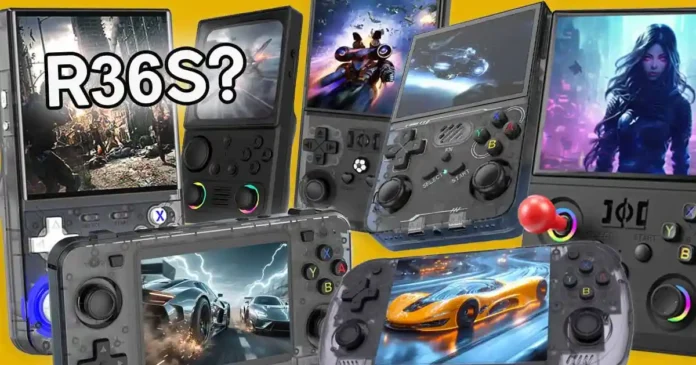
The R36S handheld family as of now includes a large number of more and less useful clone devices. Here you can find the most direct and clear comparison of all of the most popular “R36S-likes” you can find online. Use this resource, alongside the supplied board images to your advantage.
Make sure you read the individual console sections below carefully. I’ve noticed that many quick summaries you can find all over the internet (including AI-generated summaries) tend to mix up a lot of info about these devices, and the fact that they all look very similar doesn’t help when you’re doing your initial research. This guide is an attempt to set some of the misconceptions straight.
You might also like: R36S Full Setup Guide: Clone Check, dArkOSRE, SD Cards & Charging
This web portal is reader-supported, and is a part of the AliExpress Partner Program, Amazon Services LLC Associates Program and the eBay Partner Network. When you buy using links on our site, we may earn an affiliate commission!
Quick Comparison of the Most Popular R36S-Based Devices
| Specification |
|---|
TL;DR: The R36Plus and the R36XX, as well as the R36H alongside the R36H ProMax can be considered the devices closest to the original R36S, with reasonable hardware upgrades. The other handhelds listed here are either functional EmuELEC clones, or other clone devices that are based on the same RK3326 chipset as the original, and offer similar performance and user experience to the R36S, with a few caveats each described further below.
If you’re here because you’re simply comparing the handhelds, keep one thing in mind from the start: none of these are performance upgrades in comparison to the base model, as all of the devices listed are based on the very same RK3326 chipset.
When choosing between these devices you’re choosing between screen shape, Wi-Fi, storage layout, ergonomics, and firmware support rather than any tangible difference in emulation power. In many cases, game performance on these devices will depend on the emulation settings and firmware at play, rather than any other hardware differences such as screen resolution.
Why Are There So Many Versions of the R36S Out There?
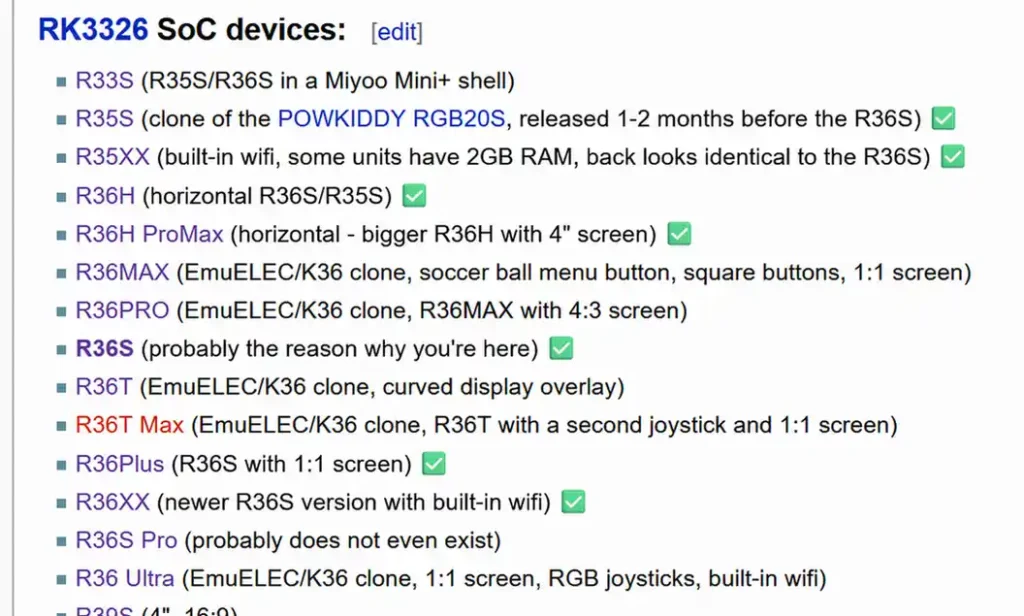
The clone wars have been on since not long after the first “original” R36S hit the market in 2023. It’s important to remember that what today is deemed the mainline R36S is actually a clone device itself, being an upgrade of the older but still reliable R35S, which is still a reasonably powerful Rockchip-based handheld for retro console emulation up to PS1 and some PSP/N64/Dreamcast games. What’s even more interesting is that the R35S itself is considered to be a clone of the older Powkiddy RGB20S.
Unlike established branded handhelds like the Miyoo Mini (produced and sold mainly by Miyoo themselves), or the Powkiddy V90S (and other Powkiddy products), the R36S isn’t a “single-brand” device, and is instead manufactured and sold by many unrelated resellers and outlets.
This causes an easy-to-understand issue with a lot of manufacturers wanting to jump on the R36S popularity bandwagon, and starting to create clones that are oftentimes much less capable than the R36S itself due to cost-cutting measures.
At the same time, though, some of the clone devices are still worth looking at, being based on the RK3326 chipset much like the R36S, and featuring some neat hardware upgrades over the base version of the handheld despite not being able to make use of the exact same custom firmware (CFW) in every case.
Other than that, there are also devices such as the R36Plus, R36XX, or the R36H that are considered to be a meaningful continuation of the main R36S design, featuring similar hardware and often much better software compatibility than the more random no-name lookalike clones.
Important note: As is common with Chinese-manufactured off-brand devices like these, although none of the named devices listed below are known to have the same kind of massive “fake of a fake” problem as the base R36S, slight deviations from the “official” specs can still happen, especially when ordering from less trusted sellers. Keep that in mind when making your purchase.
Throughout this article, for clarity, I will also refer to the “original”, non-clone R36S design as the “base” or “regular” model.
dArkOSRE, ArkOS4Clone & Software Compatibility
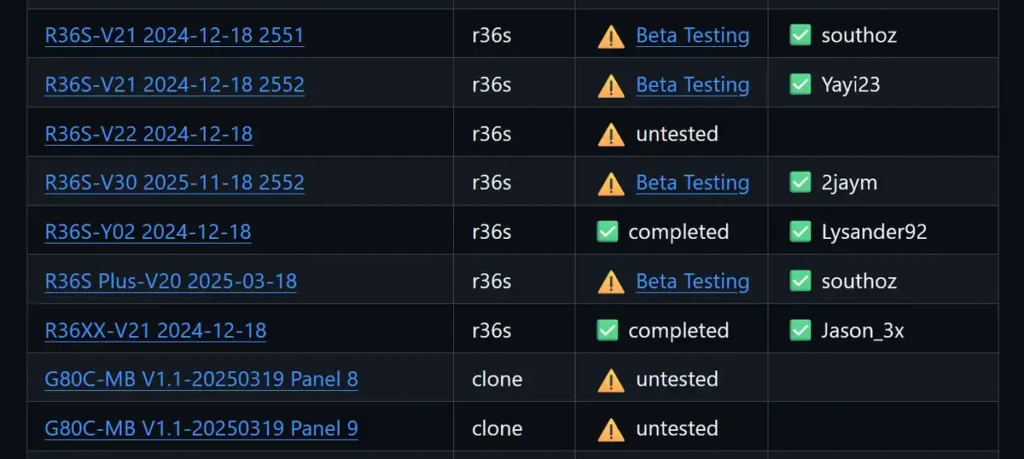
As we’ve already established, different devices from the “R36S family” can have different screens, different mainboards, different Wi-Fi chips, different boot files, and different stock firmware images while still being sold under very similar names.
For the regular R36S, dArkOSRE-R36 is now one of the main firmware options to know about, especially for people who don’t want to manually deal with every tiny clone-related fix available out there. This custom firmware supports a growing list of R36S boards and selected clones, and will work with many devices on this list.
For many of the clone-family devices, ArkOS4Clone is another major clone-focused option to know about. It is not the same as old, now legacy ArkOS for the R36S, and it exists specifically because these unofficial devices need their own DTB/config handling. Similarly, it has available support/configs for most devices mentioned in this article.
Other custom firmware options should be evaluated on a case-by-case basis, and some firmware options remain board and panel-specific. The bottom line is: check what firmware is available for your chosen device before purchasing your handheld.
List of the Most Popular “R36S-Likes”
This list focuses on the most notable R36S “inspired” devices that have become very popular over the past few months. The devices below are the ones that in my eyes are worth taking into account when thinking about getting an affordable RK3326 handheld or looking for an alternative to the original R36S. Some of these are better choices than others, but all of them are worth knowing about.
R36Plus (~R36S Plus)
- 4-inch 720×720 1:1 screen is great for GB, GBC, Pico-8 and vertical arcade games.
- Built-in Wi-Fi makes scraping, RetroAchievements and file transfers easier.
- Still retains the familiar RK3326 performance profile.
- One of the safer R36S upgrades if you get the correct model.
- No real emulation power gain over the base R36S.
- 3,000 mAh battery is smaller than the common R36S battery.
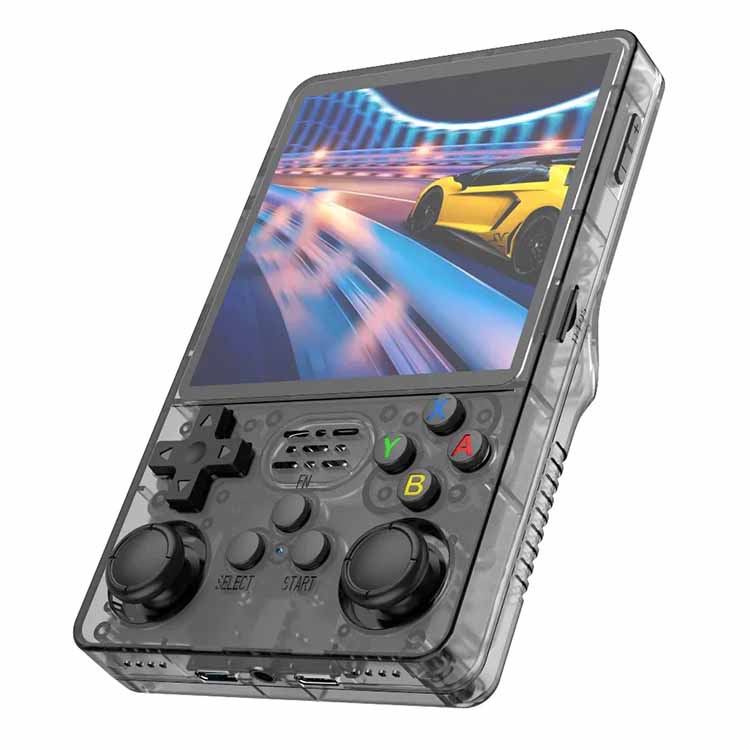
The console labeled as “R36Plus” and released in 2025 is much like all of the other handhelds on this list based on the same RK3326 chipset as the base R36S. This naturally means that it offers very similar, if not largely the same, performance. It’s also among the two most popular “R36S-likes” that are mentioned on the wiki as ones that are actually worth taking into consideration as an upgrade.
This device is essentially an R36S with a larger 1:1 720×720 display, a built-in Wi-Fi chip, and slightly worse battery life than the original. As of now, the “good” R36S Plus has little to no known widespread lookalike clones of its own, which is also a good thing. What do I mean by “good”? Here’s what I mean.
Aside from the “R36SPlus”, which is a generally known and recommended device, there also exists the “R36S Plus” which is a different device altogether, and what could fairly be considered a “naming scam”. It looks like this, and its Allwinner F1C200S chipset is significantly less powerful than the R36S-based models. In general, it is considered a throwaway device.
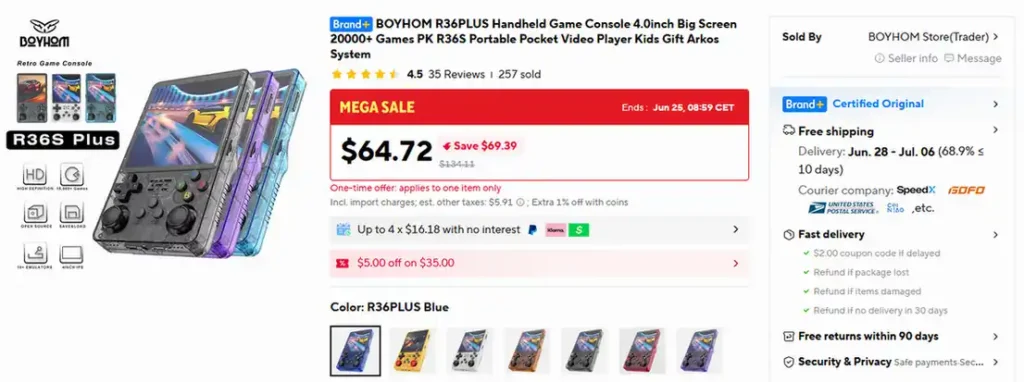
With that said, some stores out there still seem to refer to the “R36SPlus” simply as “R36S Plus”, meaning the correct upgrade of the base R36S. It might sound confusing, but just make sure you’re not picking up a device that looks different than the R36S Plus reference pictures. This way, if you’re getting your handheld from a trusted seller, you should be fine.
When it comes to compatible software, dArkOSRE-R36, which is now a standard when it comes to the R36S firmware, has been confirmed to work with the batch 2551 R36S Plus devices. Other batches should also work, albeit with some possible battery reporting inconsistencies. Knulli Linux also has an available release that runs on the handheld.
R36XX
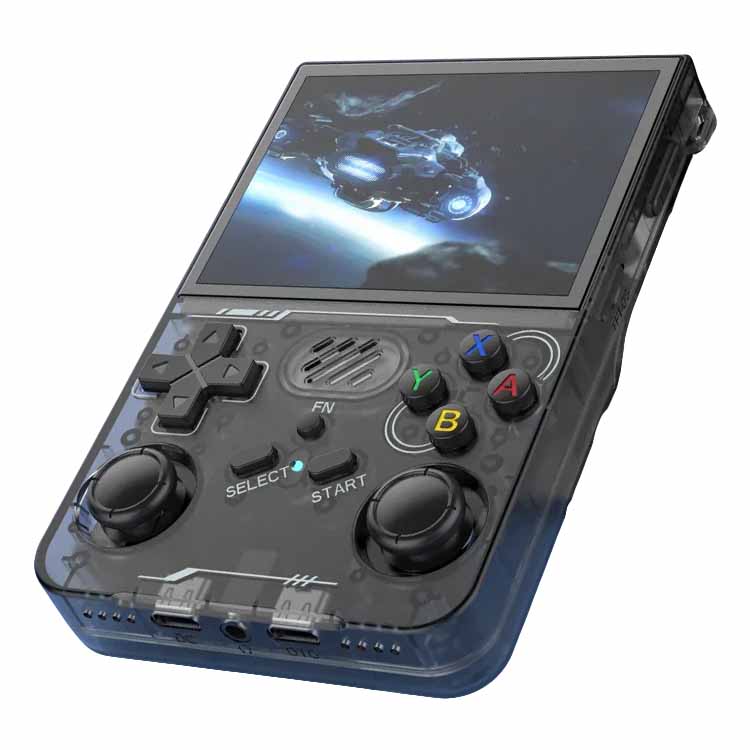
- Built-in Wi-Fi.
- 3.5-inch 640×480 4:3 display known from the original.
- Better rear/trigger ergonomics than the earliest R36S shells.
- Battery capacity is usually lower than the larger R36S batteries.
The R36XX is another R36S-style model that has been recommended on the wiki since its release around 2025. It’s a model that should be based on the original board, with bonus built-in Wi-Fi. More specifically, it’s a Panel 4 device based on the original V21 PCB. The R36XX is essentially another alternative to the R36S Plus, with different buttons, a different faceplate design, and improved ergonomics.
This one does not feature extended back grips like the next contender does, but it does come with a slightly different back design, providing, among other things, more convenient angled shoulder buttons.
Some user-reported units appear to feature 2 GB RAM on board, that is twice as much as the regular R36S. This, however, in the context of the RK3326 chipset makes little to no difference in most regular use cases.
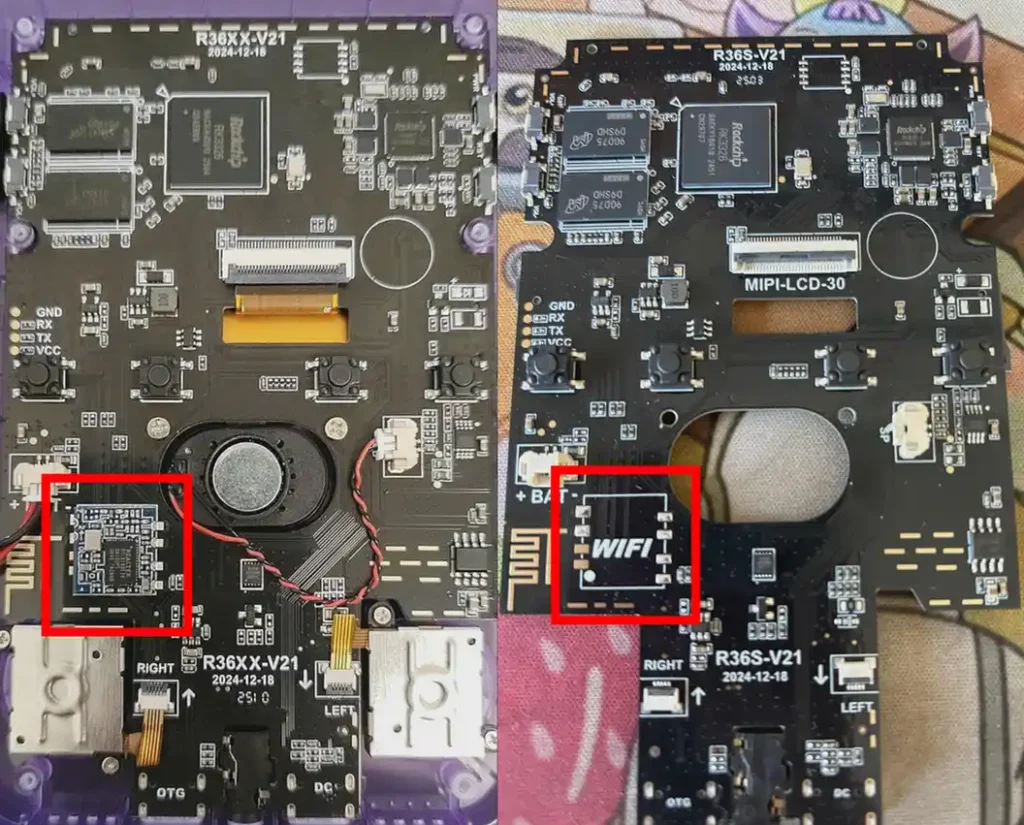
It also has very good custom firmware support. The R36XX is compatible with arkos4clone, as well as a few other CFW options like MinUI or AndR36oid (LineageOS), much like the original. As the handheld makes use of the Panel 4, it’s also compatible with dArkOSRE-R36 out of the box.
Also, beware. There are some devices out there labeled very closely, “R36SX”. These are cheap GB350 clones/fakes that are nothing like either the original R36S, or the R36XX. If you get an R36SX instead of an R36XX, you’ll get no real custom firmware options, and noticeably worse performance, as these make use of much weaker HCSEMI E3100-class chipsets with only 256MB of RAM on board.
R36SMAX (R36S Max)
- 4-inch 720×720 1:1 screen.
- Large 4000 mAh battery.
- Supported by clone-focused firmware projects and dArkOSRE.
- Less pocket-friendly than the regular R36S.
- “Football” styling might not be for everyone.
This is a device released back in 2024, described by TechDweeb as “the most popular retro handheld on Amazon” in his rather detailed video on the console which I very much enjoyed. Simultaneously, it’s the first proper “clone” device on our list.
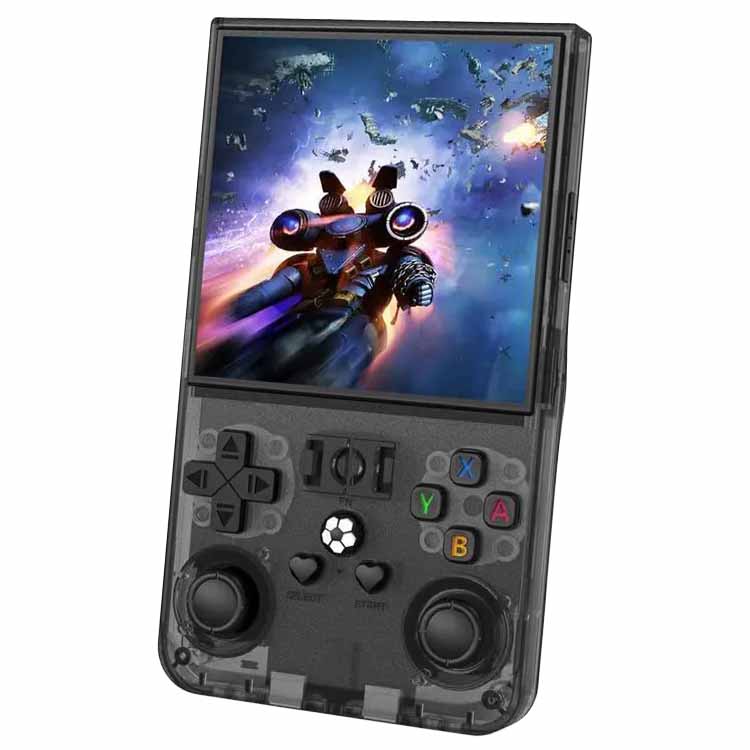
Aside from having a large 4.0-inch 1:1 720×720 display just like the R36S Plus, the R36SMAX also features two protruding grips on the back, making it much less pocket-friendly than the original and the Plus.
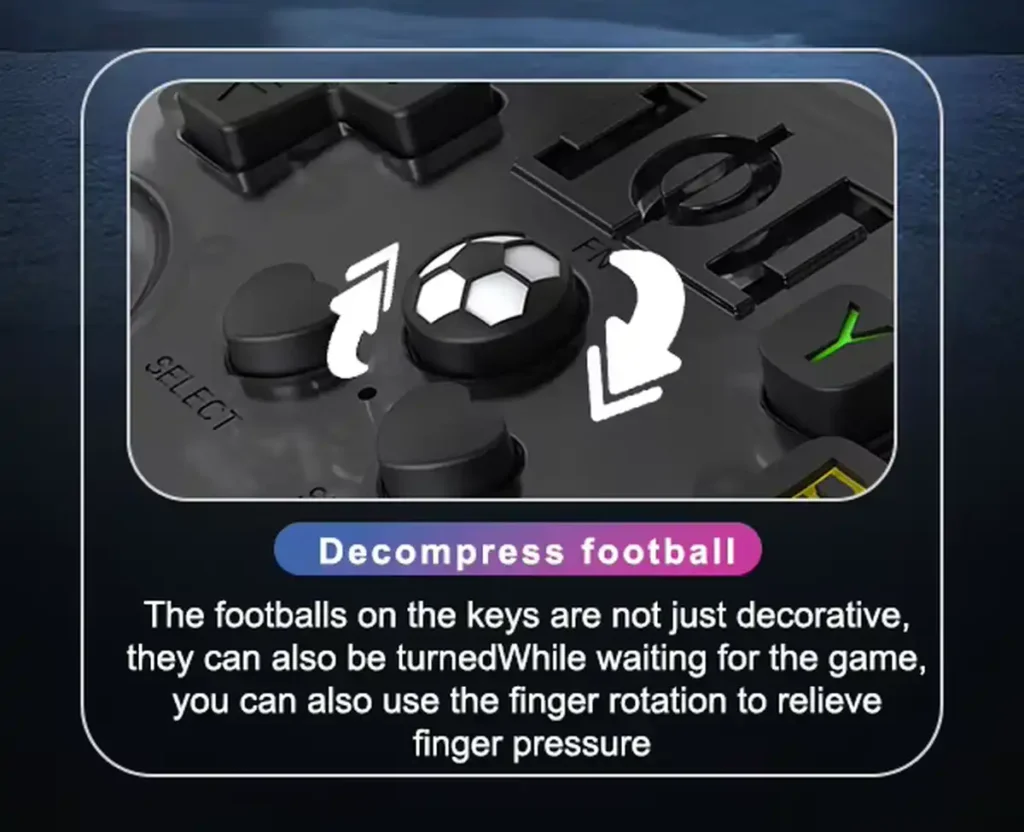
Another important difference when it comes to the visual aspect of the handheld is the rather weird “football” styling of the case.
The function button is a football that spins around and is marketed kind of like a fidget toy to use when you’re waiting for your games to load, and there is a cutout in the middle of the front panel shaped like a football field. Although it might look a bit like a speaker grille, the actual speakers are positioned on the bottom of the device.
Also, the start and select buttons are heart-shaped, and the YXAB buttons are shaped like rounded squares. It’s funky, it’s goofy, it may be cute, I really don’t mind it but I know some of you might.
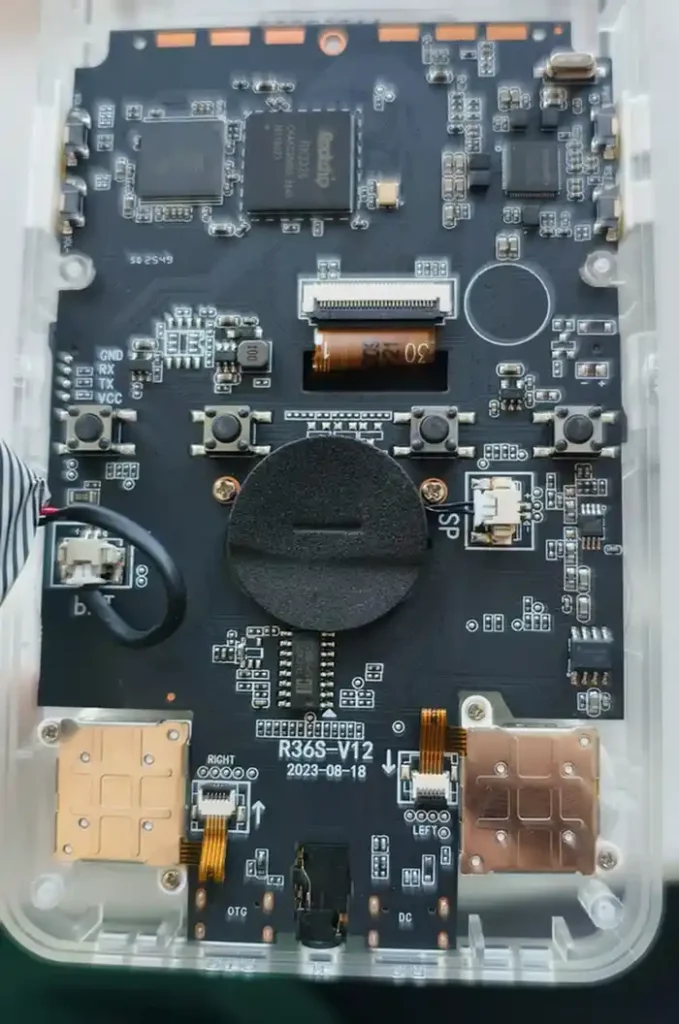
This device is an EmuELEC/K36 clone. This means that when it comes to the software it usually comes with EmuELEC installed out of the box, but it will also work with ArkOS4Clone, and the latest versions of dArkOSRE-R36.
R36SMAX is close to identical to the R36PRO, which has a very similar build and internals, just with a regular 4:3 display. This is why the PRO isn’t mentioned on this list as a separate device.
R36S Max 2
- Large 4.5-inch 1024×768 4:3 display.
- Internal eMMC plus dual microSD support.
- Built-in Wi-Fi.
- Very far from pocket-friendly.
- Rather awkward D-pad placement.
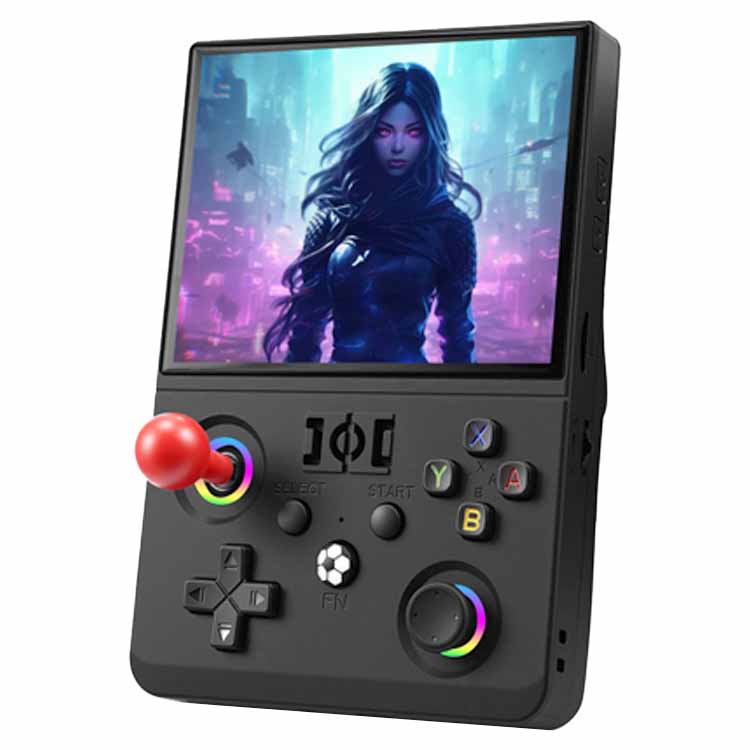
The R36SMAX 2 is another EmuELEC clone device that strays from the insides of the MAX while still retaining the “football-style” design, and mixing things up with an asymmetrical RGB backlit Xbox-style analog stick layout, with the D-pad pushed down to the bottom left of the handheld.
It also comes with red detachable joystick extensions which are supposed to resemble sticks on the classic arcade controllers. In addition, it’s missing the R36SMAX’s heart-shaped start/select buttons.
Most importantly, however, it features a 4:3 4.5-inch 1024×768 display, which is among the largest screens you can find on any R36S-style device. Because of the larger front panel and the massive kickstand-like bar on the back of the device paired with the very same grip you can find on the regular MAX, the whole device cannot really be considered pocket-friendly.
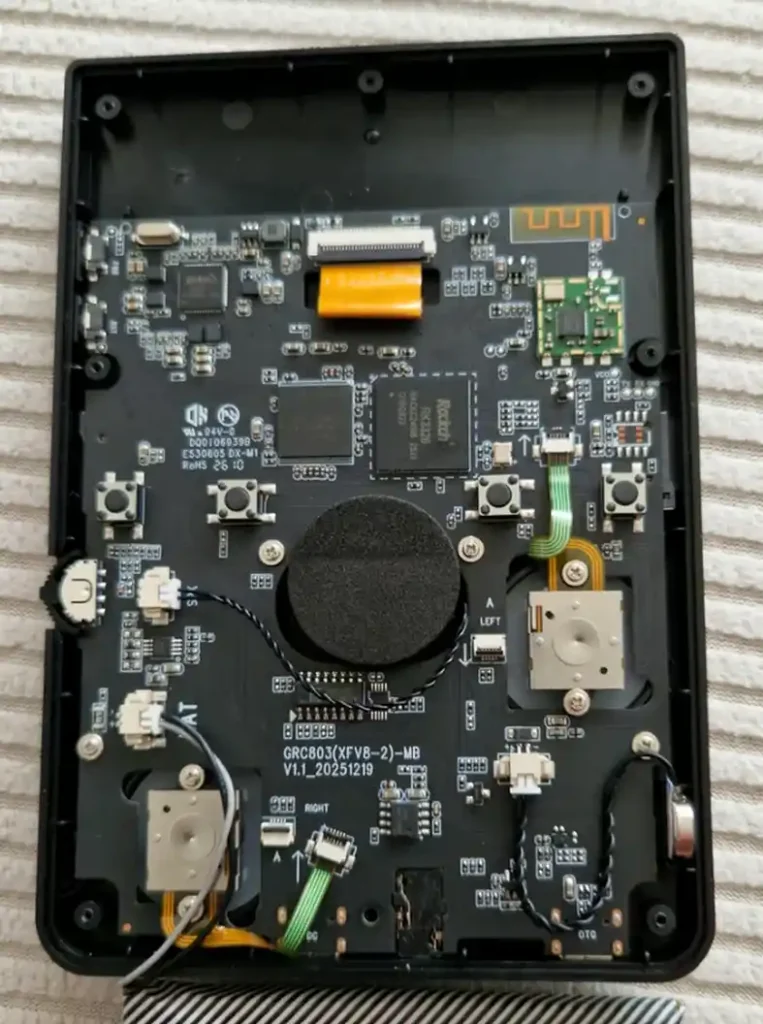
While it retains built-in Wi-Fi, curiously it also features internal eMMC memory, where the BOOT partition and the main operating system are stored out of the box. As it also has two microSD card slots just like the regular R36S, you can still use one card for the CFW, and the other dedicated exclusively to your game ROM library here.
Much like the “original” MAX, it works with ArkOS4Clone, and should also be able to be used with dArkOSRE-R36 which you can install to the microSD designated for the OS.
R36S Ultra
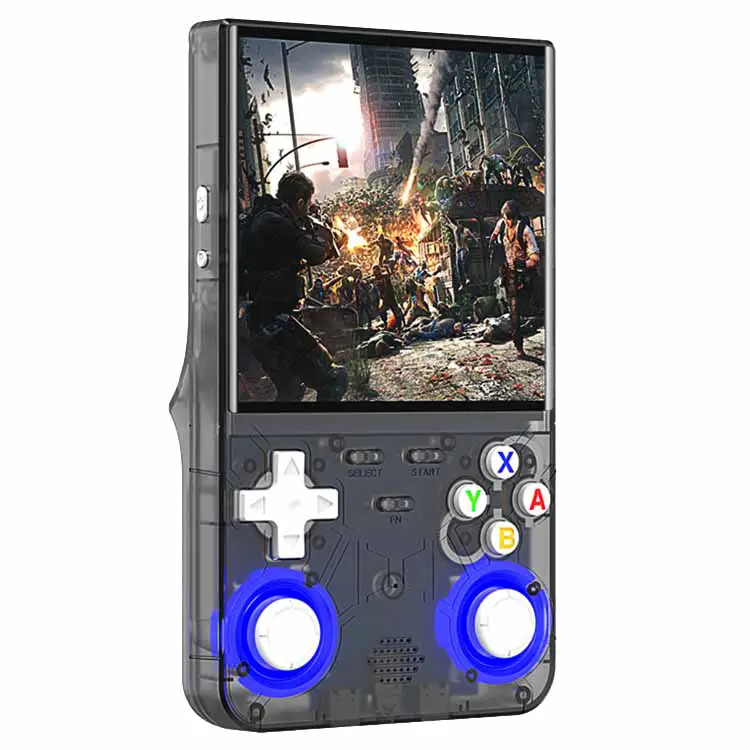
- 4-inch 720×720 1:1 display.
- Built-in Wi-Fi.
- Single microSD slot is less flexible than dual-slot devices.
Continuing on with yet another EmuELEC/K36 clone, it’s time for the R36S Ultra. It’s a device that came around in 2025, and is also considered a relatively reliable clone of the base R36S with a built-in Wi-Fi module, and a 720×720 1:1 4-inch display.
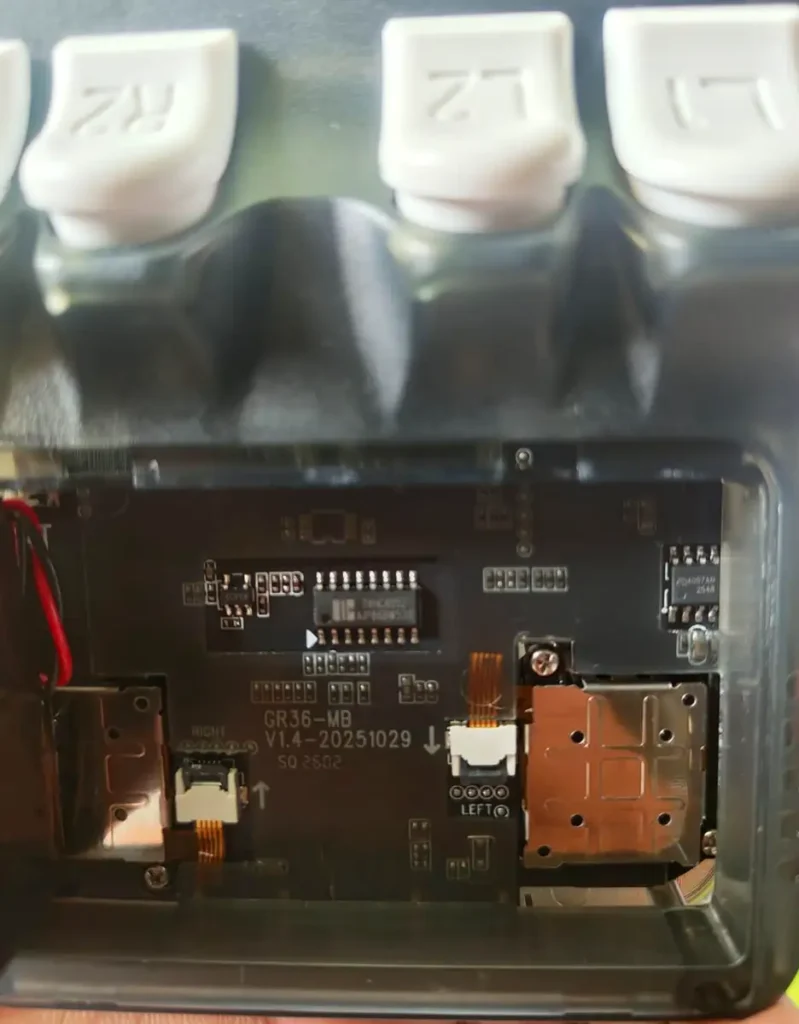
The small extras that it introduces are the RGB backlit joysticks, analog triggers, and another unique design of the outer casing. What’s different on the Ultra is that it features only one microSD card slot and a small internal eMMC chip, instead of making use of a standard dual-SD card setup. This locks you out from conveniently dividing your ROM library and OS files between two different cards.
EmuELEC is the stock experience here, while ArkOS4Clone and dArkOSRE-R36 both list R36 Ultra / GR36S-style board support in their current support notes or beta/tested device tables. For the curious, there also exists a fan-made experimental Ubuntu build for the device.
R36H
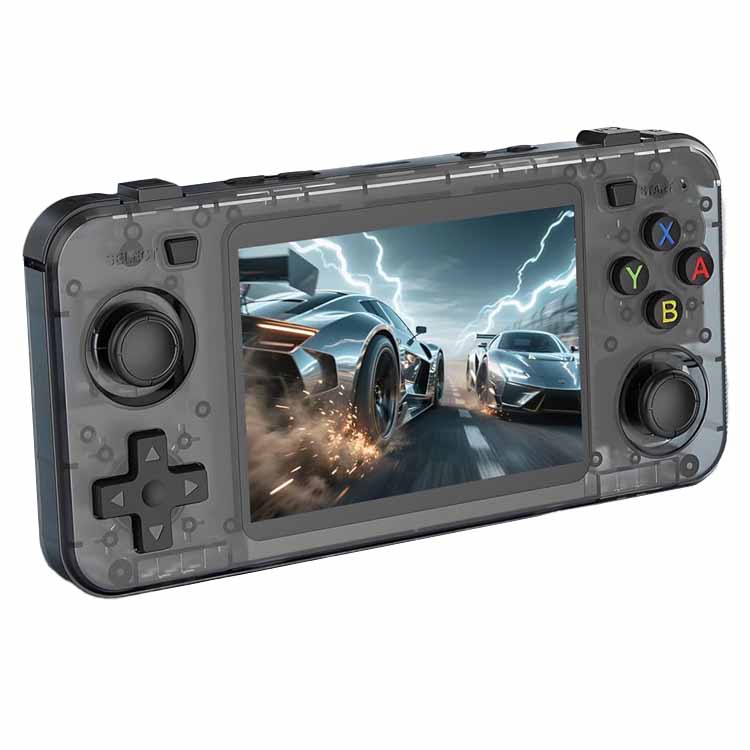
- Horizontal layout can be more comfortable for many action games.
- Same 3.5-inch 640×480 4:3 display class as the R36S.
- Good choice if you like the R36S but not its vertical shape.
- Wi-Fi is not guaranteed and batch-dependent.
- Inline shoulder buttons and lack of a dedicated function button can be annoying.
- R36H ProMax is the more interesting upgrade if you do not mind its size.
The R36H is a horizontal version of the R36S released back in 2024, with asymmetrical analog sticks and a smaller 3,000 mAh battery. It features a 3.5-inch 640×480 4:3 display much like the original R36S.
R36H makes use of the very same RK3326 chipset the original R36S does, but it differs from it a bit when it comes to available controls. The lack of a dedicated function button on the handheld and the inline shoulder button placement might be what can bother some people out there.
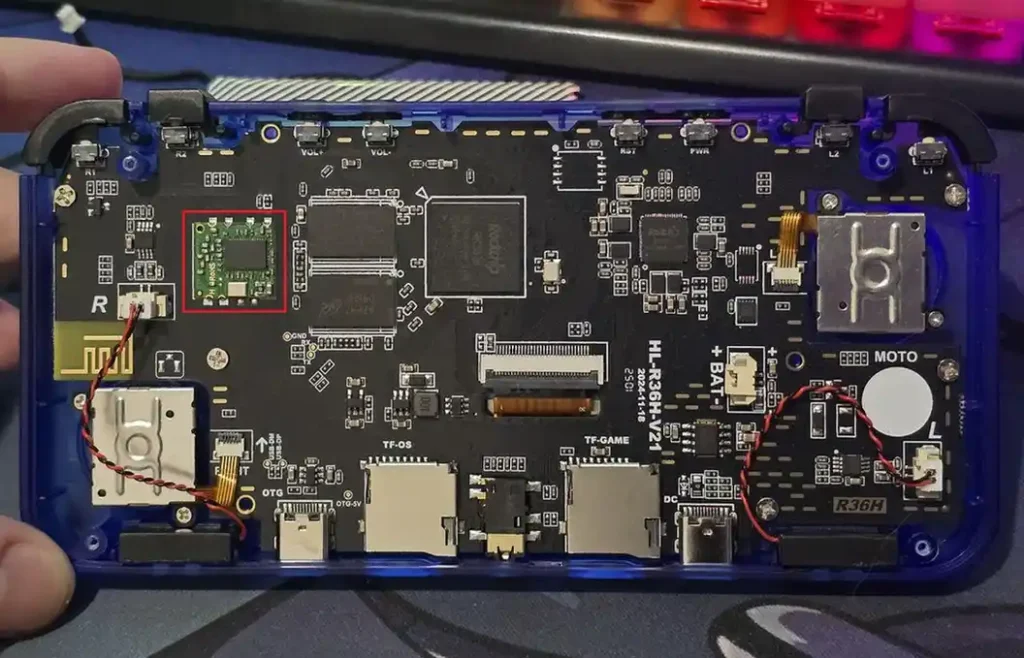
As you can see on the image above, some R36H models will come with a Realtek RTL8188ETV already soldered onto the mainboard and ready to go. This, however, is not the case with all R36H units out there.
You can check out my full review of the R36H here: R36H Hands-On Review – Is It Still Worth It?
If you feel like you prefer horizontal layout over the vertical one, I’d wager that getting the R36H might be a much better and safer pick than looking for an original non-clone R36S, as luckily there does not appear to be a widely documented clone problem for the base R36H model yet as of the time of writing this article.
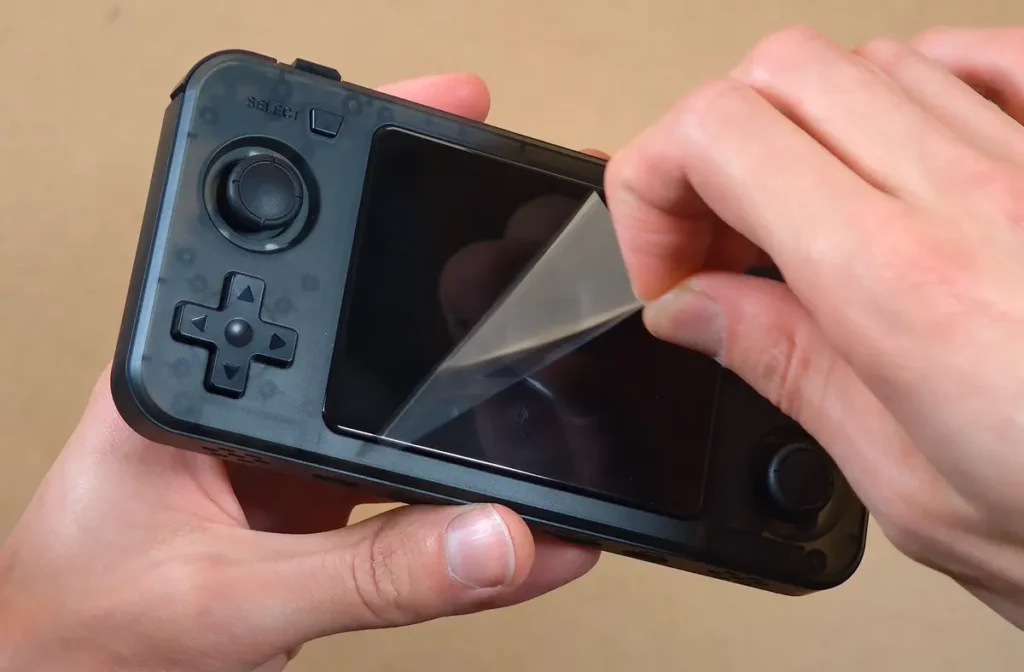
The R36H has a “regular” Display Panel 4 (V5) device just like the original R36S, so it’s supported by the latest versions of dArkOSRE-R36, ROCKNIX, as well as the software options meant for clones such as ArkOS4Clone or PAN4ELEC.
There is, however, one more interesting alternative to the R36H that you might want to be aware of, and that is, the R36H ProMax.
R36H ProMax (R45H)
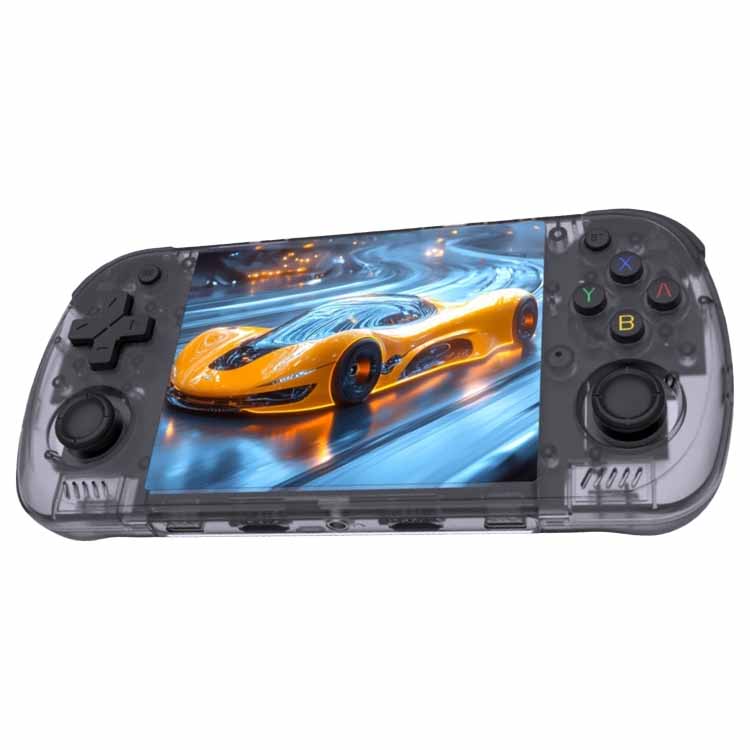
- 4.2-inch 1024×768 4:3 screen.
- Built-in Wi-Fi.
- Better grip and stacked shoulder buttons.
- Larger and less pocketable than the R36H.
The R36H ProMax is to the R36H exactly what the R36Plus and R36XX are to the original R36S. In simpler words, it’s the natural upgrade of the R36H, arriving roughly a year later.
As you might have noticed, the R36H ProMax is also known as the R45H, as is revealed by the marking on its mainboard (HL-R45H-V11). As per the usual naming craziness, you might also find it out there available under names such as R46H PRO and R36HPROMAX.
It comes with a large 4.2-inch 1024×768 4:3 display, a larger 3,500 mAh battery and a built-in Wi-Fi module. It’s also overall larger and much more ergonomic than the base R36H because of it featuring larger textured stacked shoulder buttons, and a convenient grip. Additionally, it does come with a dedicated function button out of the box.
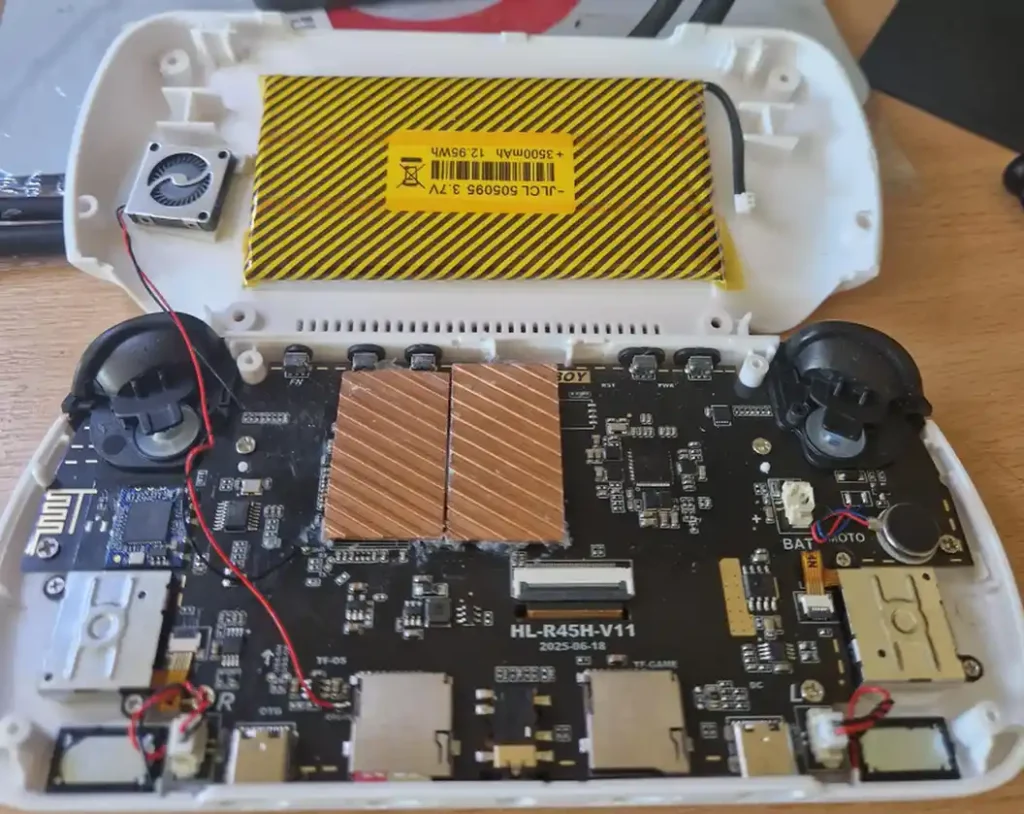
There is virtually no good reason to get a regular R36H over the ProMax if you don’t mind it being a little larger, a bit more expensive, and just a tad harder to come by. Another plus here is that for now, it does not appear to have a widely documented clone problem either.
When it comes to available firmware, ArkOS4Clone explicitly lists R36H ProMax / R45H support, and stock units are commonly sold with ArkOS-style Linux builds.
Other than that, it’s one of the most solid RK3326-based devices, and definitely one of my personal favorites. With that, let’s move on to the last device on our list, which is somewhat of an interesting one.
R36T MAX
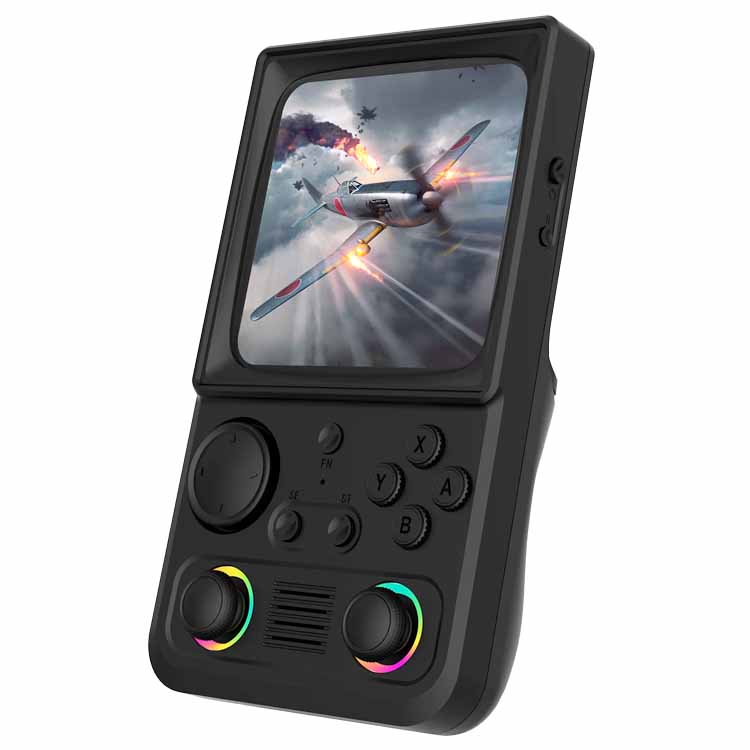
- One of the most unique R36-style designs out there.
- 4-inch 720×720 1:1 screen works nicely with the CRT-inspired theme.
- Built-in Wi-Fi.
- The round D-pad is suboptimal for many more dynamic games.
- Single microSD layout is less convenient than dual-slot R36S-style devices.
- The custom CRT-like curved display cover can sometimes… cover some of the display contents on the edges.
If you’re looking for something extra spicy, even more so than the MAX and MAX II, and something that can actually be some kind of a novelty in terms of R36S-inspired devices, there is also the R36T MAX.
It’s a successor to the R36T, which looks very similar, although it features only one analog stick. The circular D-pad, optional wood-like case finish, RGB backlit analog sticks and an absolute monstrosity of a curved CRT-like front panel finish make this one of the most unique devices here.
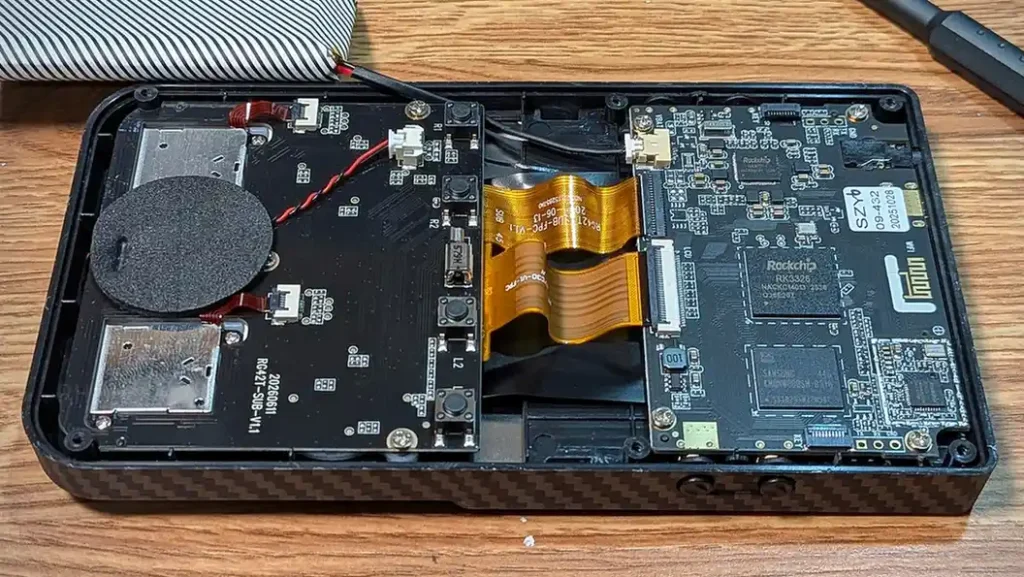
Is it convenient? Not really. But it certainly has its charm. With CRT scanline filters that you can rather easily configure in RetroArch, this can become quite an interesting device if you can look past its overall weirdness. All in all, I couldn’t help but mention it here.
When it comes to the specs and internals, it’s still very much an RK3326 clone-family device, and the same general clone OS compatibility notes apply here. ArkOS4Clone already lists an R36T MAX configuration, but its stock EmuELEC-based firmware is also perfectly serviceable.
Other Notable “R36S-likes”
The R36-style device list over on the Handhelds Wiki is much longer than the list above, and the ArkOS4Clone supported devices table is also a good way to see just how many RK3326 handhelds have entered the clone wars. I don’t think every one of them deserves its own full section here, but a few are worth mentioning.
- R36PRO – as already mentioned, very close to the R36SMAX idea, but with a more standard 4:3 screen. Worth knowing about if you like the MAX shell but dislike the 1:1 screen.
- R33S – essentially an R36S in a Miyoo Mini shell. If you were ever dreaming of the Miyoo Mini being just a little more powerful, this one might just interest you, although it’s pretty hard to come across these days.
- K36 / K36S – these are important mainly because many firmware discussions and clone lists often refer to K36-style boards. When you see an “EmuELEC/K36 Clone” mentioned anywhere, these are the devices that started it all, and can be useful to know about when exploring different custom firmware options for their clones.
If the device that interests you wasn’t covered here, you can always refer to the handhelds.wiki for more information. Remember, though: the less documentation a handheld has after being available for a while, the less likely it is to be truly worth your time.
What All This Means if You Just Want an R36S
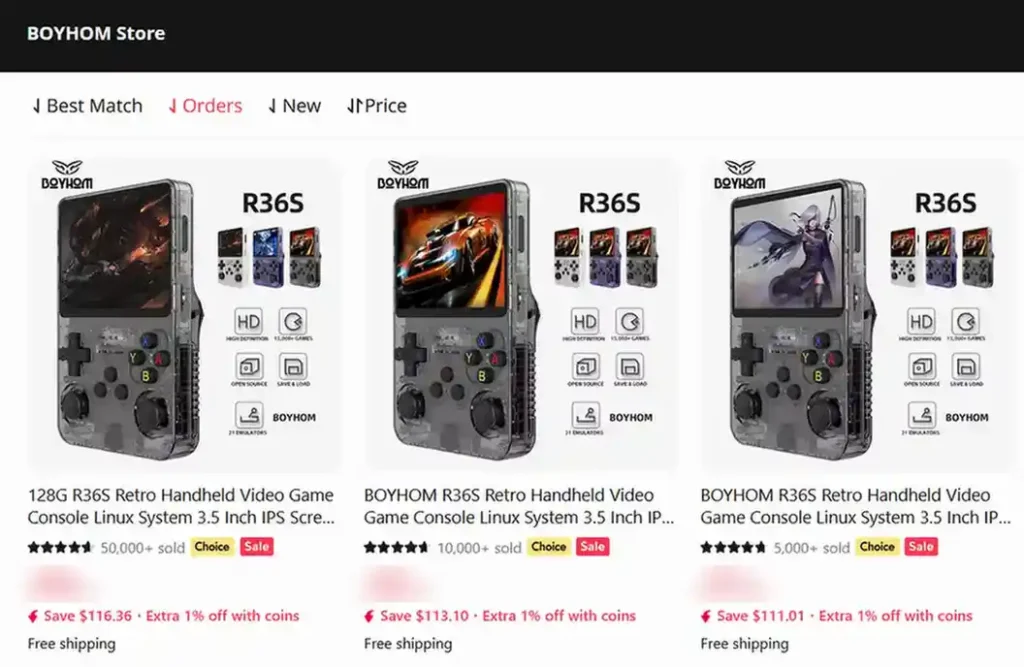
If you simply want “an R36S” because you watched a setup guide or read one of my R36S articles, then my advice is simple: either buy the regular R36S from a seller that the community currently trusts such as the BOYHOM store, or get one of the safer R36S-style upgrades that is easier to identify visually, like the R36Plus or R36XX.
If you want the most boring, guide-friendly route, get the base R36S and follow the R36S starter guide. If you want built-in Wi-Fi and the classic 4:3 screen, look at the R36XX, and do the exact same. If you want the 720×720 square-screen experience for Game Boy, Game Boy Color, Pico-8 and vertical arcade games, the R36Plus is the nicer pick to go with.
If you prefer horizontal handhelds, you can skip the whole “is this a real R36S” headache and look straight at the R36H or R36H ProMax.
In other words: your choice should really be based on the screen, layout, Wi-Fi, and firmware support. Remember that all devices based on the RK3326 chipset will have pretty much the same emulation performance with slight variations when it comes to emulator settings and the custom firmware used.
So, In Conclusion…
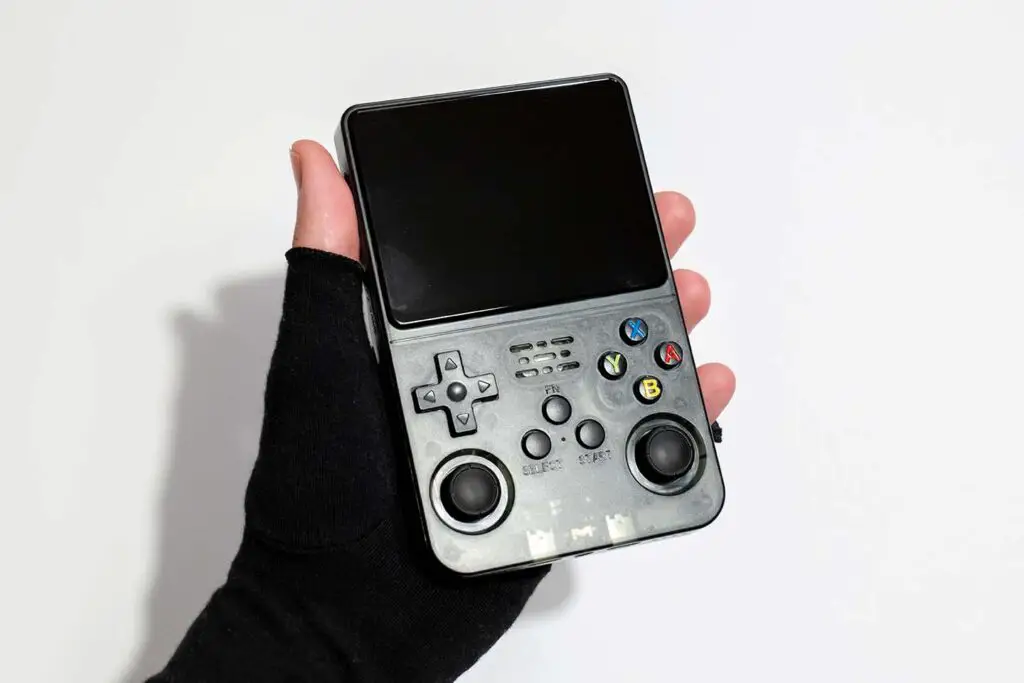
While neither the differently named clone devices nor the non-obvious lookalike clones are “bad” devices per se, all of them have their small quirks that you want to be aware of when attempting to purchase “an R36S” anywhere online.
With that said, my best advice for you is: first, keep track of the r/R36S community over on Reddit and the handhelds.wiki containing the identifiable clone list, and second, give my full R36S handheld starter guide a read – it contains a lot of useful info about the console that you can use to your advantage.
You might also like: Powkiddy V90S vs. Miyoo Mini Plus – Hands-On Comparison