

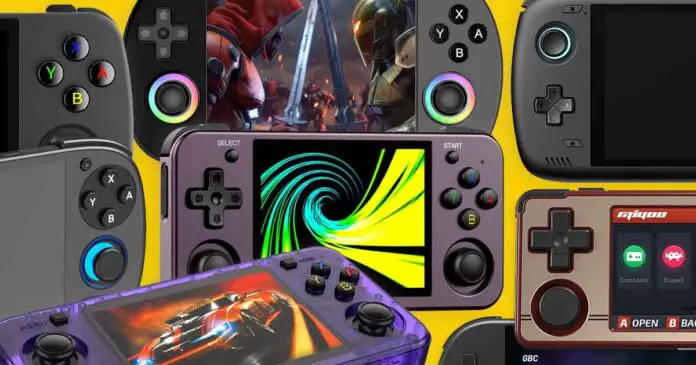
Having already covered the best emulator handhelds of the year, I thought it was time to give the newest popular horizontal handhelds the same kind of attention with this comprehensive buyer’s guide. Here’s a list of the best pocket emulators with 16:9, 4:3, 3:2, and even one interesting 1:1 display aspect ratio option that you should know about!
If you want to see my main list of the latest best performing retro handhelds, you can find it here: 13 Best Retro Handheld Emulator Consoles This Year – My Personal Picks!
Major updates:
– June 2026 – Added the AYN Odin 3, AYN Odin 2 Portal and Anbernic RG477M, refreshed the high-end Android recommendations and updated a few older performance notes.
– January 2026 – Updated with 3:2 handhelds and additional information.
This web portal is reader-supported, and is a part of the AliExpress Partner Program, Amazon Services LLC Associates Program and the eBay Partner Network. When you buy using links on our site, we may earn an affiliate commission!
Budget Considerations, and What To Expect
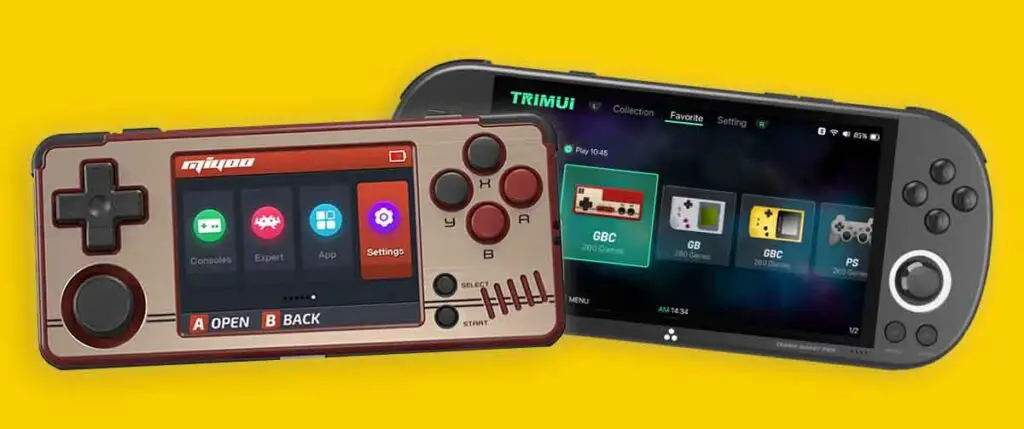
Retro handheld prices now generally span everything from sub $60 basic emulator consoles to pocket emulators way exceeding the $100 mark. In most cases, the difference in price comes with a noticeable difference in build quality and performance.
The more expensive devices tend to be able to emulate systems above the PS1/N64 era, which is the most common performance cutoff point for the more “budget” retro handhelds.
The less expensive pocket emulators will generally offer you nearly flawless performance when it comes to the 8-bit/16-bit console era, as well as great PS1 performance, but very little beyond that. While cheaper systems such as the Miyoo Mini A30 can play less graphically advanced PSP/N64/Dreamcast games with playable framerates, anything above that is the domain of the systems from the higher price point.
The most sophisticated Android-based devices can comfortably crack into GameCube, PS2, Wii, 3DS and selected Nintendo Switch territory, with plenty of room for upscaling in older systems. Just keep in mind that Switch, Wii U, PC and PS3-style emulation remains much more game-dependent and experimental than simple PS1 or PSP emulation.
Newer and more expensive handhelds such as the AYN Odin 3, the Retroid Pocket 6, or the AYN Odin 2 Portal are among the top contenders both when it comes to the range of systems they can emulate and their actual performance in newer console emulation.
The best rule of thumb here is to decide which games you want to play and then shop one tier higher so you’re not stuck tweaking your emulator software settings for hours on end.
Horizontal vs. Vertical “Game-Boy Style” Handhelds
Horizontal handhelds have a few commonly mentioned advantages over the classic Game Boy style vertical consoles. They grant you proper full-size shoulder buttons, wider hand grips (usually profiled), and more room for analog sticks, which is very important if you want to emulate any newer systems released after 2000.
Check out also: Buying a Used PS Vita for Homebrew – What You Need To Know
Vertical models often win on pure pocketability factor and nostalgic charm, but they can also be simply too small for some, especially so for people with larger hands. To answer that, some vertical devices, such as the Miyoo Mini which I have recently reviewed, come in two form factors – smaller (the Miyoo Mini), and larger (the Miyoo Mini Plus).
You can see a similar list but both for horizontal and vertical devices here: 13 Best Retro Handheld Emulator Consoles This Year – My Personal Picks
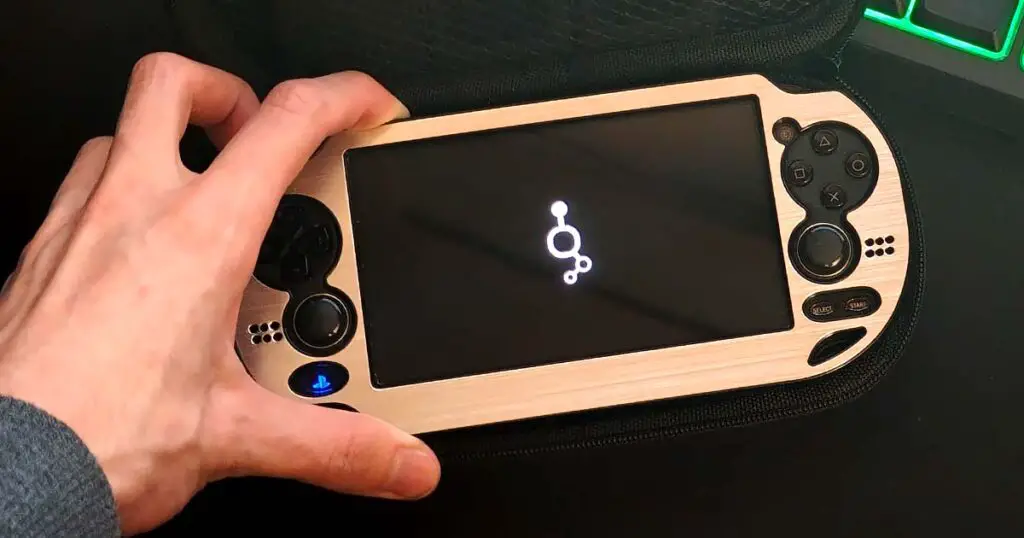
I wouldn’t be myself if I didn’t mention the fact that aside from the models on this list, a modded PS Vita is also a great option for horizontal retro gaming, especially if you care about running native PSP/PSV titles natively. In fact, it’s probably one of the best solutions when it comes to sheer build quality and general user experience for game emulation excluding the PS2/PS3/Xbox game titles.
Which Aspect Ratio Should You Choose?
Choosing the right aspect ratio for your new handheld is important. If you pick the wrong one for your favorite consoles, you can easily end up with large black bars on the sides of the display (pillarboxing) or top and bottom (letterboxing).
This naturally happens because of size mismatch between the digital game viewport area, and the physical size of the display on your handheld. While you can certainly stretch the image to fit, this will distort the image, and is usually one of the things most emulation fans try to avoid.
Here is a quick cheat sheet on which aspect ratio fits which retro systems:
- 4:3 Display (The “Classic” CRT Look): In most cases this is the “gold standard” for retro gaming. It is the native ratio for almost all home consoles including NES, SNES, Genesis/Mega Drive, PS1, N64, Dreamcast, and GameCube.
- 16:9 Display (“Widescreen”): Native for systems such as PSP, PS Vita, Nintendo Switch, or for streaming modern PC games. It is also great for newer retro emulators that support widescreen hacks, letting some older 3D games render more scenery on the sides.
- 3:2 Display (Game Boy Advance): This is a somewhat rarer ratio which is perfect for GBA scaling. It will give you black bars for both non-stretched 4:3 and 16:9 native titles.
- 1:1 Display (square screens): This is much more niche, but it can be surprisingly useful for Game Boy, vertical arcade titles and layouts where you want a lot of vertical room.
My advice: If you want an “all-in-one” device and plan on playing a lot of newer systems like the PS2 or Switch, go for a more powerful handheld with a 16:9 display. If you strictly want to relive the 8-bit through 128-bit home console era, stick to 4:3 or 3:2 to maximize your screen real estate.
Smartphone Emulation & Horizontal Detachable Controllers
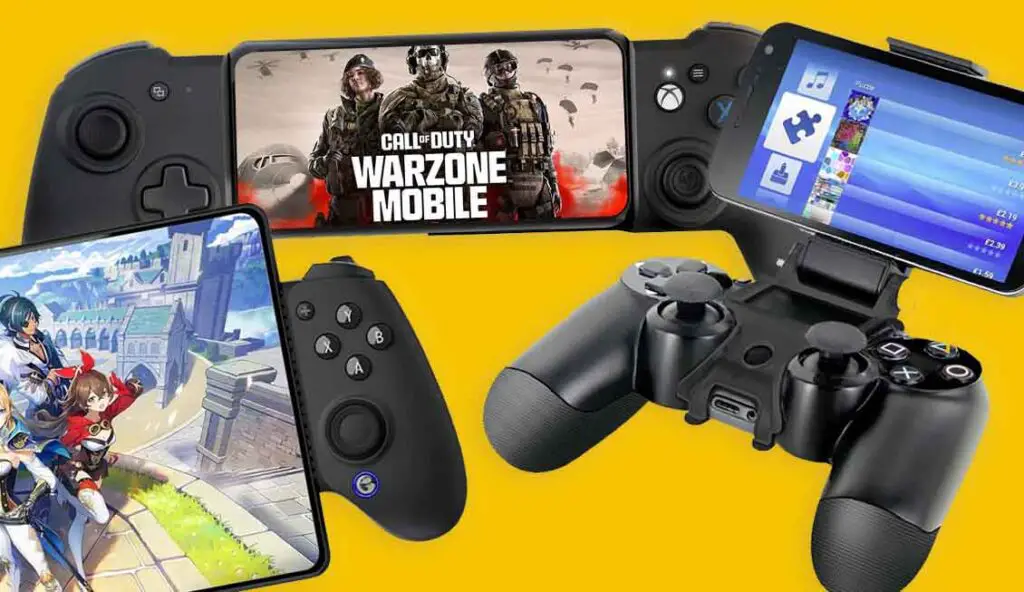
A modern high-end smartphone paired with a telescopic controller like one of these, can easily outperform most cheaper handhelds you can see below – provided you don’t mind not having a dedicated device for your retro gaming sessions, and some extra battery drain.
While pocket emulators can easily outperform any phone-attached wireless controller in terms of integrated controls, gamepad latency and single-purpose focus, I felt like mentioning this rather popular alternative to having a portable emulator handheld was important here.
You can see the best available models of such devices here: 14 Best Clip-On Controllers for Retro Mobile Gaming This Year (Android/iPhone)
With that out of the way, let’s get to our list!
15 Best Horizontal Retro Handhelds, 16:9, 4:3 and 3:2 Models – The List
16:9 Aspect Ratio
1. AYN Odin 3 (16:9)
- Qualcomm Dragonwing Q8 performance with much more headroom than older Snapdragon 865 handhelds.
- 6-inch 1080p 120Hz OLED display.
- Large 8000mAh battery and a comfortable horizontal shell.
- Great choice for PS2, GameCube, Wii, Android games, streaming and newer-system experiments.
- One of the more expensive handhelds here.
- Newer chipset support can take time to mature in some emulator setups.
- Not as small as cheaper pocket-first handhelds.
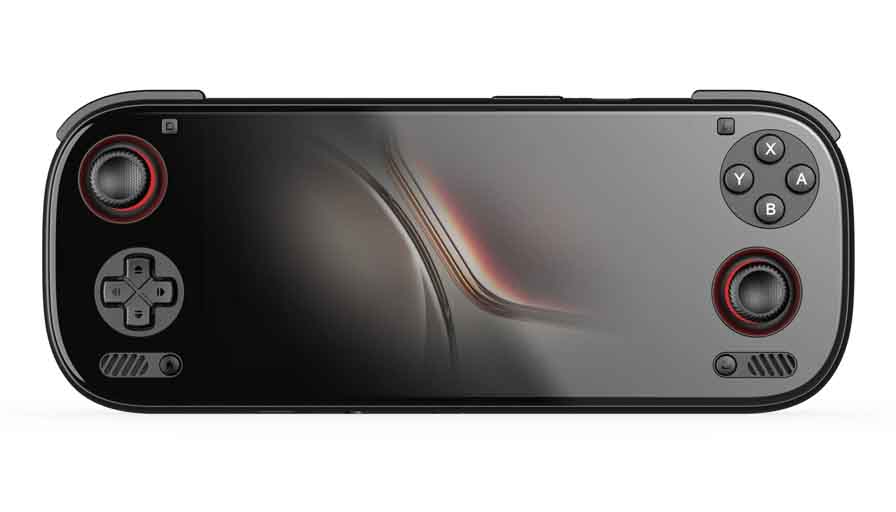
The AYN Odin 3 is the new high-end AYN model and the device that should now be mentioned first when talking about the strongest horizontal Android handhelds. It’s a significant upgrade from the Snapdragon 8 Gen 2 generation with the Qualcomm Dragonwing Q8 (based on Snapdragon 8 Elite), keeping the general Odin idea, which is a comfortable wide shell, a large battery, active cooling, and a screen made for longer sessions.
The 6-inch 1080p 120Hz OLED display makes it a natural fit for PSP, streaming, Android games, widescreen hacks, and newer systems that benefit from extra screen width. In pure performance terms, it is the new big step over the Odin 2 family and the Retroid Pocket 6, although the newer chipset also means that some emulator and driver support may need time to mature.
If you are shopping mainly for Game Boy, SNES, Genesis and PS1, this can be overkill. But if you want a premium horizontal Android handheld with lots of performance headroom for PS2, GameCube, Wii, 3DS, Android games and selected newer-system experiments, this is now one of the strongest options in this entire category.
2. Retroid Pocket 6 (16:9)

- Top-tier Snapdragon 8 Gen 2 performance – excellent for PS2, GameCube and Wii, with plenty of upscaling headroom.
- Large, quality 5.5-inch AMOLED display (1080p, 120Hz).
- Hall-effect analog sticks and analog triggers.
- Larger 6000mAh battery than the RP5.
- Wi-Fi 7, Bluetooth 5.3, and active cooling.
- Premium price point compared to most other handhelds on the list.
- Active cooling means at least some background fan noise under load.
- Still not the most pocket-friendly option due to its size.
The new Retroid Pocket 6 is essentially the RP5 formula pushed one step further. It keeps the same 5.5-inch AMOLED display size, but upgrades the panel to 1080p at 120Hz, bumps the battery up to 6000 mAh, and swaps in the Snapdragon 8 Gen 2. Add active cooling, analog L2/R2 triggers, hall-effect sticks, Wi-Fi 7 and Bluetooth 5.3, and you end up with a worthy successor for the RP5.
Performance-wise, this is right up there with the strongest 16:9 handhelds currently available. Everything up to PSP, Dreamcast, GameCube, Wii and PS2 is exactly where it should be here, with plenty of room for upscaling, and even some lighter Switch and PC titles are on the table if you do not mind the usual tweaking. It is not cheap, but if you want one of the current top picks in the horizontal handheld market, the RP6 is an easy recommendation.
3. AYN Odin 2 Portal (16:9)

- Snapdragon 8 Gen 2 performance with mature emulator support.
- Large 7-inch 1080p 120Hz AMOLED display.
- Huge 8000mAh battery.
- Very comfortable choice for longer PS2, GameCube, Wii and streaming sessions.
- Much larger than the Retroid Pocket 6 and many of the smaller handhelds here.
- Less pocketable than most budget devices on this list.
- Odin 3 now exists if you want the newer high-end AYN option.
The AYN Odin 2 Portal is the Odin 2 variant I would now point to first if you want the larger-screen AYN experience without jumping to the newer Odin 3. It keeps the Snapdragon 8 Gen 2 performance class, but pairs it with a bigger 7-inch 1080p 120Hz AMOLED display and a large 8000 mAh battery.
In practice, this is less about pocketability and more about comfort. It is a very strong choice for PSP, GameCube, PS2, Wii, Android games, streaming, and lighter Nintendo Switch titles where the large OLED panel makes a real difference. It also benefits from the more mature Snapdragon 8 Gen 2 ecosystem, which is one of the reasons I would not call it obsolete just because the Odin 3 exists.
4. Retroid Pocket 5 (16:9)
- Great performance for many PSP, GameCube and PS2 titles.
- Large, quality 5.5-inch OLED display (1080p).
- Hall-effect analog sticks and analog triggers.
- 3.5mm audio jack on board.
- Large 5000mAh battery.
- Not as compelling if priced too close to the RP6.
- Active cooling means at least some background fan noise.
- Still a fairly premium option compared to the cheaper handhelds on the list.
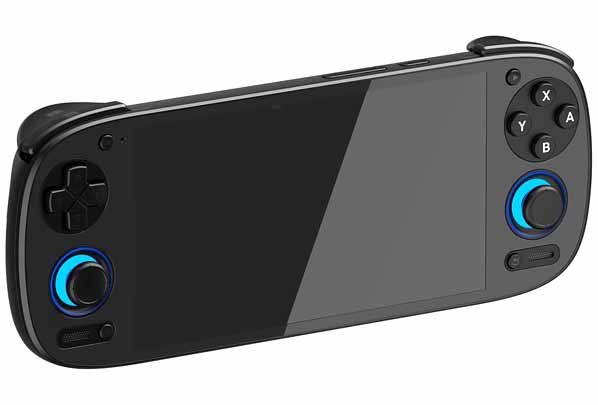
Retroid Pocket 5 features a 5.5-inch 1080p OLED display, hall-effect analog sticks, analog triggers, and a solid 5000 mAh battery, which alongside the Snapdragon 865 chipset which lies at its heart puts it in the premium territory of Android-based retro emulator handhelds. The size of the device is comparable to the Switch Lite, and the addition of grips on the back is a nice touch too.
When it comes to performance, as expected of a device in this price range you will be able to enjoy full-speed N64, Dreamcast, PSP and many GameCube/PS2 titles; only the heaviest PS2 games and Switch titles might need tweaks or simply be out of reach. All in all, this is still one of the better horizontal handhelds out there, especially if you can find it below the RP6 price.
5. Retroid Pocket 4 Pro (16:9)
- Runs PSP, Dreamcast, GameCube and many PS2 games very well for its size.
- Analog triggers and quality dual joysticks.
- High quality 4.7-inch 16:9 display.
- No OLED panel like on the RP5/RP6.
- Flat back design in comparison to the more comfortable grips on newer Retroid models.
- Only makes the most sense today if you find it discounted.
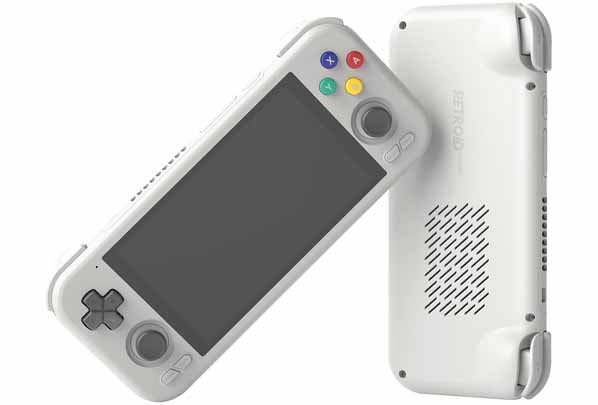
The Retroid Pocket 4 Pro preceded the release of the RP5. Compared to the RP5, it doesn’t have the convenient grips on the back, which can be an issue for some. Its 4.7-inch IPS display is also a treat, although it’s not really comparable to the OLED on the RP5 and RP6.
Running with the MediaTek Dimensity 1100 as its main chipset, it’s still one of the better performers in its size class. It handles everything up to late Dreamcast/PSP and a large slice of PS2/GameCube games at native speed, even being able to run some lighter Switch titles with varying degrees of success. As always, the more advanced 3D titles will require more patience and setting tweaks.
6. TRIMUI Smart Pro (16:9)
- Slim, modern design reminiscent of a PS Vita.
- Built-in Wi-Fi and Bluetooth.
- Large 5000mAh battery.
- Strong community support with options like CrossMix-OS and Tomato OS.
- A 720p display rather than a 1080p one.
- The A133 chipset performance is mostly limited to the PS1 era and below.
- The stock Linux-based OS is just okay – you may want community firmware for the best experience.
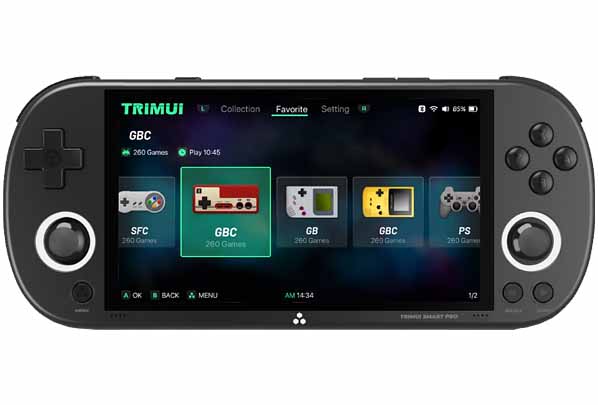
TRIMUI Smart Pro is based around the Allwinner A133 CPU which tops out at PS1 games making it an ideal device for 2D and 32-bit classics, but not quite enough for newer and more demanding titles. N64/Dreamcast/PSP console games are usually hit-or-miss on A133 devices, and that is exactly the case here. The performance of the TRIMUI Smart Pro is directly comparable to the RK3326 chipset used by the R36S handheld which I got quite recently.
The handheld features a 4.96-inch 720p IPS display, two analog sticks, and a 5000 mAh battery. Custom firmware options like CrossMix-OS and Tomato OS are available for this one, and you can set it up for a better overall experience. It also has a direct vertical Game Boy-style equivalent – the TRIMUI Brick, which I describe in more detail in my other pocket retro consoles top list here.
4:3 Aspect Ratio
7. Anbernic RG477M (4:3)
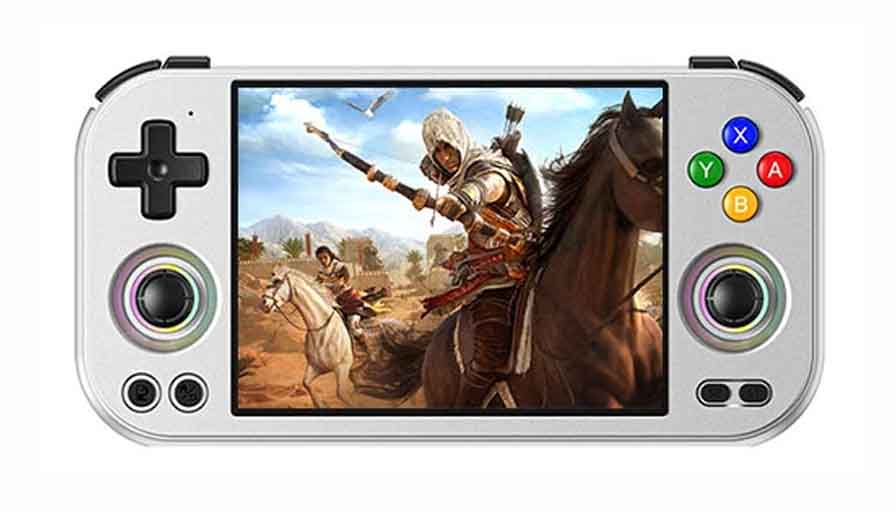
- Dimensity 8300 performance in a premium metal shell.
- 4.7-inch 1280×960 120Hz 4:3 display.
- Great screen ratio for older home console systems.
- A much more modern and capable alternative to the older RG405M.
- Metal body adds weight.
- Not as cheap as simpler 4:3 Linux handhelds.
The Anbernic RG477M is the most important new addition to the 4:3 part of this list. It brings a much more modern Android hardware platform to the classic screen ratio category, combining a Dimensity 8300 processor, a premium CNC aluminum shell, and a 4.7-inch 1280×960 120Hz display.
That screen is the main reason this device belongs here. A 4:3 panel makes so much sense for older home consoles, and the higher resolution gives you more room for clean scaling than the older 640×480 handhelds. At the same time, the Dimensity 8300 gives the RG477M far more power than older 4:3 Android models like the RG405M.
8. Anbernic RG405M (4:3)
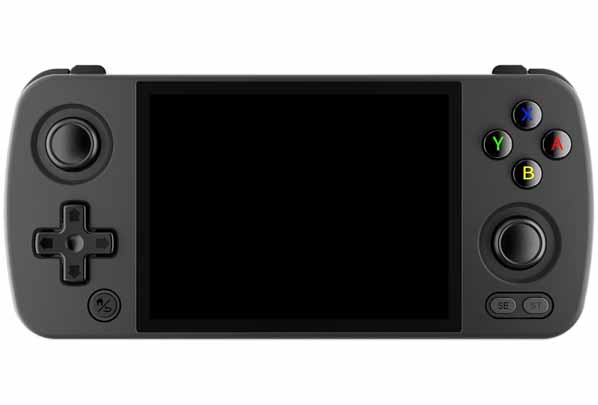
- Aluminum shell and great build quality.
- Handles PS1, N64, Dreamcast and PSP smoothly.
- Large 4500mAh battery.
- The T618 struggles with many GameCube/PS2 titles.
- A bit on the heavier side due to its aluminum casing.
- Now clearly older next to the RG477M.
The Anbernic RG405M is still worth mentioning, even though the newer RG477M now makes it look much older. It runs on Android 12 OS, features a Unisoc T618 chipset which nails PS1, N64, Dreamcast and PSP emulation, but can struggle quite a bit with many GameCube/PS2 titles. That’s one of the reasons why in my eyes it should be treated more as a discounted 4:3 pick rather than the premium Android option in this category.
The 4.0-inch 640×480 IPS screen, sturdy aluminum shell and the rather large 4500 mAh battery are some of the most important advantages this device has. For older games designed for 4:3 displays, it’s still a reasonable choice if you find it at the right price.
9. Anbernic RG40XXH (4:3)
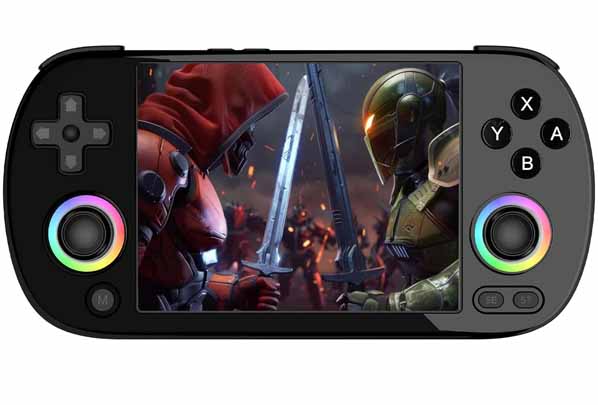
- Large 4.0-inch IPS screen (640×480) with 4:3 aspect ratio.
- Comfortable horizontal layout with improved grips.
- Dual RGB-backlit analog sticks.
- Struggles with games beyond the PS1 era; many N64, Dreamcast and PSP titles need frameskip or tweaks.
- A smaller 3200mAh battery, although battery life is still decent.
Anbernic RG40XXH is another 4:3 handheld with a 4.0-inch 640×480 IPS display, dual low-profile sticks and comfy grips beating its smaller RG35XX cousin in terms of ergonomics. It features a smaller 3200 mAh battery which can manage up to 5-6 hours of gameplay depending on what you play.
Just as with the TRIMUI Smart Pro and the R36S, the budget H700 chip on the RG40XXH means excellent PS1 gameplay, with occasional success with running N64/PSP titles at decent speed – but nothing more than that. Still, in my opinion it’s one of the better designed cheaper 4:3 handhelds out there.
10. R36H (4:3)
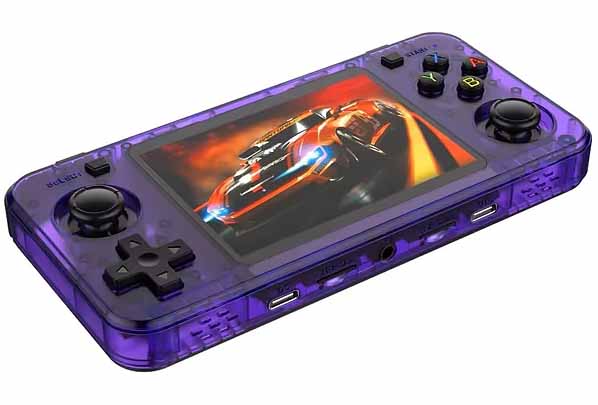
- Very convenient portable design with two analog sticks.
- Removable 3000mAh battery.
- Dual USB-C ports and HDMI output.
- A solid pick for systems up to PS1, with some lighter PSP/Dreamcast attempts.
- Not a top performer when it comes to emulation power.
- A rather stiff D-pad, much like on the R36S.
The R36H, based on the RK3326 chipset, acing every system from the early 8-bit era to PS1 games and even tackling some newer PSP and Dreamcast titles, is another great choice when it comes to the more pocketable horizontal handheld solutions.
Its 3.5-inch 640×480 IPS display, HDMI output, dual USB-C ports and a swappable 3000 mAh battery make it a great device for the price. If you liked this one, you can also check out the R36S handheld being pretty much the very same emulator console based on the same chipset, but in the vertical Game Boy style format.
You can read my full review of the R36H here: R36H Hands-On Review – Is It Still Worth It?
11. Anbernic RG353M (4:3)
- Premium-feel CNC aluminum body.
- Hall-effect analog sticks and high quality input buttons.
- Runs PS1 and below flawlessly, and handles many N64, Dreamcast and lighter PSP games.
- Dual OS (Android 11 + Linux).
- May be a little bit overpriced for what it is.
- The RK3566 performs well, but much more could be expected from an Android-based handheld.
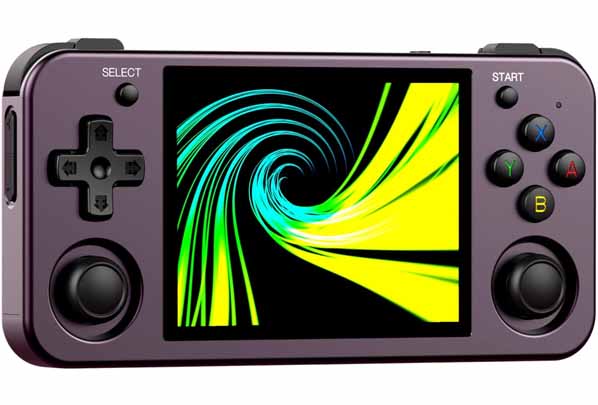
Anbernic RG353M is another very compact horizontal handheld which runs on a RK3566 CPU handling PS1 perfectly, N64/Dreamcast/lighter PSP mostly smoothly, and playing a good chunk of less demanding PSP titles without much trouble. All this, encased in a true pocket sized premium-feel metal shell and accompanied by hall-effect analog sticks, a 640×480 3.5-inch IPS display and a 3500 mAh battery.
This console runs two different operating systems which you can choose between on boot (Android 11 & a Linux-based main OS). The 3rd party support for ArkOS as well as Moonlight game streaming on Android are also a great addition.
12. Miyoo Mini A30 (4:3)
- Fits literally anywhere – the A30 is extremely small and lightweight.
- Sharp 2.8-inch IPS screen (640×480).
- Struggles with most N64 and newer heavier 3D consoles.
- No headphone jack, audio output possible only via USB-C.
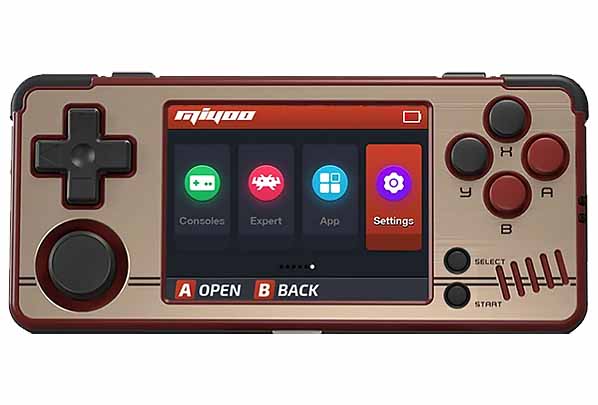
The Miyoo Mini A30 is a smaller horizontal version of the classic Miyoo Mini with similar performance and build quality. This little device can run NES through PS1 without any hiccups. From N64 onwards it will struggle just as much as the previous few budget contenders. All in all, it’s a perfect gadget for playing 8-bit, 16-bit and 32-bit games on the go while saving some space inside your pockets.
The 2.8-inch 640×480 IPS screen is clear and sharp, but there is no audio jack on board and the audio is output via the USB-C connection. Some people may also argue that both the display and the buttons/shell are too small to be comfortably used by people with larger hands. Although Onion OS is not available for this device, you can use Spruce OS as a comparable 3rd party software frontend. Pretty good find!
You might also like: Miyoo Mini Plus Handheld Emulator Console Hands-On Review
3:2 Aspect Ratio
13. Anbernic RG351P (3:2)

- 3:2 aspect ratio display means pixel-perfect 2x scaling for Game Boy Advance games.
- Solid build quality with dual analog sticks and stereo speakers.
- Mature custom firmware ecosystem (AmberELEC, ArkOS).
- The older RK3326 chipset struggles with N64 and Dreamcast.
- No internal Wi-Fi (requires a USB dongle).
The Anbernic RG351P is a great device for experiencing the Game Boy Advance library to this day. Unlike most retro handhelds that use 4:3 screens, the RG351P features a 3.5-inch 480×320 3:2 IPS display, which scales GBA games perfectly at pixel-perfect 2x integer scaling with zero black bars.
Running on the older RK3326 chipset, it definitely shows its age compared to the T618, Dimensity or Snapdragon devices higher up on this list. Still, it will run all PS1 games, as well as a large chunk of the NDS catalog, capping out at many N64 titles. The dual analog sticks are a neat addition here. It has no Wi-Fi chip on board.
14. MagicX One 35 (3:2)
- A horizontal handheld with vertical TATE mode capabilities.
- A very bright, high quality 3:2 3.5-inch display.
- Excellent price-to-performance ratio for many systems up to PSP/Dreamcast.
- Not enough for GameCube/Nintendo Wii and up.
- Android setup is still less straightforward than a basic Linux handheld.
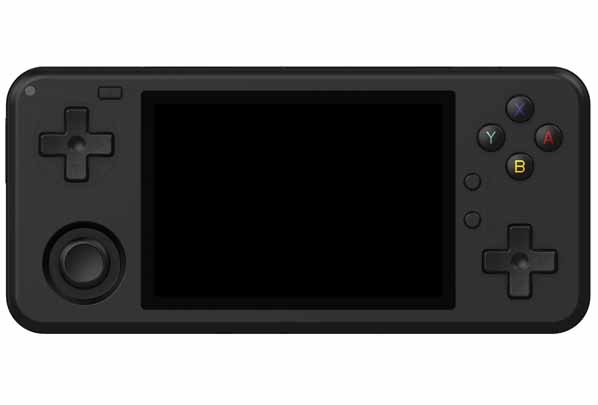
The MagicX One 35 is a nice pocket Android-based handheld that I recently had the chance to review. It entered the market as a budget-friendly horizontal option with the possibility of using it in the vertical TATE mode, mainly for retro arcade, MAME, and NDS titles. It’s also great for pocket Android gaming, with a built-in touch controls mapping utility.
Performance-wise, it has a lot to show, as it can handle a lot of N64 and PSP games well, although heavier titles still depend on settings and expectations. It can even tackle some simpler games from consoles such as the PS Vita and GameCube. As I noted in my recent hands-on review, this device is quite an interesting pick in the sub-$100 price range. It’s built and designed really well, and since its release has received many software updates from MagicX.
15. Powkiddy V10 (3:2)
- A 3:2 IPS display perfect for GBA.
- Highly pocketable and lightweight form factor.
- Very affordable price point.
- Lack of analog sticks limits the library mostly to D-pad focused games.
- Generally lacks power for anything over PS1.
- Mono speaker audio.
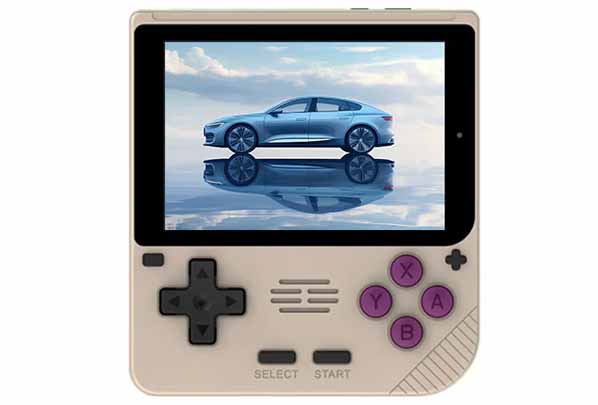
While the Powkiddy V10 might not be a typical horizontal handheld, with its 3:2 aspect ratio its design makes a lot of sense, and in my honest opinion is really worth taking a look at here. Its main purpose is to be a small budget Game Boy Advance emulation machine, and it does that job better than almost anything else in its price bracket, especially when it comes to the pocketability factor.
No analog sticks, a quality 3:2 IPS panel, and very well thought-out ergonomics. If you are willing to ditch the fully horizontal layout for the sake of portability and GBA compatibility, this is the “exception to the rule” that might just suit you.
1:1 Aspect Ratio
Bonus: Powkiddy RGB30 (1:1)
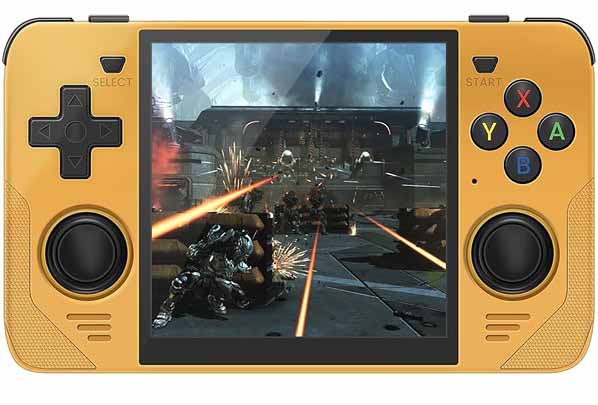
- Unique 4.0-inch 720×720 square display ideal for Game Boy games with minimal black bars.
- A 4100mAh battery and dual microSD slots.
- Great performance up to PS1/N64.
- Flat design with no grips on the back.
- Not the highest build quality at this price range.
- Some screen ghosting can be noticed, especially in fast-motion scenarios.
The Powkiddy RGB30 is probably one of the more interesting consoles on this list, featuring a 720×720 square display which was most probably designed with playing GB/GBC games in mind (as well as some vertical arcade shooters). Much like the RG40XXH and the TRIMUI Smart Pro, this console also maxes out around the PS1/N64 era, and so, you won’t be able to play any newer games on this system.
With that aside, it’s still a pretty good choice when it comes to 1:1 consoles. The only other one that comes to mind is the R36S MAX which is a vertical Game Boy style handheld, and so, doesn’t make it on this particular list. For more info on 1:1 aspect ratio displays, check out this Reddit post: “1×1 screen is niche” is a misconception
So, Which Horizontal Handheld Would I Pick?
If I wanted the strongest and most future-facing horizontal Android handheld here, I would first look at the AYN Odin 3. If I wanted something a little smaller while still keeping flagship Android performance, the Retroid Pocket 6 would be the most obvious pick. If screen size mattered more than pocketability, I would look at the AYN Odin 2 Portal. These are also the top 3 handhelds on this list when it comes to performance.
For older 4:3 systems in a premium Android shell, the Anbernic RG477M is the most interesting new option. For a cheaper 4:3 horizontal handheld, the RG40XXH and R36H still make sense. And if Game Boy Advance is your main target, the RG351P and Powkiddy V10 continue to have a very clear reason to exist.
As always, choose based on the games you actually want to play, not on the longest supported-system list on a product page. A cheaper device can be perfect if your target is PS1 and older. A stronger Android handheld makes sense only when you actually plan to use that extra power. That’s pretty much it!
Next read: 13 Best Retro Handheld Emulator Consoles This Year – My Personal Picks