
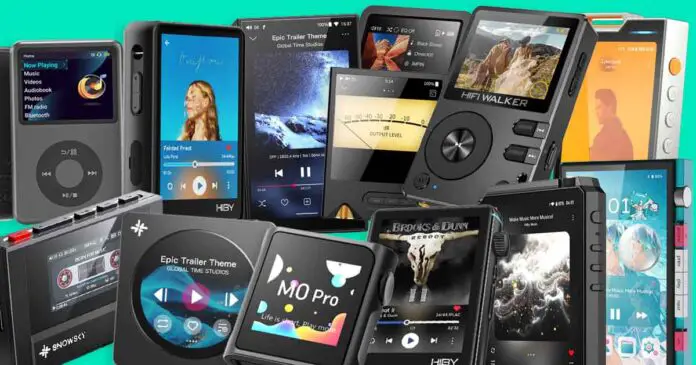
Whether you’re nostalgic for the days when iPods and simple pocket MP3 players were everywhere, or you just like the idea of having an affordable portable device for music playback separate from your phone, you might just be interested in DAPs. Here is what the situation looks like this year.
You might also like: 13 Best Retro Handheld Emulator Consoles – My Personal Picks
Updated – June 2026: Added the Shanling M0 Pura and Snowsky Echo Nano, adjusted top picks section.
This web portal is reader-supported, and is a part of the AliExpress Partner Program, Amazon Services LLC Associates Program and the eBay Partner Network. When you buy using links on our site, we may earn an affiliate commission!
Quick Top Picks
What Are DAPs? Isn’t a DAP Pretty Much an MP3 Player?
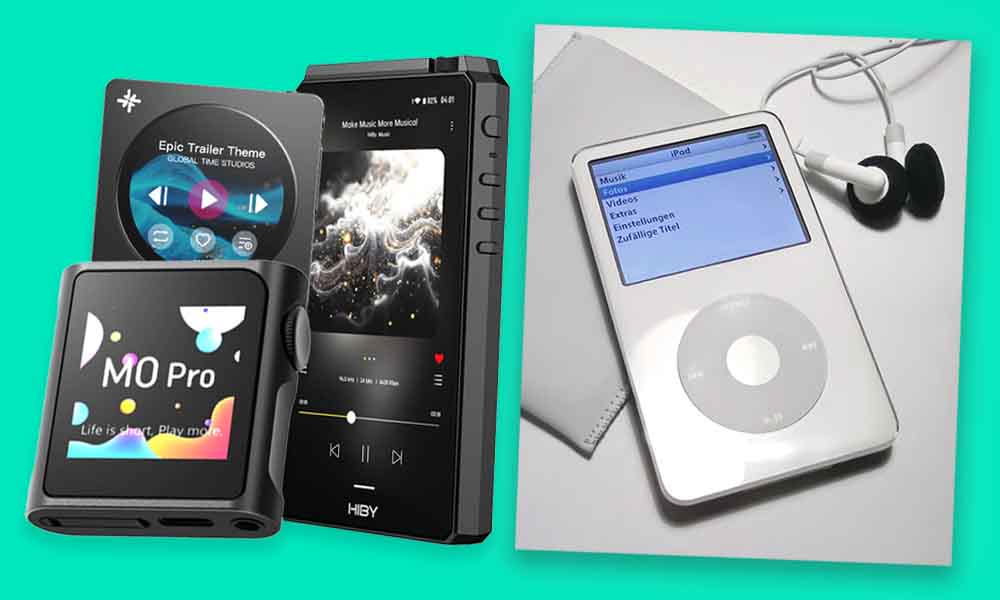
Well yes and no. While the basic premise of a DAP (a Digital Audio Player), is that it is a device that plays music for you, the world of modern DAPs is quite different from the world of the “classic” audio players of the past decades.
The main thing here is the idea of extending the feature sets of older portable music players. Many modern DAPs give you access to features that were very uncommon on simple MP3 players back in the day, such as using high-capacity microSD storage (often up to 2TB), playing lossless file formats such as FLAC, utilizing Bluetooth and USB DAC modes, allowing for Wi-Fi file transfers, letting you listen to internet radio, use streaming apps, and much more.
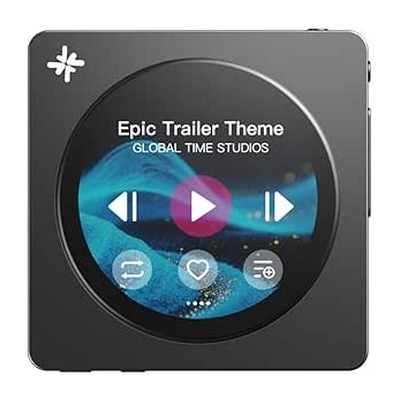
Another thing is the rather interesting and recent trend of bringing back the “retro” features of older portable audio devices, like physical buttons for playback control, case shapes or interfaces alluding to older audio media such as cassette tapes and CDs. The FiiO Snowsky Echo Mini and Snowsky Disc are the obvious examples here.
Of course, there are also plenty of models that cater to fans of the digital minimalism aesthetic, where the goal is to simply have a focused music player that simply stays out of your way.
With that said, almost all of the new devices are geared towards an upgrade from what a traditional MP3 player might be able to do. Better DAC sections, balanced headphone outputs, hi-res file support, more storage, and stronger headphone amplification are their usual advantages.
Want to learn more about DAC dongles for your phone? Check this out: DAC vs. DAC-less USB-C Adapters – Which One Do You Actually Need?
Why Not Just Use a Smartphone?
This is the question I asked myself right away after noticing the growing popularity of DAPs in recent months. Come to think of it, I do believe that there are a few different advantages a DAP or a simple MP3 player can have over your mobile phone, the most important ones being:
- DAPs act as separate devices, letting you listen to music without worrying about battery drain, memory constraints, or cognitive distractions on your smartphone.
- They feature headphone jacks, which most modern phones unfortunately do not have.
- They also let you make use of large microSD cards for music storage, with some modern players supporting cards up to 2TB.
- Many DAPs support file formats like FLAC, ALAC, WAV, APE, and DSD, and feature higher-quality digital-to-analog converter chips than many mid-range phones.
- Provided that you can do without music discovery algorithms, owning a DAP can help you ditch music streaming subscription services and save money in the long run.
- Many of the more pocketable DAPs can also be much smaller than your smartphone, which is a convenience in itself.
- And let’s be honest, many devices like the FiiO Snowsky Disc do not only look pretty cool, but can also be very satisfying to interface with. Some modern DAPs like the HiBy M500 and FiiO JM21 also keep dedicated physical buttons for playback control.
A quick tip: You can use free and open-source tools such as SpotiFLAC to quickly convert all your Spotify songs to FLAC and transfer them onto your new DAP. This can make it really easy to make the jump from monthly subscriptions to fully local music listening.
What About Bluetooth Headphones?
Here’s the realistic take: if you’re currently using a pair of AirPods or similarly standard Bluetooth earbuds, a standard Bluetooth-compatible DAP is probably not going to do much for you in terms of audio quality.
With Bluetooth headphones, the DAP’s analog DAC and headphone amp are mostly bypassed. Wireless sound quality is mainly determined by codec support, Bluetooth implementation, and the headphones’ own DAC, amp, and DSP. A good DAP should support the same high-quality codecs that most high-end smartphones do.
That said, if you are using a pair of wireless headphones that support high-quality Bluetooth codecs, specifically LDAC, your experience in terms of audio quality can be much better. Bluetooth is still not the same thing as wired lossless playback, but LDAC is much better than basic SBC when the connection is stable. Many mid-range and higher DAPs like the HiBy R3 II 2025 support LDAC output, which means you can still get a genuinely better wireless experience than a very basic phone setup would provide.
There is also the option of using a DAP as a Bluetooth DAC receiver, essentially connecting your phone to it over Bluetooth and letting the DAP handle the conversion and amplification while your phone does the streaming. Some devices like the HiBy R3 II support this kind of use, which is a clever way to get better sound out of Spotify or Tidal without going fully wired. Still, you won’t get the same quality as with quality wired headphones this way.
Android DAPs vs. Non-Android DAPs
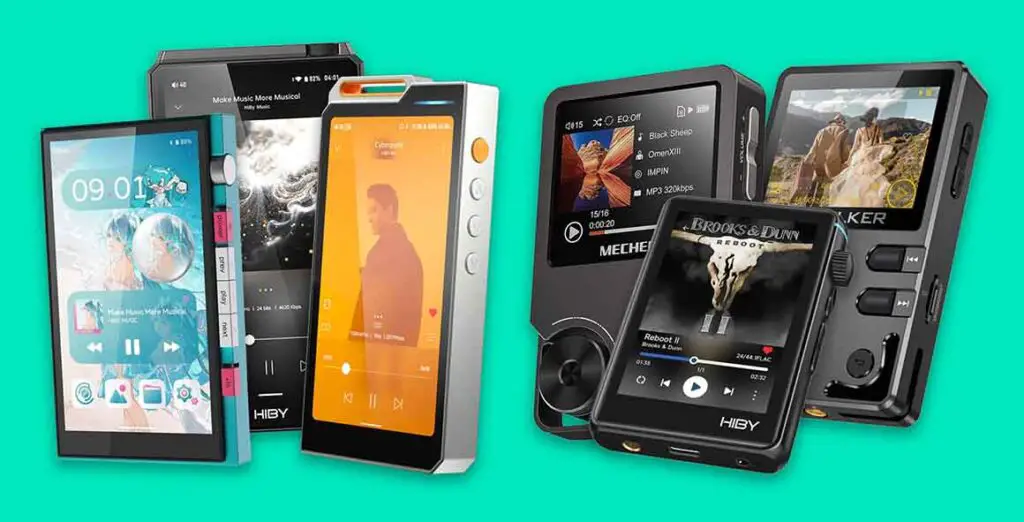
This is one of the biggest choices you have to make before buying a modern DAP. Android DAPs are basically small audio-focused phones without the phone part. They let you install streaming apps, use larger touchscreens, download music offline inside apps, and run things like Apple Music, Spotify, Tidal, Qobuz, or local player apps. If you want streaming, Android is usually the safer route.
The downside is that Android DAPs also bring Android problems. They boot slower, drain more battery, can age out of app support, rely on manufacturer’s continued support for security updates, and often feel slower than a real smartphone with the same screen size.
Keep in mind that most Android DAPs do not offer the same high-refresh-rate smoothness as modern phones or tablets. Most of them are maxed out at 60Hz or less. If you are used to a 120Hz display or higher, their interfaces may feel noticeably less fluid by comparison.
They are also more distracting by nature. If the reason you want a DAP is to stop touching your phone and mix up your experience while getting a device more akin to “classic” pocket MP3 players of the past decades, buying what is essentially a tiny Android tablet optimized for music playback may not solve the whole problem for you.
Non-Android DAPs are simpler. They usually run a dedicated OS, boot faster, last longer on battery, and focus on local files, Bluetooth, USB DAC functions, and sometimes limited services like Tidal or Qobuz. If you already own a carefully tagged MP3 or FLAC library and want a device that does music and almost nothing else, a non-Android DAP can be the better alternative here. Some of the non-Android DAPs like the HIFI Walker H2 also support alternative firmware versions like Rockbox, with many additional features and performance fixes.
So, my simple rule of thumb is this: buy Android if streaming apps matter, buy non-Android if local files matter more.
What Kind of Different DAPs Are There?
First, there are basic MP3 players that happen to play FLAC, with reasonable quality DACs inside. These are cheap, simple, and good enough for casual listening, but they are not really audiophile devices. Innioasis Y1 on the list below belongs to this category.
Then you have compact non-Android hi-res players, like the FiiO Snowsky Echo Mini, Shanling M0 Pura, HiBy R3 II, and HiBy R3 Pro II. These are the better choice if you want a pocket player with better DAC hardware, microSD support, and actual headphone outputs without going full smartphone.
Next are Android DAPs, like the FiiO JM21, HiBy R4, FiiO M21, Sony NW-A306, and HiBy R6 III. These are, as we’ve already mentioned, for streaming users, people with big local libraries, and anyone who wants a more familiar app-based experience akin to using your smartphone, with fewer of its distractions.
At the other end of the spectrum, there are high-end and “flagship” DAPs. This is where you start seeing larger batteries, more advanced DAC arrays with higher audio output quality, desktop modes, stronger amplification, premium chassis materials, and, at times, prices that can slowly stop making sense to regular users. The FiiO M23, iBasso DX260 MK2 and HiBy R6 Pro II 2025 live in this very category.
“Big” Brands vs. Chinese Hardware
The old portable audio world used to be dominated by names like Sony, Apple, SanDisk, and Cowon. That world is mostly gone, aside from being partly preserved on the second-hand audio electronics market.
Sony still makes Walkman devices, and SanDisk-style clip players still exist, but the serious modern DAP market is now mostly carried by various Chinese audio brands such as FiiO, HiBy, Shanling, iBasso, and ONIX, often thrown into one huge bag labeled “Chi-Fi”.
FiiO, HiBy, Shanling, iBasso, ONIX, and a few others are the companies pushing most of the interesting hardware forward. They are the ones offering budget sub-$100 DAPs, devices with balanced 4.4mm outputs, mid-range Android players, and the more capable hardware aimed at power users, often passing the $500 price mark.
The catch is retail trust. With brands like Sony, you usually know what warranty path you are getting. With Chinese hardware, you need to pay attention to the seller you’re getting your device from if you’re not buying via the official manufacturer’s store.
On Amazon, I strongly prefer listings sold by the brand or a known official seller. On AliExpress, I would stick to official stores where possible, and when it comes to resellers, always check their store reviews, sales history and order count.
What About The Prices?
Modern DAP prices can range anywhere from around $60 to well over $1,000 in the extreme cases. The good news is that you do not need to spend flagship money to get a meaningful upgrade over a phone dongle setup.
Under $100, you are mostly buying fun, storage, and basic hi-res playback. From $100 to $200, the options become much more serious, with better DAC chips, balanced outputs, and usable Bluetooth/Wi-Fi features.
From $200 to $500, Android becomes common and output power improves. Above $500, you are mostly paying for better amplification, nicer build, higher quality DAC implementations, and sometimes a lot of luxury-brand logic.
20 Best DAP Models in 2026 Compared (All Price Ranges)
Below are all the models I would actually sort into the conversation this year, based on what the overall landscape of the DAP community looks like based on current specs, availability, pricing, and recurring feedback from DAP communities and audio reviewers. The devices are grouped by approximate street price at the time of writing. Remember that the pricing can change quickly.
Sub-$100 DAPs
This is the price range that will probably be the most interesting one for you if you’re looking for your very first DAP and you’re on a tight budget. In this price range you can find many surprisingly good devices that cost less than some quality wireless earbuds out there. As of the time of writing this article, none of the devices in this category support gapless playback (that is, playback without a short moment of silence between your songs).
1. FiiO Snowsky Echo Mini (~$60)
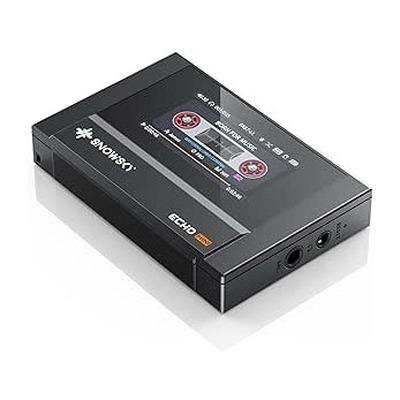
- Dual CS43131 DACs for the money.
- 3.5mm and 4.4mm headphone outputs.
- Bluetooth 5.3 (SBC only).
- Pocket retro aesthetic.
- No Wi-Fi or streaming apps.
- microSD support tops out at 256GB.
- No LDAC/aptX support.
The FiiO Snowsky Echo Mini is one of the most popular budget DAP choices out there. It features dual CS43131 DACs, both 3.5mm and 4.4mm jack outputs, 8GB of internal storage, microSD support (up to 256GB), support for DSD256/24-bit FLAC playback, Bluetooth 5.3 with SBC transmission only (without LDAC and aptX support), and it offers anywhere from 10-15 hours of battery life.
Being a smaller and cheaper device, it doesn’t support any kind of streaming and doesn’t have network capabilities, but as a tiny local-file player with two headphone jacks (which both can work simultaneously) it’s a much stronger pick than its price can suggest. And its cassette-tape-like design is a very nice bonus on top of that.
2. FiiO Snowsky Echo Nano (~$60)
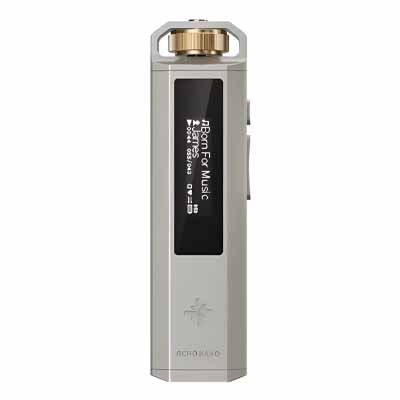
- Very small and easy to pocket.
- Independent CS43131 DAC chip.
- Supports DSD256 and common lossless formats.
- Can work as a USB DAC for a phone or computer.
- No balanced output.
- More limited than the Echo Mini.
- Small controls are not ideal for huge libraries.
The FiiO Snowsky Echo Nano is one of the smallest and simplest players on this list. It uses an independent CS43131 DAC chip, supports DSD256 hardware decoding, plays the usual local formats including FLAC, supports microSD storage up to 256GB, and can also work in UAC mode as an external sound card for your phone or computer.
Compared with the Echo Mini and Snowsky Disc, this one is relatively simple, and purely pocketability-oriented. There is no balanced output and no big screen to make browsing easier, but if you want something extremely small, cheap, and more pleasant to use than a random generic MP3 player, it earns its place here.
3. Innioasis Y1 (~$66)
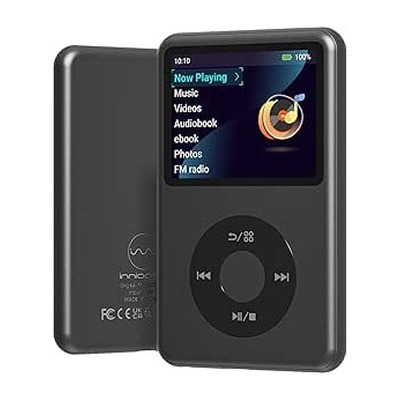
- 64/128GB/1TB internal storage at a reasonable price.
- Bluetooth, FM radio, speaker, and video extras.
- The audio quality is not that great.
- Build and UI are very much budget-tier.
- Has quite a few better alternatives for a similar price.
The Innioasis Y1 is much more of a retro-style MP3 player than a proper quality DAP. It’s a budget device that doesn’t really get any substantial praise in its reviews aside from it being vaguely similar to an iPod Classic. You get 64GB of storage, microSD support up to 128GB, Bluetooth, a small 1.8-inch screen, standard FLAC/APE/AAC/OGG support, FM radio, speaker and video extras.
Still, its sound quality is more “good enough” than impressive, especially compared with the stronger budget DAPs in this price range. Its value, and the main reason it made it to this list is its simplicity and iPod-style controls. It can be a good fit if you need an absolute basic “dumb” device for music playback, provided you find it for a reasonable price, but doesn’t really compare well with other budget DAPs out there.
4. MECHEN M30 (~$80)
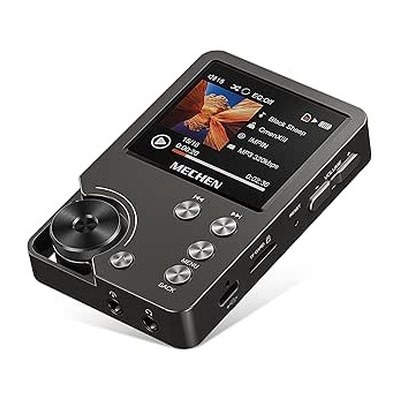
- CNC aluminum body.
- Scroll wheel-based navigation.
- Very convenient and sleek form-factor.
- No aptX or LDAC support.
- No balanced headphone output.
- No Rockbox support, unlike the HIFI Walker H2.
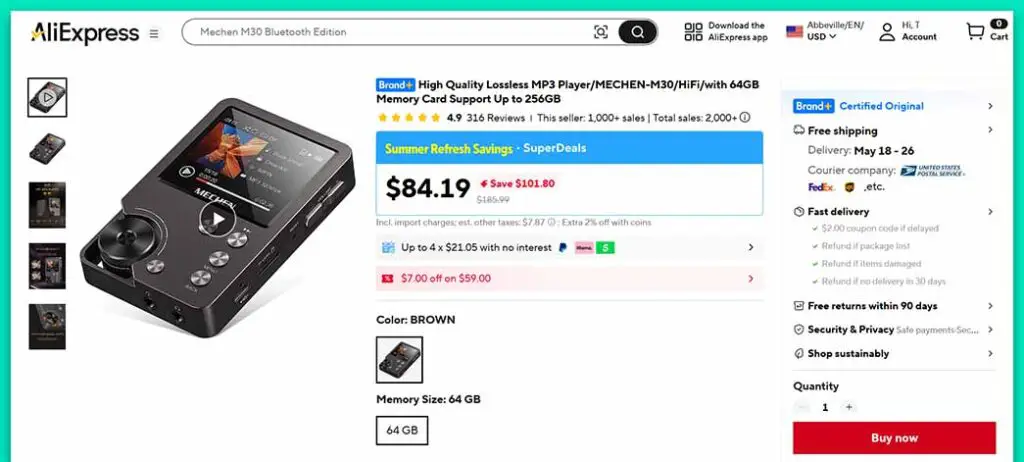
The Mechen M30 is a DAP that’s relatively popular on both Amazon and AliExpress. While the newer revisions of it can feature Bluetooth 5.3, they have no support for aptX or LDAC Bluetooth codecs. It features a 2-inch 320×240 display, aluminum body, a built-in scroll wheel, WM8965 DAC section with TPA6530 amplification, and DSD128/FLAC/WAV support. The max supported microSD size on the M30 is 256GB.
With its convenient design featuring a neat metal scroll wheel, it’s currently among the most commonly chosen DAPs in the sub-$100 price range. The newer revisions of this device feature a USB-C port instead of microUSB, so look out for those if you’re interested.
5. FiiO Snowsky Disc (~$80)
- Dual CS43131 DACs and balanced 4.4mm output.
- Bluetooth 5.4 with SBC and LDAC support.
- Wi-Fi, AirPlay, USB DAC and coaxial output.
- Gapless playback available on newer firmware.
- microSD support up to 2TB.
- The square form factor is not for everyone.
The FiiO Snowsky Disc is definitely one of my favorite devices here. It features double 3.5mm and 4.4mm outputs, dual CS43131 DACs, supports Bluetooth 5.4 with SBC and LDAC, as well as Wi-Fi/AirPlay, and can work in USB DAC mode. It also supports large microSD cards, for up to 2TB.
As the firmware for the Disc is still in active development, there are many new software updates coming every now and then that extend the functionality of the device, and add useful new features such as the ability to use animated GIFs on the player’s circular display. One of the recent updates has also introduced the gapless playback feature.
Budget DAPs ($100–$200)
One level up from the first budget tier comes the next price bracket featuring devices up to $200. This is the category in which Android-based DAPs start to appear. Some of these players introduce streaming support.
6. HIFI Walker H2 (~$126)
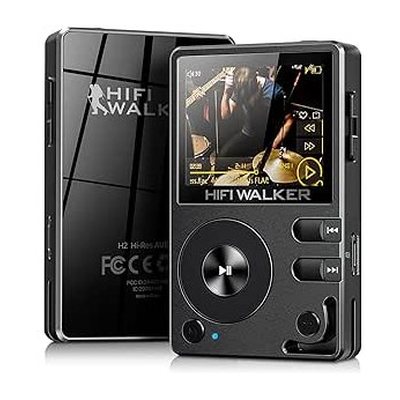
- ESS ES9018K2M DAC.
- Two-way Bluetooth with aptX & LDAC support.
- USB DAC and line-out functions.
- Rockbox support.
- No Wi-Fi or streaming apps.
- Not as compact as newer tiny DAPs.
The HIFI Walker H2 often appears compared to the Mechen M30, mainly because both devices are relatively easy to come across over on AliExpress. It uses an ESS ES9018K2M DAC, supports DSD128 and common lossless files, includes a 2-inch non-touch screen, microSD support up to 512GB, USB DAC mode, line out, and two-way Bluetooth connection with aptX and LDAC.
Much like the M30, it also features a navigation wheel that’s reasonably pleasant to use, and comes in a form factor that is very well optimized for user convenience. It also supports Rockbox on compatible non-touch H2 / Eros Q/K-style revisions, which can let you access a lot of new great quality-of-life features.
7. Shanling M0 Pro (~$142)
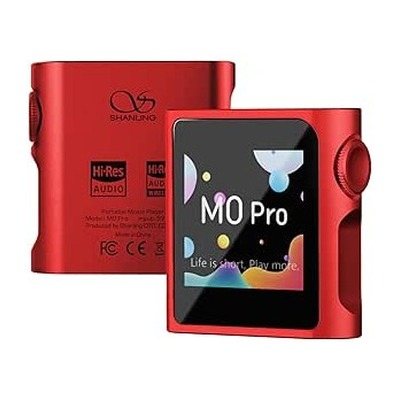
- Dual ESS ES9219C DAC/amp chips.
- Very small and pocket-friendly.
- Bluetooth transmitter and receiver support.
- Balanced mode available through Shanling’s adapter.
- Tiny screen is not for big libraries.
- No Wi-Fi streaming apps.
- Balanced output needs an extra adapter.
- Wheel-based control can feel fiddly.
The M0 Pro is for people who want a really tiny and highly pocketable DAP, not a phone-shaped device. It uses dual ESS ES9219C DAC/amp chips, plays up to 32-bit/384kHz PCM and DSD128, supports bidirectional Bluetooth and microSD cards up to 2TB, and can use a balanced output mode through Shanling’s dedicated adapter.
Of course, a device this size isn’t perfect for all use cases. If, however, you’re looking for an ultra-portable device to carry around or for instance, use in your car, this might be one of the smallest players in this lineup, aside from the FiiO Snowsky Echo Mini.
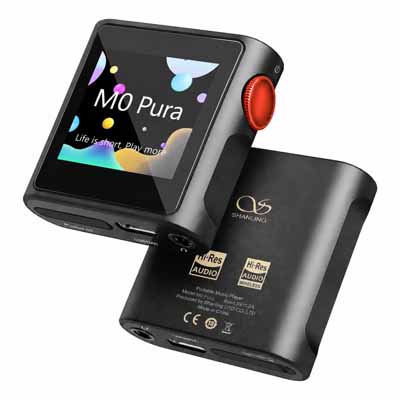
8. Shanling M0 Pura (~$130)
- Dual Cirrus Logic CS43131 DACs.
- Up to 250mW @ 32Ω output power.
- Extremely small touchscreen design.
- Newer fourth-generation M0-series model.
- Tiny screen is once again, not optimal for huge libraries.
- Small body means small battery, and less convenient controls.
- No Wi-Fi streaming apps.
The Shanling M0 Pura is the newer, updated version of the M0 Pro. It keeps the same ultra-compact touchscreen idea as the older M0, but now uses dual Cirrus Logic CS43131 DACs, supports bidirectional Bluetooth, microSD cards up to 2TB, and can output up to 250mW at 32 ohms through its balanced mode.
Of course, this is still a very small non-Android DAP, so it is not meant for streaming apps, huge touch navigation, or smartphone-like use. But if you want the smallest proper hi-fi player possible, the M0 Pura now makes more sense than the older M0 Pro unless the Pro is much cheaper or comes bundled with the balanced adapter.
9. HiBy R3 II 2025 (~$159)
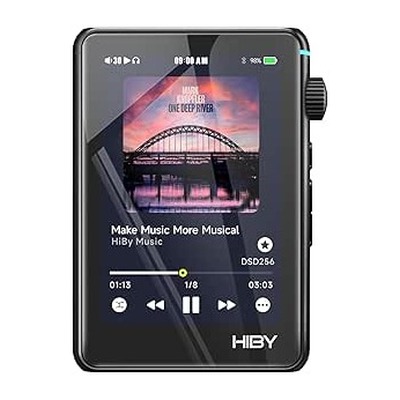
- Dual ES9219C DACs.
- HiByOS with Qobuz/Tidal support.
- 3.5mm and 4.4mm outputs.
- Bluetooth 5.1 with LDAC and UAT support.
- Not a full Android player.
- The software can struggle with larger track collections.
- Streaming app support is limited to what HiByOS offers.
The HiBy R3 II 2025 is the small player I would look at if you’re not keen on jumping straight into Android-based DAPs. It has dual ES9219C DACs, a 3.2-inch touchscreen, HiByOS, 3.5mm and 4.4mm outputs, DSD256/PCM 32-bit/384kHz support, MQA 16x, 2TB microSD support, Wi-Fi, and Bluetooth 5.1 with LDAC/UAT. It is a good middle ground between a pure file player and a streaming machine.
When it comes to streaming, this one supports only Tidal and Qobuz, albeit without the possibility to save your streamed tracks for offline playback. The R3 II 2025 is a great device that’s still held back, even if just a bit, by its dedicated firmware – the HiByOS. While it’s perfectly serviceable and still updated as of the time of writing this article, it is a little bit rough around the edges.
10. FiiO JM21 (~$180)
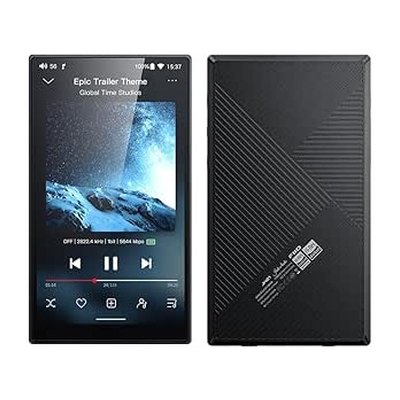
- Android 13 with Snapdragon 680.
- Dual CS43198 DACs.
- Can be used with compatible Google Play Store apps.
- 3.5mm and 4.4mm outputs.
- Good power for the price.
- Android brings more maintenance than HiByOS-style players.
This is the first and the most affordable Android-based DAP on our list. The FiiO JM21 is one of a few budget Android players. It features a Snapdragon 680 CPU, dual CS43198 DACs, a 4.7-inch screen, 3.5mm and 4.4mm outputs, LDAC, USB DAC functionality, and enough output power to handle most IEMs and portable headphones. As it runs Android 13, it can support any compatible streaming app you can download from the Play Store, much like all of the other Android DAPs.
The FiiO JM21 comes in two versions: a base model with 3GB RAM / 32GB ROM / 2,400mAh battery, and an upgraded version with 4GB RAM / 64GB ROM / 3,100mAh battery. Both are roughly at the performance level of a lower-end smartphone, but with physical track navigation controls and software interface catered towards music playback.
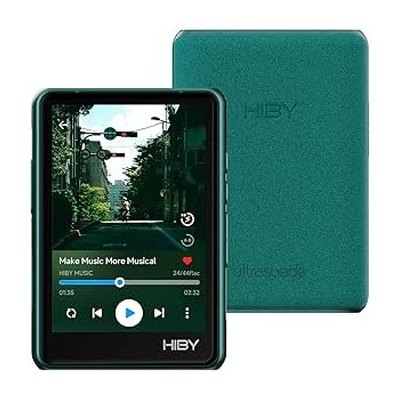
11. HiBy R3 Pro II (~$189–$199)
- Dual CS43198 DACs and four OPA1622 amps.
- 3.5mm and 4.4mm outputs.
- Large 4000mAh battery.
- Qobuz/Tidal support.
- Still not a full app-store streamer.
- The software side, much like on the R3 II, can be a little unpolished.
- Close enough in price to some Android models to make the choice harder.
The HiBy R3 Pro II is the upgraded version of the small HiBy idea. It moves to dual CS43198 DACs, four OPA1622 amps, a 4000mAh battery, 3.3-inch IPS display, 3.5mm and 4.4mm outputs, DSD256/PCM 384kHz support, and microSD expansion up to 2TB.
Frankly, I would choose it over the regular R3 II if battery and output stage matter for you more than saving the last few dollars, as the difference in price is quite small. When it comes to HiByOS, the very same quirks apply to all of the HiBy devices that are not based on Android.
Mid-Range DAPs ($200–$500)
This price category is mainly the Android DAP battleground, but there are still a few focused non-Android options worth considering here.
12. HiBy R4 (~$249)
- Android 12 with Snapdragon 665.
- System-wide SRC bypass.
- Bluetooth 5.0 with LDAC, aptX, AAC, and SBC support.
- 3GB RAM, 32GB storage, and up to 2TB microSD.
- 3.5mm and 4.4mm outputs.
- Reported overheating/high power-draw issues.
- Comes with the usual cons of Android-based DAPs.
The HiBy R4 is yet another (and not last) HiBy device listed here. It gives you Android 12, Snapdragon 665, 3GB RAM, 32GB storage, Bluetooth 5.0 with LDAC, aptX HD, aptX, AAC, and SBC support, microSD expansion up to 2TB, Spotify/Tidal-style streaming app access via Google Store, system-wide SRC bypass (bypassing Android software resampling for bit-perfect audio), and 3.5mm plus 4.4mm outputs.
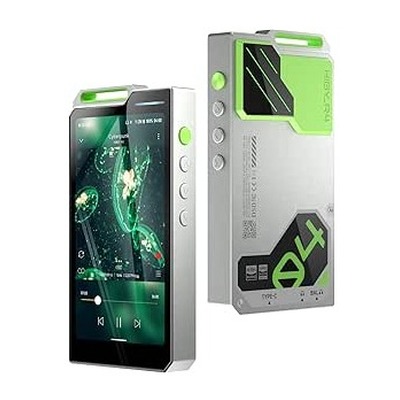
While it is not subtle when it comes to its design, it’s a reasonable Android DAP to recommend if you have no issue with the slight overheating and high power-draw issues reported by some users. It also comes in a limited Evangelion themed variant.
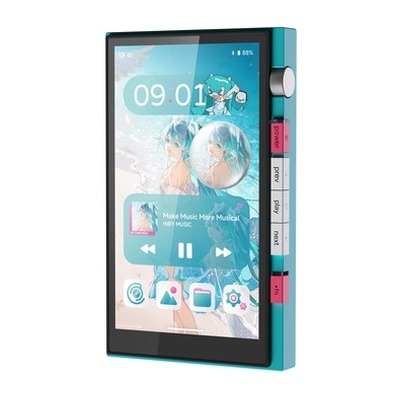
13. HiBy Digital M500 (~$319)
- Comes in the dedicated Hatsune Miku variant.
- Very nice looking physical controls.
- Wi-Fi and 4G options.
- Large touchscreen Android-style experience.
- Anime collaboration styling is not very style-neutral.
- It’s on the larger side for a DAP.
HiBy Digital M500 is another one of my favorites here. Coming in both Wi-Fi and 4G versions and a large touchscreen, it’s also paired with a very specific Hatsune Miku collaboration look. The physical buttons on this device are really well designed (although a bit wobbly), and the overall feel of the device is very much on point. Being Android-based and powered by a Snapdragon 680 CPU and Android 14, it also lets you install all the streaming apps you want, which is a great plus. It supports cards for up to 2TB.
Keep in mind that this device ventures into the world of larger, smartphone-sized players. This is also where the price rises accordingly. The M500 is a solid pick if you’re in the market for these kinds of devices. With that said, if the anime-style design bothers you, this might not be the best choice for you.
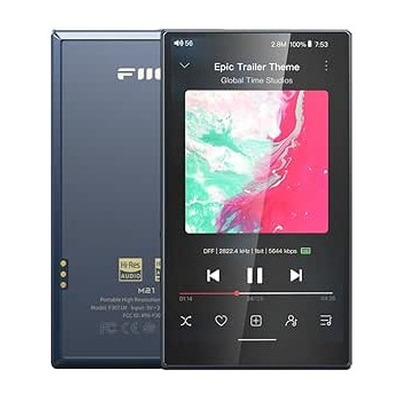
14. FiiO M21 (~$330)
- Android 13 with Snapdragon 680.
- Four CS43198 DAC chips.
- Desktop mode with charging bypass.
- 4GB RAM, 64GB storage, and 2TB microSD support.
- Bigger than small HiBy/Shanling players.
- Battery life drops when using balanced output.
- Not as premium-feeling as FiiO’s upper models.
The FiiO M21 is where FiiO starts to feel properly modern without crossing into luxury pricing. It’s also another smartphone-sized Android-based DAP. It brings about Android 13, Snapdragon 680 (much like the HiBy M500), four CS43198 DACs, 4GB RAM, 64GB storage, a 4.7-inch display, LDAC, microSD support up to 2TB, and a desktop mode (charging bypass mode) that can deliver far more power than most portable users need.
The M21 is, in a sense, a direct upgrade to the FiiO JM21. Although it uses the exact same CPU, it offers larger internal storage, improved battery life, and quad DACs for cleaner, more dynamic sound with low distortion. It also adds balanced 4.4mm output alongside the standard 3.5mm, plus Bluetooth 5.0 support with LDAC, LHDC, aptX, and aptX HD transmission.
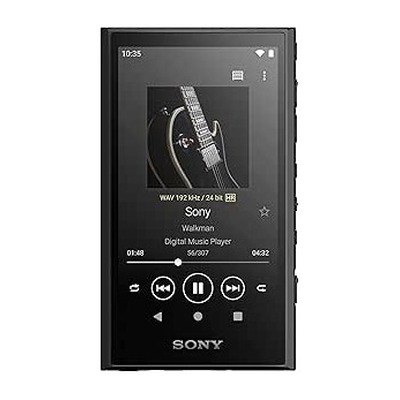
15. Sony NW-A306 (~$398)
- Compact 3.6-inch Android Walkman.
- 32GB internal storage plus microSD expansion.
- Great pocketability and build feel.
- No balanced output.
- Long boot time.
- Less driving power than many other DAPs.
The Sony NW-A306 is a little bit different, in the sense that it comes from a renowned brand, known for their classic Walkman hardware. You get a compact Android Walkman with Wi-Fi, Bluetooth, USB-C, 32GB internal storage, microSD expansion, a 3.6-inch screen and DSD support. You do not get the output power or balanced jack of many other DAPs, so it is best for efficient IEMs and people who care about size and finish.
While its official microSD support is in theory up to 1TB, there are users that have successfully used larger cards with it. If you want more internal storage, the NW-A307 is the 64GB A300-series variant, but availability depends heavily on region/import listings.
16. HiBy R6 III 2025 (~$399)
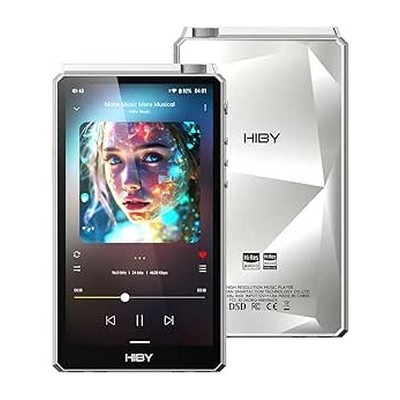
- Android 12 with Snapdragon 665.
- Four CS43198 DACs.
- Class A and Class AB amp modes.
- 5-inch display, 4GB RAM, 64GB storage.
- Bigger and heavier than R3-style players.
- Battery life depends heavily on amp mode.
The HiBy R6 III 2025 uses Android 12, Snapdragon 665, four CS43198 DACs, 4GB RAM, 64GB storage, a 5-inch 720p display, 2TB microSD support, Bluetooth 5.0, dual-band Wi-Fi, and dedicated 3.5mm/4.4mm headphone and line outputs.
The Class A/AB amp modes are one main reason to consider it over the smaller HiBy players. Other than that, it’s yet another worthwhile Android-based pick here.
17. ONIX XM2 (~$449)
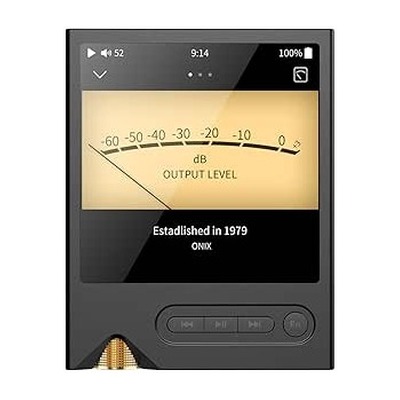
- CS4308P 8-channel DAC architecture.
- Up to 800mW at 32Ω.
- The only device on the list with an OLED touchscreen.
- Bluetooth 5.2, USB DAC, and 2TB microSD support.
- No Android app-store experience.
- Small screen for heavy library browsing.
The ONIX XM2, also known as the Onix Tocata XM2, is for people who don’t want Android but still want real output power. This rather sleek device is based around the CS4308P 8-channel DAC architecture and features a compact 3-inch OLED touchscreen. It also supports Bluetooth 5.2, USB DAC mode, and microSD expansion up to 2TB, and can give you up to 800mW of output power at 32Ω.
Its custom operating system is really intuitive, although it won’t let you use other streaming services than TIDAL, or install any third-party apps like you would be able to do on Android-based DAPs. Other than that, its looks are very original too, and it’s one of the more pocketable devices you can find in the higher price tiers.
Audiophile Tier ($500–$1,000)
Past the $500 price mark, we start to enter into the range of devices with larger displays, more output options, as well as stronger amplification, more elaborate DAC implementations and better build materials.
18. HiBy R6 Pro II 2025 (~$699)
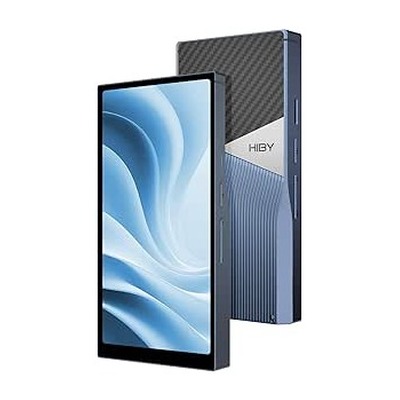
- Dual CS4308P DAC chips.
- Android 12, Snapdragon 665, 6GB RAM, 128GB storage.
- Large 5.9-inch 1080p display.
- Class A and Class AB modes.
- Large for a pocket music player.
- Battery drain rises fast in Class A.
- Much more expensive than the already-good R6 III.
The HiBy R6 Pro II 2025 is the direct upgrade of the base R6 III 2025. It features dual CS4308P DACs, runs on Android 12 with Snapdragon 665, 6GB RAM, 128GB storage, and 2TB microSD support. It also gives you access to a nice large 5.9-inch 1080p touchscreen.
In comparison to the HiBy R6 III 2025, it features a larger, higher resolution display, has higher power output, and lower noise floor. Although it also has a larger battery, its larger display does balance out the battery life making it close to that of its predecessor. All in all, a very good higher-tier device.
19. FiiO M23 (~$730)
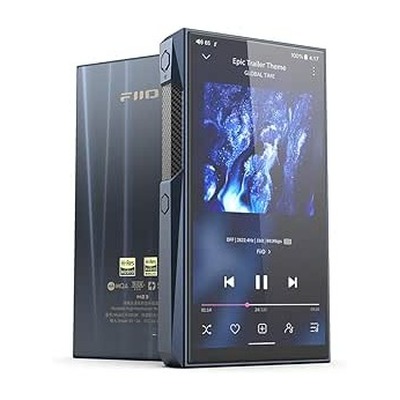
- AK4191EQ + AK4499EX DAC combo.
- Global SRC bypass.
- Desktop mode for higher-power listening.
- 3.5mm and 4.4mm outputs.
- Android 10 is reasonably dated by now.
- Large and more transportable than tiny-pocketable.
- Overkill for efficient IEM-only users.
The FiiO M23 is a great device if you specifically want the AKM sound architecture and more output headroom. It uses the AK4191EQ + AK4499EX DAC combo, Android 10 with global SRC bypass, Snapdragon 660, a 5.5-inch display, 3.5mm and 4.4mm outputs, MQA/DSD support, and of course, as all Android-based DAPs, access to all Wi-Fi streaming apps.
Compared to the FiiO M21, it features a more sophisticated AKM sound architecture, significantly higher output power, and better heat dissipation. While the M21 is more pocket-friendly and runs a newer Android 13, the M23 offers its dual-power supply design and THX amplification. It’s a very good choice for those who need a portable device that can effortlessly drive full-sized headphones.
20. iBasso DX260 MK2 (~$949)
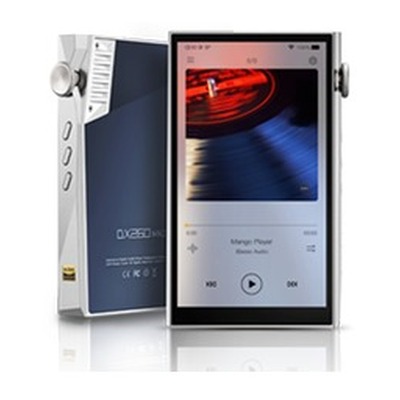
- Eight CS43198 DAC chips.
- Android 13 on the MK2 model.
- FPGA-Master architecture.
- 3.5mm and 4.4mm outputs.
- The price is pretty steep.
- More specialist than casual listeners need.
The iBasso DX260 MK2 is one of the most advanced Android-based DAPs under $1,000. It is sold directly by iBasso, uses an eight-CS43198 DAC design, Android 13, FPGA-Master processing, a 5-inch display, 3.5mm and 4.4mm outputs, and native DSD/PCM support. Perhaps most importantly, it’s also the only device listed here that features a user-replaceable battery, 4400mAh capacity.
While I would not really recommend this device as your first DAP, it’s one of the more interesting upper-tier devices to consider. If you’re looking for a more affordable equivalent of this very DAP, the iBasso DX180 has many of the features of the 260, for a much lower price.
So, In The End…
DAPs really make the most sense when you want music to be its own thing again. Not another app between notifications, not another drain on your phone battery, and not another compromise around missing headphone jacks. That’s the main reason these kinds of devices exist and gain popularity so quickly lately.
If you mostly use Bluetooth earbuds and stream casually, your phone is still probably enough. If you use high-quality wired IEMs, keep a large local music library, care about physical controls, or simply want a less distracted way to listen, a DAP starts to make a lot more sense.
For most people, I would start with the FiiO Snowsky Disc, HiBy R3 II 2025, FiiO JM21, or FiiO M21, depending on budget and whether Android matters.
The more expensive players often do offer many unique features, but most of them in many cases won’t be that important to you if you’re just getting accustomed to DAPs without extensive background in the ins and outs of digital audio. That’s pretty much everything you need to know to get started.
You might also like: “Nextar MA933A” Clone From AliExpress – And What It’s Worth